 Pin It
 Last summer, my friend brought over avocados from her garden and challenged me to make something beyond the usual toast situation. I remembered loving tuna salad sandwiches as a kid, but wanted something lighter and plant-based. That's when it hit me—why not skip the bread entirely and use the creamy avocado as the vessel? The first bite was a revelation: briny, tangy, herbaceous, everything you'd want from a satisfying lunch without feeling heavy.
I made this for a picnic with coworkers who had wildly different diets, and watching everyone grab seconds was oddly satisfying. One person admitted she was skeptical about chickpea tuna, but ended up asking for the recipe before we even finished eating. That's when I knew this wasn't just a weeknight meal—it was something worth sharing.
Ingredients
- Canned chickpeas: Drain and rinse them thoroughly to remove excess starch, which helps the salad stay light and prevents mushiness.
- Vegan mayonnaise: Use a good quality brand because this is where the creaminess and richness come from—don't skimp.
- Dijon mustard: Just one tablespoon adds sharp depth and prevents the whole thing from tasting bland or one-note.
- Lemon juice: Freshly squeezed makes a noticeable difference; bottled tastes flat by comparison.
- Celery and red onion: Dice these finely so they distribute throughout rather than creating crunchy pockets.
- Dill pickles and capers: These briny elements are what make it taste fishy without any fish involved.
- Fresh parsley: Never skip this—it brightens everything and makes the dish feel intentional rather than thrown together.
- Garlic powder, sea salt, and black pepper: Season generously because avocado is mild and needs supporting flavors.
- Ripe avocados: They should yield gently to thumb pressure, not rock-hard or mushy.
Tired of Takeout? 🥡
Get 10 meals you can make faster than delivery arrives. Seriously.
One email. No spam. Unsubscribe anytime.
Instructions
- Break down the chickpeas gently:
- Use a fork or potato masher to crush them until mostly broken, but leave some whole pieces for texture. You want it chunky enough to feel substantial, not smooth like hummus.
- Mix the salad base:
- Combine the mayo, mustard, and lemon juice first to create a binding liquid, then fold in the vegetables and seasonings. Taste as you go because you might find you want more lemon or salt depending on your avocado.
- Prepare your avocado canvas:
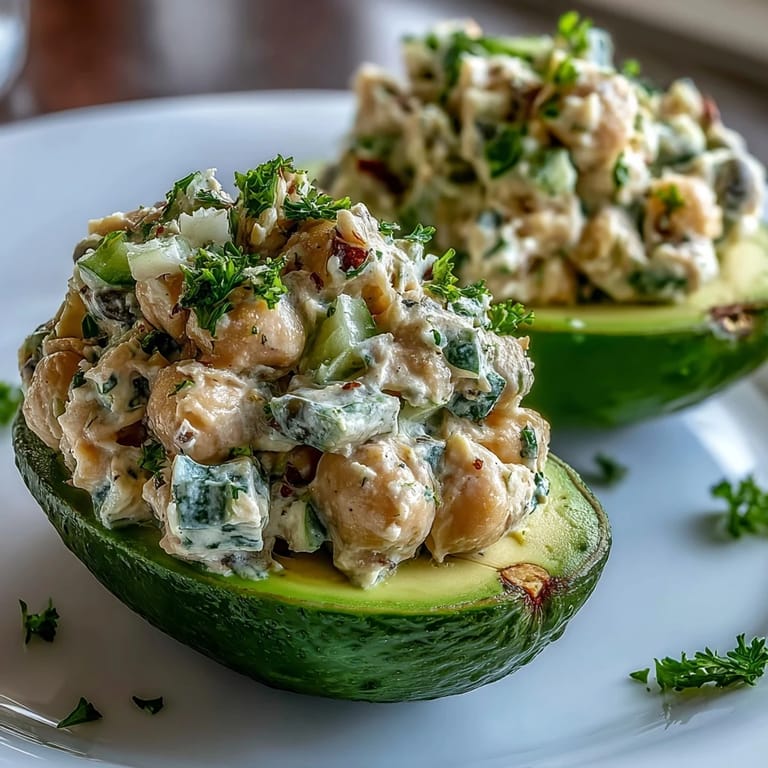
- Cut them in half lengthwise, twist gently to separate, and use a small spoon to remove the pit. If you want a deeper cavity for more salad, scoop out a thin layer from the center, but don't go too deep or you'll lose the structural integrity.
- Fill and serve:
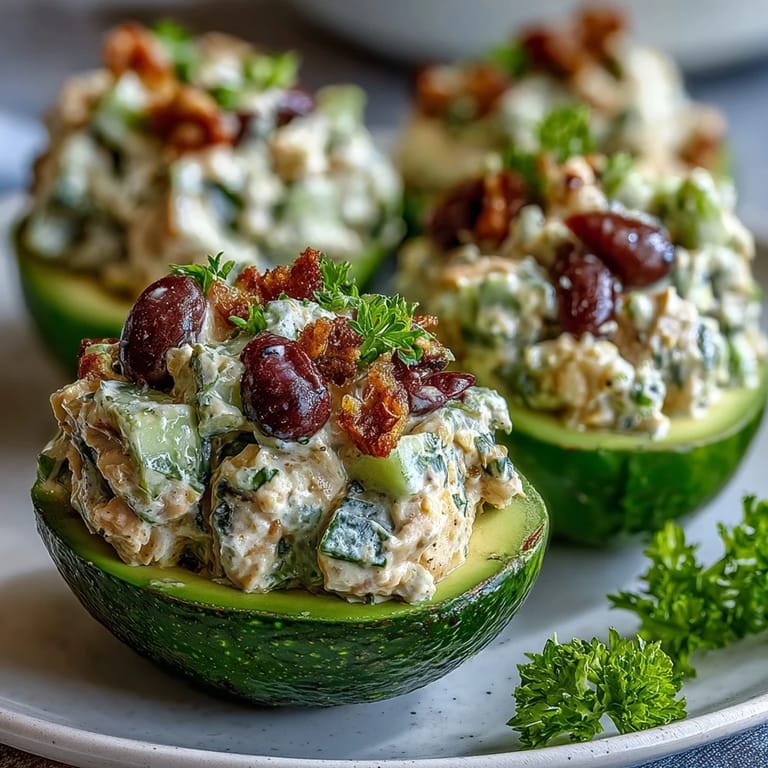
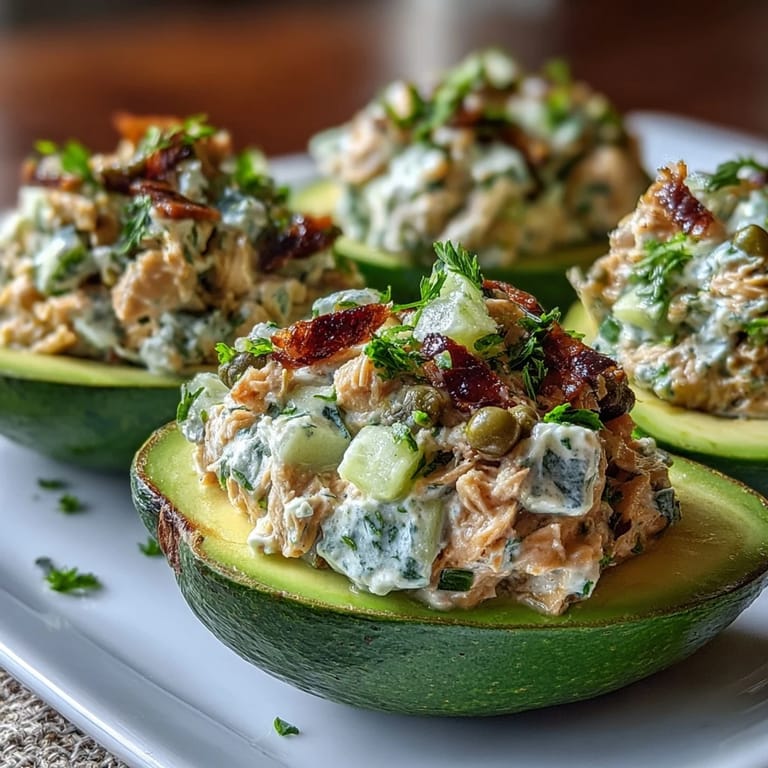
- Pile the chickpea mixture generously into each half, letting it mound slightly. Serve immediately with lemon wedges, or over greens if you want to make it feel more like a composed salad.
 Pin It
My mom tried this skeptically, convinced nothing plant-based could replicate the satisfaction of her beloved tuna melts. She came back for seconds and started keeping canned chickpeas stocked just to make this at home. When your parent asks for a recipe without you offering, you know you've created something genuinely craveable.
The Secret to Texture
The textural contrast is everything here—creamy avocado against crispy celery and onion, briny capers and pickles cutting through richness, herbs adding brightness. Don't over-mix or mash the chickpeas into submission because you need that little bit of chew to remind your mouth it's a substantial meal, not just spread on vegetable. I learned this the hard way by food processing the whole thing once, which resulted in something that felt more like a dip than lunch.
Playing with Flavor
Once you have the basic formula down, this becomes a playground for whatever you have on hand or whatever mood strikes. I've added a pinch of smoked paprika on days when I want something smokier, torn nori sheets for a more ocean-forward vibe, or even a tiny splash of soy sauce for umami depth. The pickles and capers already do the heavy lifting, so you're really just adding personality.
Why This Became My Lunch Go-To
Partly because it's genuinely delicious and satisfying, but also because it forces me to slow down. There's something about eating from an avocado half with a spoon that makes you present, makes you actually taste what you're eating instead of rushing through lunch at your desk. It's become my signal to myself that I deserve a real meal, not just something to refuel between tasks.
- Make the salad the night before and store it separately from the avocado for grab-and-go lunches.
- Double the salad recipe and use it to stuff tomatoes, bell peppers, or serve alongside crackers throughout the week.
- If avocados aren't ripe yet, the salad is equally good served in lettuce cups or on toasted bread.
 Pin It
 This recipe proved to me that the best meals aren't always the most complicated ones—sometimes they're just thoughtful combinations that respect each ingredient. Make this when you want something that feels indulgent without being heavy, something that tastes like you put in effort even though you barely did.
Recipe Questions & Answers
- → Can I prepare the chickpea mixture ahead of time?
Yes, preparing the chickpea mixture in advance helps flavors meld. Store it in the fridge for up to two days, but fill avocados just before serving to prevent browning.
- → What can I use instead of vegan mayonnaise?
Regular mayonnaise works well if not avoiding dairy. For a lighter option, mashed avocado or Greek yogurt can provide creaminess with a different twist.
- → How can I keep avocados from browning after cutting?
Brushing the avocado flesh with lemon juice or lime juice slows oxidation and keeps the surface looking fresh longer.
- → Can I add extra protein to this dish?
Additional plant proteins like cooked quinoa or hemp seeds can boost protein content while maintaining the fresh, light nature of the dish.
- → What are good serving suggestions?
Serve stuffed avocados over mixed greens and garnish with lemon wedges. Complement with crusty bread or crackers for a heartier meal.
- → Are there any allergen concerns with this dish?
Check ingredients in mayonnaise for soy or mustard allergens. Adjust or substitute ingredients as needed based on dietary restrictions.