 Pin It
 There's something about arranging food that makes you feel like an artist instead of just a home cook. I discovered this feeling one evening when a dinner party suddenly became something grander than planned—the kind of gathering that needed drama, elegance, and a centerpiece that would make people pause. That's when I realized a grazing board could be so much more than ingredients on wood; it could be a performance, a cascade of luxury that spills over the edge like velvet curtains taking their final bow.
I remember standing in my kitchen at dusk, summer light spilling across the counter, when my mother-in-law texted that she was bringing her new partner to dinner. My heart sank—would a regular spread feel ordinary for such an important first impression? That's when I grabbed my largest wooden board, ignored every conventional arrangement rule, and let things tumble deliberately over the edge. Watching their faces light up as they walked in, before they'd even tasted anything, told me I'd done something right.
Ingredients
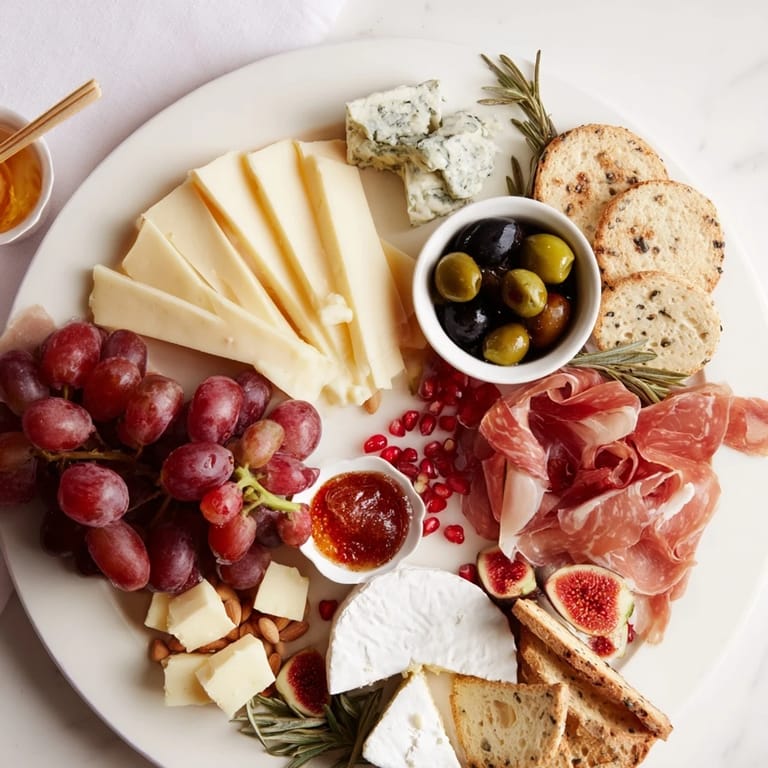
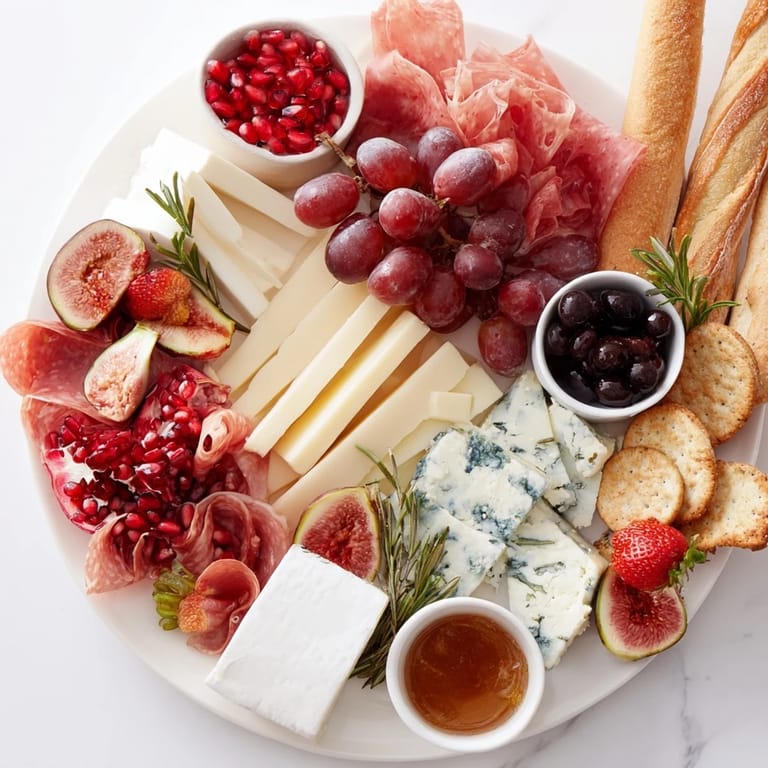
- Brie, 150 g in wedges: Soft and buttery, it's your canvas—the piece that makes everything feel intentional and luxe.
- Aged Cheddar, 150 g in sticks: Cut into geometric shapes so it catches light and adds textural contrast against the creamy cheeses.
- Blue Cheese, 120 g in chunks: Bold and salty, it anchors the board with personality and creates pockets of intensity.
- Prosciutto, 100 g loosely draped: Let it bunch and fold naturally—rigid arrangement kills the curtain effect.
- Soppressata, 100 g folded: Slightly sturdier than prosciutto, it holds its shape and adds deep color contrast.
- Red Grapes, 1 cup on the stem: Keep them clustered—they're your jewels and they roll just enough to guide the eye across the board.
- Fresh Figs, 1 cup halved: Their deep interior and delicate exterior create a visual moment; add them last so they stay pristine.
- Strawberries, 1 cup halved: Bright and forgiving, they fill gaps and add cheerfulness without overwhelming.
- Pomegranate seeds, 1 cup: These are your sparkle—arils scattered strategically catch light and create visual rhythm.
- Baguette, 1 sliced: Toast lightly if time allows; it keeps longer and prevents sogginess near damp elements.
- Seeded Crackers, 150 g: Choose sturdy ones that won't break under the weight of toppings.
- Fig Jam, 1/2 cup: Serve in a small dish so guests can control their portions and it doesn't stain lighter ingredients.
- Honey, 1/4 cup: Use a shallow bowl with a small spoon—drizzling straight from a bottle is messy and slides off bread.
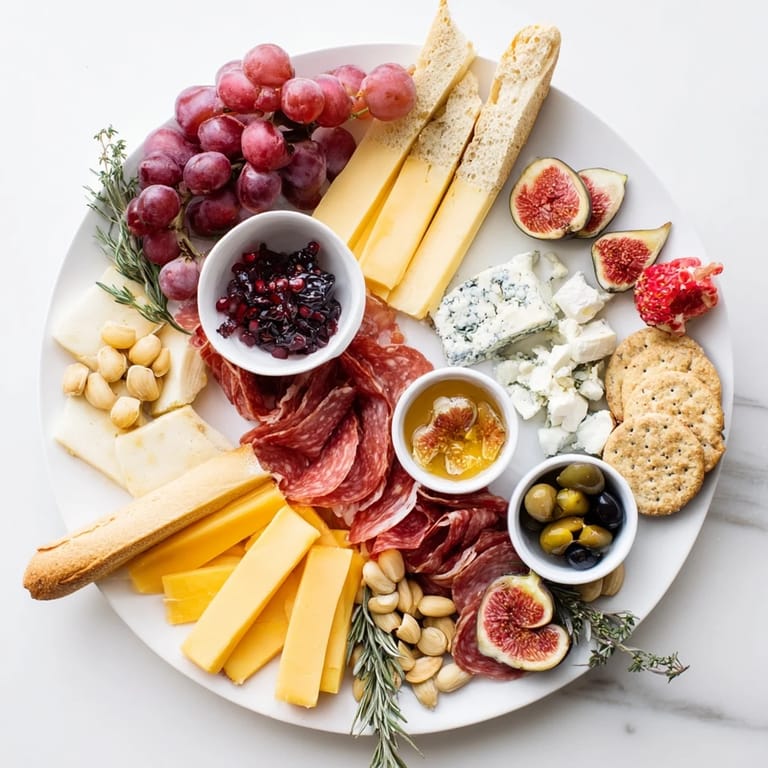
- Marcona Almonds, 1/2 cup: Buttery and rich, they bridge sweet and savory beautifully.
- Olives, 1/2 cup mixed green and black: Pit them beforehand; nothing kills the mood like a guest biting down on a pit.
- Fresh herbs for garnish: Rosemary and thyme add aromatics and visual texture—tuck them between items rather than scattering.
Tired of Takeout? 🥡
Get 10 meals you can make faster than delivery arrives. Seriously.
One email. No spam. Unsubscribe anytime.
Instructions
- Set the Stage:
- Position your wooden board where it can be the main event—near the table's edge or even slightly overhanging for maximum drama. A board that's too centered feels safe; let it command space.
- Layer the Cheeses:
- Start with your largest pieces and let them spill deliberately. The wedge of Brie should hang slightly off one corner, while cheddar sticks lean against it at angles.
- Cascade the Cured Meats:
- Bunch and fold the prosciutto so it creates ruffles—imagine actual stage curtains gathering and folding. Layer soppressata underneath or alongside, letting it bunch naturally rather than lying flat.
- Tuck In the Fruit:
- Grapes go in clusters so they stay put; figs and strawberries nestle into gaps. Let pomegranate arils scatter across surfaces and trail slightly over edges—they're meant to feel a bit wild.
- Fan Your Breads:
- Arrange baguette slices and crackers in overlapping rows, angling them so some naturally extend beyond the board's boundary. This takes seconds but creates visual movement.
- Settle in Your Bowls:
- Place small dishes of jam, honey, olives, and almonds among the ingredients, not in neat rows. Let them nestle into negative space and feel discovered rather than placed.
- Garnish for Drama:
- Tuck fresh herb sprigs between clusters of cheese and fruit, letting them poke upward. A single sprig of rosemary standing tall adds elegance; scattered leaves feel careless in a good way.
- Present Immediately:
- This is your moment—step back, let people see it whole before anyone touches a thing. The first impression is everything.
 Pin It
One of my favorite moments came when a usually reserved guest let out a small laugh of delight at the sight of it, then immediately forgot her manners and dove in. That's the feeling a well-arranged board should create—the sense that the rules are suspended and play is invited.
The Art of Proportion
When I first made this board, I stuffed it with every ingredient in equal measure and it felt chaotic, like I was afraid of white space. I learned that restraint is what creates impact. Choose three colors as your main palette—maybe deep blue cheese, pale brie, and the vibrant reds of berries—and build around them. Everything else becomes supporting texture. One ingredient shouldn't fight for attention; instead, each should know its role in the composition. The board is only crowded; it's never cluttered.
Pairing Flavors That Sing Together
The magic happens when guests start combining things themselves. A piece of sharp cheddar with fig jam and an almond, or brie with a grape and a thyme leaf—these combinations are better when discovered than dictated. I learned early on that part of my job is simply giving them the right pieces to play with. The honey seems optional until someone dips a strawberry in it and their eyes light up. That moment, that discovery, is what makes this different from just putting food on a table.
Drinks and Final Touches
This board was born to be paired with something celebratory—a crisp rosé that cuts through the richness, or sparkling wine that feels festive without pretension. If you want to add even more visual flair, toss in edible flowers between the herbs, or scatter a few pomegranate arils in clusters across different zones so your eye travels through the whole composition.
- Make sure every bowl has a small spoon or cheese knife so guests don't use their fingers in the condiments.
- If you're worried about time, prep all ingredients the morning of and assemble just 15 minutes before guests arrive.
- The real secret is confidence—arrange it boldly and people will assume it took hours.
 Pin It
 There's power in feeding people something that looks like you planned it for days but tastes like you just grabbed your favorites. That's really what this board is.
Recipe Questions & Answers
- → What cheeses work best for this grazing board?
Brie, aged cheddar, and blue cheese provide creamy, sharp, and tangy flavors that balance well when layered on the board.
- → How can I make this suitable for vegetarians?
Simply omit the prosciutto and soppressata or substitute with plant-based alternatives to maintain the rich texture and flavor variety.
- → What fresh fruits complement the savory elements here?
Red grapes, fresh figs, strawberries, and pomegranate seeds add natural sweetness and vibrant colors that contrast beautifully with the cheeses and meats.
- → Any tips for arranging the board to achieve its dramatic effect?
Place cheeses and fruits so some pieces cascade over the board edges, fold and layer charcuterie to mimic flowing curtains, and scatter condiments in small bowls to create visual interest.
- → What pairings work well with this grazing board?
A crisp rosé or sparkling wine offers a refreshing complement, enhancing the range of flavors and textures on the board.