 Pin It
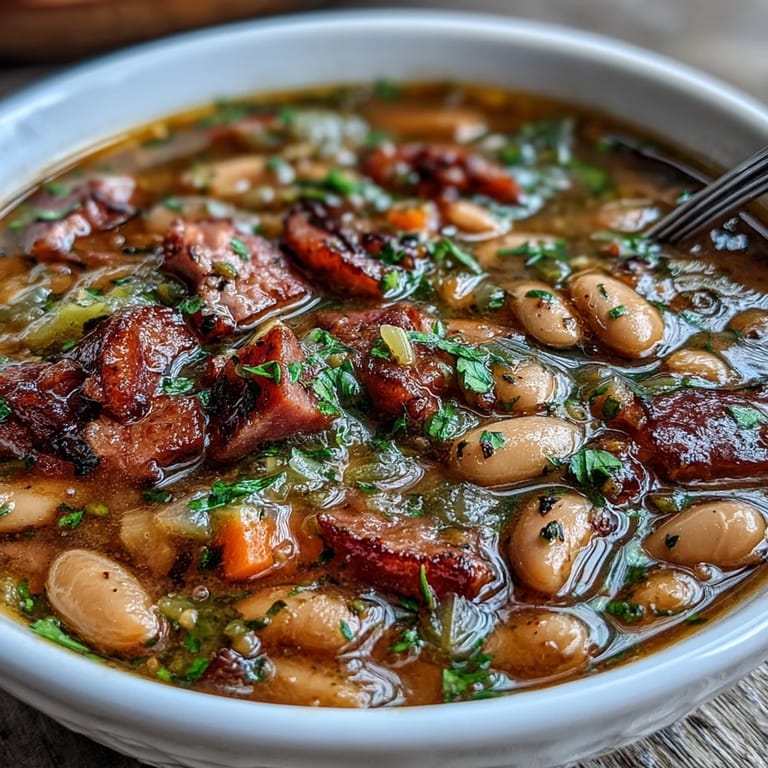
 My grandmother used to simmer ham bone soup on the stove while rain pattered against the kitchen window, and the smell would drift through the entire house like an invitation. Years later, I found myself with a leftover ham bone after Easter dinner, staring at it on the counter and remembering how she never let anything go to waste. That first pot I made from memory tasted exactly like comfort, smoky and deep, with beans so tender they practically dissolved on your tongue. Now it's become my answer to those gray afternoons when the world feels a bit too much and you need something warm to hold.
I made this soup for my neighbor when she came home from the hospital, and watching her face soften with that first spoonful told me everything I needed to know about food and care. She ate three bowls straight, then asked if I could teach her how to make it. Now whenever I cook it, I think of that afternoon in her kitchen, how something as humble as beans and ham bone became a quiet way of saying I'm thinking of you.
Ingredients
- Ham bone with meat attached: This is your treasure—don't skip it or substitute it lightly, as it's what gives the entire soup its savory backbone and depth.
- Dried navy beans: Soak them overnight so they cook evenly; rushed beans turn to mush in some spots and stay hard in others, which ruins the whole texture.
- Onion, carrots, celery: This holy trinity is non-negotiable; they build the flavor foundation that everything else sits on.
- Smoked paprika: It's the secret that makes people pause mid-bite and wonder what you added—use the good stuff, not the dusty tin from the back of your cabinet.
- Garlic, thyme, oregano: These three work together to round out the smoke and savory notes without overpowering the delicate bean flavor.
- Chicken or vegetable broth: Low-sodium is essential because you're building flavor as you go, and salty broth will box you in.
- Olive oil: Just a touch to start the vegetables gently; you don't need much when the ham will eventually render its own fat.
Tired of Takeout? 🥡
Get 10 meals you can make faster than delivery arrives. Seriously.
One email. No spam. Unsubscribe anytime.
Instructions
- Prepare your beans with intention:
- Drain and rinse those soaked beans—this step removes the compounds that cause digestive discomfort and gives you a cleaner-tasting final soup.
- Build your flavor base:
- Heat olive oil and sauté your onion, carrots, and celery until they're soft and slightly golden, about five to six minutes. You'll notice the kitchen starting to smell like home cooking before you've even added the ham.
- Wake up the spices:
- Stir in garlic, smoked paprika, thyme, oregano, and black pepper, then cook for exactly one minute—any longer and the spices can turn bitter. Your nose will tell you when it's right; that's when you smell smoke and herbs dancing together.
- Combine everything and let time do the work:
- Add the ham bone, beans, bay leaf, and broth to the pot, bring it to a boil, then lower the heat to a gentle simmer. This is where patience becomes your main ingredient; let it bubble quietly for an hour and a half to two hours, stirring every so often, until the beans are creamy inside and the broth has turned golden and rich.
- Rescue the meat from the bone:
- Once the beans are tender, fish out the ham bone, let it cool just enough to handle, then pick off any meat clinging to it and return that to the pot. Throw away the bare bone and the bay leaf, which has done its job.
- Fine-tune and serve:
- Taste the soup and adjust salt and pepper as needed—remember, you started with low-sodium broth, so this soup is a blank canvas waiting for your touch. Ladle it into bowls and serve hot, with crusty bread on the side if you have it.
 Pin It
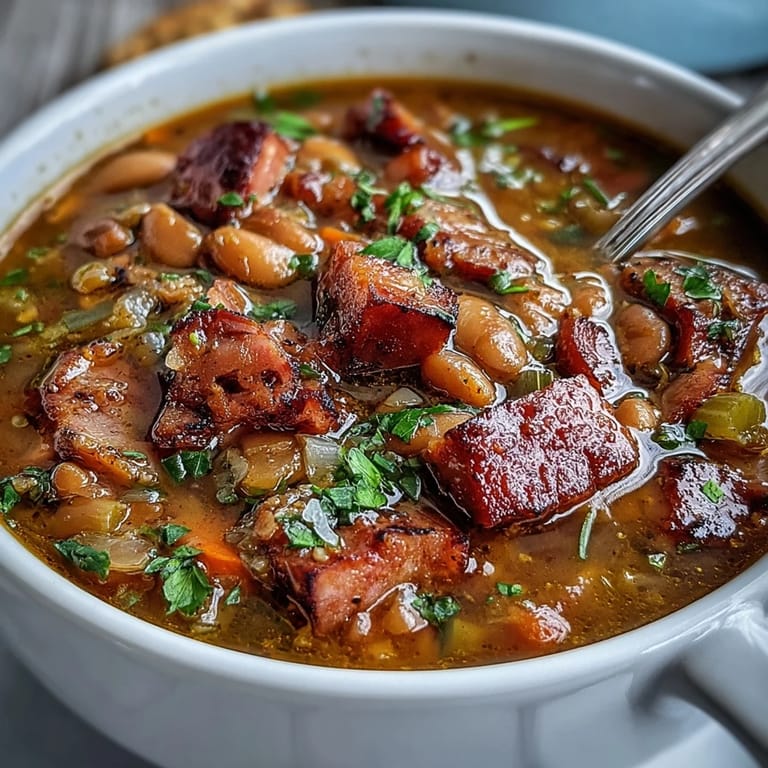
There's a moment, usually around the two-hour mark, when you lift the lid and the steam rises and you realize you've made something that's bigger than a recipe—it's a ritual, a small act of nourishment that connects you to everyone who's ever made soup on a cold day. That's when this dish stops being ingredients and becomes something that feeds more than just hunger.
The Science of Slow Cooking
The longer this soup simmers, the more the collagen in that ham bone breaks down into gelatin, which gives the broth that silky mouthfeel and makes it naturally rich without any cream. Those beans are absorbing all that ham-infused liquid, so by the end they're not just beans anymore—they're flavor vehicles. The spices have had time to marry together, and the acidity has mellowed, creating a soup that tastes like it's been simmering for three days when it's really only been a couple of hours.
Variations That Actually Work
If you want to stretch this soup further, add diced potatoes in the last thirty minutes of cooking—they'll soften up and add body without changing the character of the dish. Some people mash a handful of the cooked beans against the side of the pot to thicken the broth, which gives it a heartier feel. You can also swap the ham bone for a smoked turkey leg if you're trying to avoid pork; the flavor will shift slightly toward smoke and away from richness, but it's equally delicious and still deeply satisfying.
When to Make This Soup
This is the soup you make after a holiday when you've got that leftover ham bone sitting in your fridge and you want to feel resourceful. It's also the soup you make on a Sunday afternoon when you want something simmering while you fold laundry or read a book, filling your home with the smell of something good happening. Winter is the obvious season, but honestly, I've made this on cool spring evenings too, whenever the mood strikes for something grounding.
- Serve it with thick slices of buttered cornbread for a classic pairing that feels like tradition on a plate.
- A crisp salad alongside balances the richness if you want something lighter on the side.
- Leftover soup tastes even better the next day, after the flavors have settled and deepened overnight.
 Pin It
 This soup has become my version of chicken soup for the soul—humble, honest, and somehow always exactly what people need when they need it. Make it, share it, and watch how something as simple as a ham bone and beans becomes the thing people remember about your cooking.
Recipe Questions & Answers
- → What type of beans works best for this soup?
Dried navy beans or great northern beans are ideal, as they soften well and hold their shape during long simmering.
- → Can I use fresh ham meat instead of a ham bone?
Yes, diced cooked ham can be added for extra meatiness, though the bone adds deeper flavor during cooking.
- → How does smoked paprika influence the flavor?
Smoked paprika adds a warm, smoky depth that complements the ham and beans, enhancing the overall richness.
- → Is soaking the beans necessary before cooking?
Soaking the beans overnight helps reduce cooking time and ensures even tenderness throughout the soup.
- → What can I serve alongside this soup?
Crusty bread, cornbread, or a light red wine such as Pinot Noir pair beautifully with this hearty soup.