 Pin It
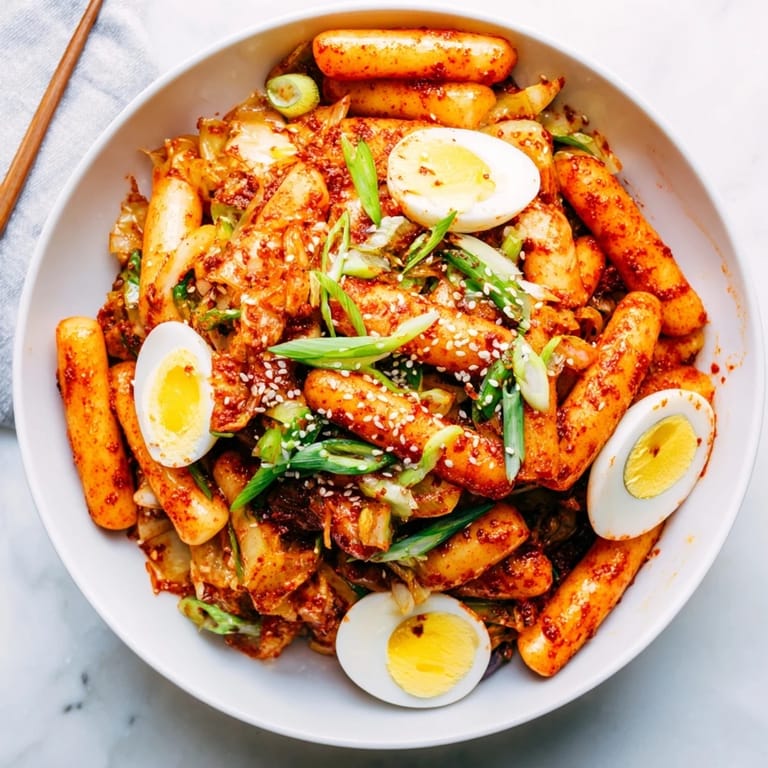
 My tiny apartment kitchen smelled like garlic and chilies the first time I attempted tteokbokki after returning from Seoul. I'd watched street vendors slide those rice cakes around in massive iron pans, their rhythm hypnotic, the sauce thickening into something impossibly glossy. Mine turned out a little too watery that evening, but the flavor transported me right back to those bustling night markets anyway. Now I make this whenever I need comfort that hugs back.
I served this to my friend Sarah during a particularly gray February, watching snow pile up outside while steam curled from our bowls. She took one bite and declared it better than our favorite spot downtown, though honestly she might have just been being kind. The sauce really does coat every single rice cake if you let it thicken properly.
Ingredients
- 500 g Korean rice cakes: Fresh or frozen cylindrical ones work best, and that quick soak in warm water makes all the difference between tender and toothbreakingly hard
- 3 tbsp gochujang: This fermented chili paste brings depth that hot sauce simply cannot replicate, so dont skip it or substitute
- 1 tbsp gochugaru: Adjust this depending on your spice tolerance, but remember the rice cakes really need some heat to cut through their richness
- 2 tbsp soy sauce: Provides that savory foundation and saltiness, though you can use tamari if needed
- 1 tbsp each sugar and honey: The double sweetness approach balances the heat and creates that gorgeous sticky consistency
- 3 cups water with kombu: Making a quick dashi base adds so much umami, even if you skip the anchovies for a vegetarian version
- 2 green onions and sesame seeds: These fresh elements brighten everything up right at the end
Tired of Takeout? 🥡
Get 10 meals you can make faster than delivery arrives. Seriously.
One email. No spam. Unsubscribe anytime.
Instructions
- Prep your rice cakes:
- If they've been sitting in the fridge or came frozen, drop them into warm water for about 10 minutes while you get everything else ready. This tiny step prevents that disappointing rock center.
- Build the broth base:
- Simmer your water with the kelp and anchovies if you're using them, letting it infuse for about 10 minutes before fishing out the solids. The liquid should taste like the ocean, not overpowering.
- Stir in the sauce:
- Whisk in the gochujang, gochugaru, soy sauce, sugar, honey, and garlic until the paste completely dissolves. The broth will turn this beautiful deep red, and your kitchen will start smelling amazing.
- Add the rice cakes and simmer:
- Drop in your rice cakes along with the onion and cabbage, then let everything bubble gently for 10 to 15 minutes. Stir every so often because the sauce thickens quickly and those rice cakes love to cling to the bottom.
- Finish with freshness:
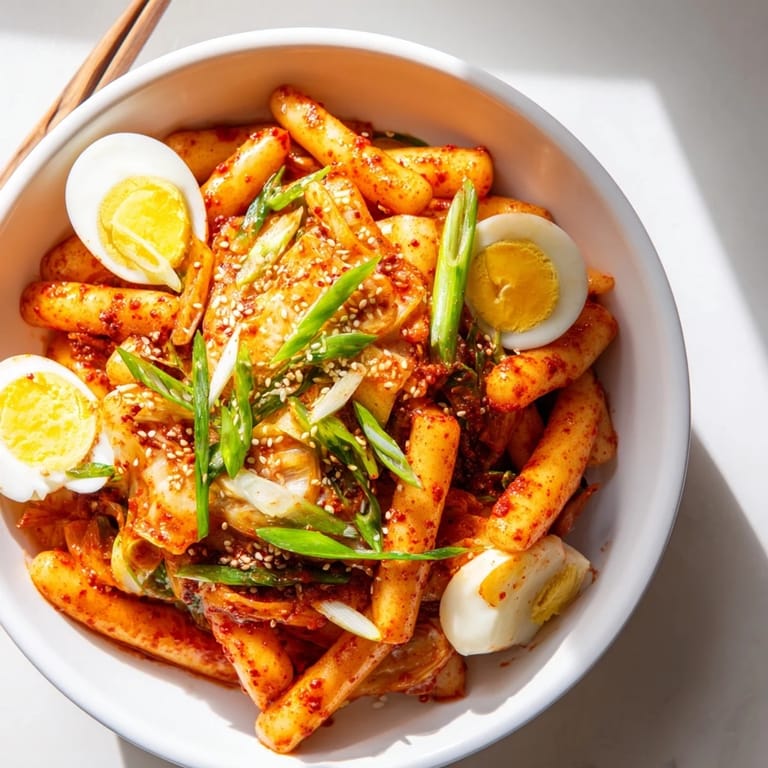
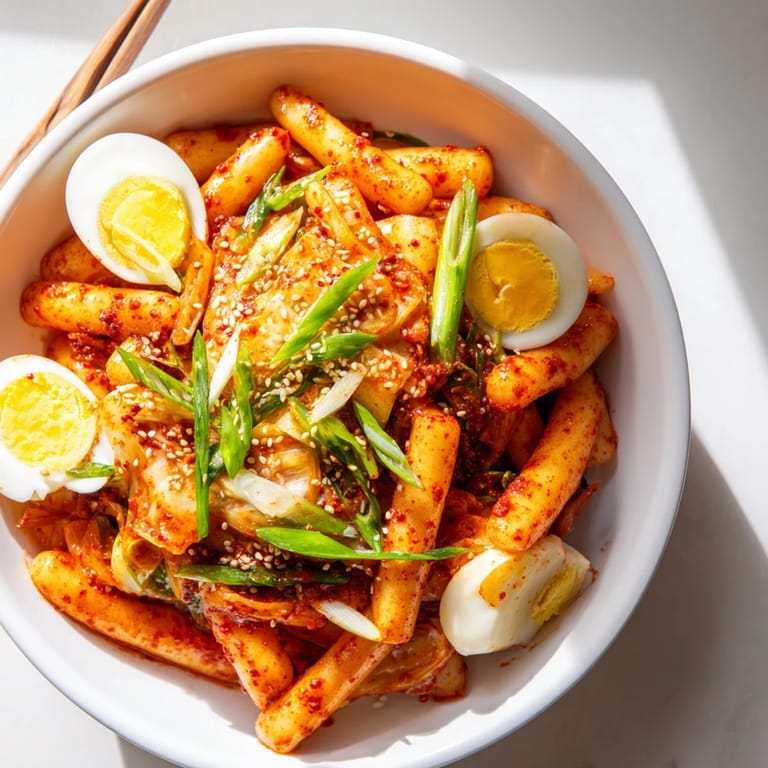
- Toss in the green onions and boiled eggs during the last couple of minutes, just enough to warm them through without overcooking. Sprinkle sesame seeds over everything before serving.
 Pin It
  Pin It
This dish has become my go-to when friends need cheering up or when I'm craving something that feels like a warm embrace. Something about that combination of chewy and spicy just works.
Making It Your Own
Don't be afraid to add fish cakes or dumplings if you want something more substantial. Sometimes I throw in sliced cabbage or whatever greens are wilting in my crisper drawer.
Getting The Consistency Right
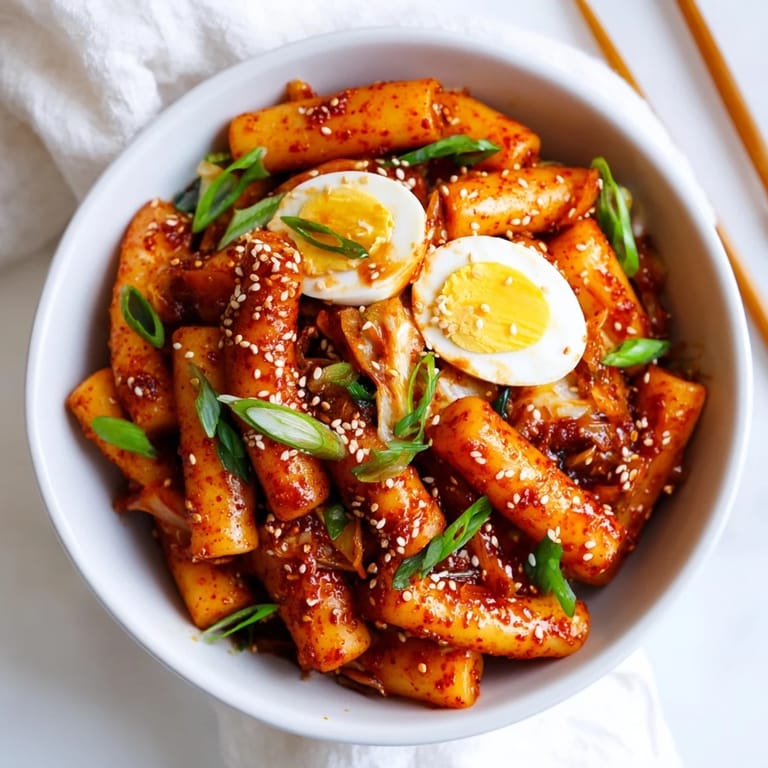
The sauce should coat the back of your spoon and leave a trail when you run your finger through it. If it's too thin, keep simmering. Too thick, splash in a bit more water.
Serving Suggestions
Pickled radish on the side cuts through the richness beautifully. I also love setting out extra gochugaru for anyone who wants to turn up the heat.
- Have extra water nearby in case you need to thin the sauce at the end
- Wooden chopsticks work better than metal ones for stirring
- This dish waits for no one once it hits the table
 Pin It
  Pin It
 Hope this brings some warmth to your table too. Few things beat that perfect balance of sweet, spicy, and chewy on a cold night.
Recipe Questions & Answers
- → What makes tteokbokki sauce authentic?
Authentic tteokbokki sauce relies on gochujang (fermented Korean chili paste) as its foundation, balanced with gochugaru chili flakes for heat depth. The sweetness typically comes from sugar or honey, while soy sauce provides savory umami. Many traditional versions include anchovy-kelp broth for extra richness.
- → How do I know when rice cakes are properly cooked?
Properly cooked rice cakes should be soft and chewy throughout, with no hard centers. They typically take 10-15 minutes of simmering in the sauce. The rice cakes will also plump slightly and absorb some of the sauce, becoming glossy and coated in the spicy glaze.
- → Can I make tteokbokki less spicy?
Absolutely. Reduce the amount of gochugaru (chili flakes) or decrease the gochujang quantity, adding more soy sauce or water to maintain the proper sauce consistency. You can also add extra honey or sugar to balance any remaining heat.
- → What proteins pair well with tteokbokki?
Traditional additions include fish cakes (eomuk) sliced into strips, which simmer alongside the rice cakes. Boiled eggs are also classic. For a heartier version, you might add thin slices of beef or tofu, though purists often prefer the simplicity of just rice cakes in sauce.
- → How should I store and reheat leftover tteokbokki?
Store in an airtight container in the refrigerator for up to 2 days. The sauce will thicken significantly as it cools. Reheat gently with a splash of water, stirring frequently to prevent sticking and restore the creamy sauce consistency. The rice cakes may become slightly softer upon reheating.
- → What if my rice cakes are frozen or very hard?
Soak refrigerated rice cakes in warm water for 10 minutes before cooking. For frozen rice cakes, thaw overnight in the refrigerator, then soak briefly. This ensures even cooking and prevents the exterior from becoming mushy while the center remains hard.