 Pin It
 The smell of roasting chickpeas filled my apartment on a Tuesday night when I had nothing but canned goods and wilted vegetables in the fridge. I tossed them with spices I barely measured, hoping they'd crisp up the way I'd seen in a friend's kitchen months before. When they came out golden and crunchy, I built a bowl around them with whatever I could chop, and suddenly dinner felt intentional. That scrappy meal turned into something I crave constantly now. Sometimes the best recipes start with almost nothing at all.
I started making these bowls for my roommate during finals week, when we were both too tired to think but needed real food. She'd come home to find everything chopped and waiting, and we'd sit on the couch assembling our bowls in silence, too hungry to talk. The peanut sauce became our shared obsession. We'd argue over who got the last drizzle, laughing through mouthfuls of crunchy chickpeas and cool cucumber. Those bowls got us through that semester, and now every time I make them, I think of her.
Ingredients
- Chickpeas: The star of the bowl, they roast up crispy on the outside and stay creamy inside if you dry them really well before tossing with oil and spices.
- Olive oil: Just enough to help the chickpeas crisp without making them greasy, and it carries the smoky paprika beautifully.
- Smoked paprika: This is what makes the chickpeas taste like they came from somewhere special, adding a subtle depth that regular paprika just can't match.
- Ground cumin: Earthy and warm, it balances the smokiness and makes the whole bowl feel comforting.
- Garlic powder: I prefer powder here because fresh garlic can burn in the oven, and this gives an even, mellow flavor.
- Brown rice or quinoa: The base that soaks up all the peanut sauce, I usually make extra because leftovers are gold.
- Red cabbage: Adds crunch and a pop of color that makes the bowl look as good as it tastes.
- Carrots: Julienned thin, they're sweet and crisp, a perfect contrast to the rich peanut sauce.
- Cucumber: Cool and refreshing, it cuts through the richness and adds a hydrating crunch.
- Cherry tomatoes: Halved so they burst with juice in every bite, they bring a little acidity that brightens everything.
- Edamame: Extra protein and a slight chew that makes the bowl even more satisfying.
- Cilantro: Fresh and bright, it wakes up the whole dish, though I know some people can't stand it.
- Creamy peanut butter: The soul of the sauce, it needs to be the good stuff, not the separated natural kind that won't emulsify.
- Soy sauce: Adds salty umami depth that makes the peanut sauce craveable, use tamari if you need it gluten free.
- Maple syrup: Just a touch of sweetness to balance the salty and spicy, honey works too if that's what you have.
- Rice vinegar: Brings acidity and brightness, cutting through the richness of the peanut butter perfectly.
- Sriracha: Optional but highly recommended, it gives the sauce a gentle kick that keeps things interesting.
- Garlic clove: Minced fine so it blends smoothly into the sauce and adds a sharp, fresh bite.
- Roasted peanuts: Chopped and scattered on top for extra crunch and a reminder of what makes the sauce so good.
- Lime wedges: A squeeze at the end is non negotiable, it ties everything together with a burst of brightness.
- Sesame seeds: Optional but they add a nutty finish and make the bowl look polished.
Tired of Takeout? 🥡
Get 10 meals you can make faster than delivery arrives. Seriously.
One email. No spam. Unsubscribe anytime.
Instructions
- Roast the Chickpeas:
- Preheat your oven to 425°F and line a baking sheet with parchment so nothing sticks. Toss the drained, rinsed chickpeas with olive oil and all the spices until they're evenly coated, then spread them out in a single layer and roast for 20 to 25 minutes, shaking the pan halfway through so they crisp up evenly and turn golden.
- Make the Peanut Sauce:
- While the chickpeas are in the oven, whisk together peanut butter, soy sauce, maple syrup, rice vinegar, sriracha, and minced garlic in a bowl, adding warm water a tablespoon at a time until it's smooth and drizzles easily. Taste it and adjust the heat or sweetness to your liking, this is your sauce so make it yours.
- Prep the Vegetables and Grains:
- Cook your rice or quinoa if you haven't already, following the package directions, and while that's going, slice the cabbage, julienne the carrots, chop the cucumber, halve the tomatoes, and pick the cilantro. Having everything ready makes assembly feel effortless and keeps the vegetables crisp.
- Assemble the Bowls:
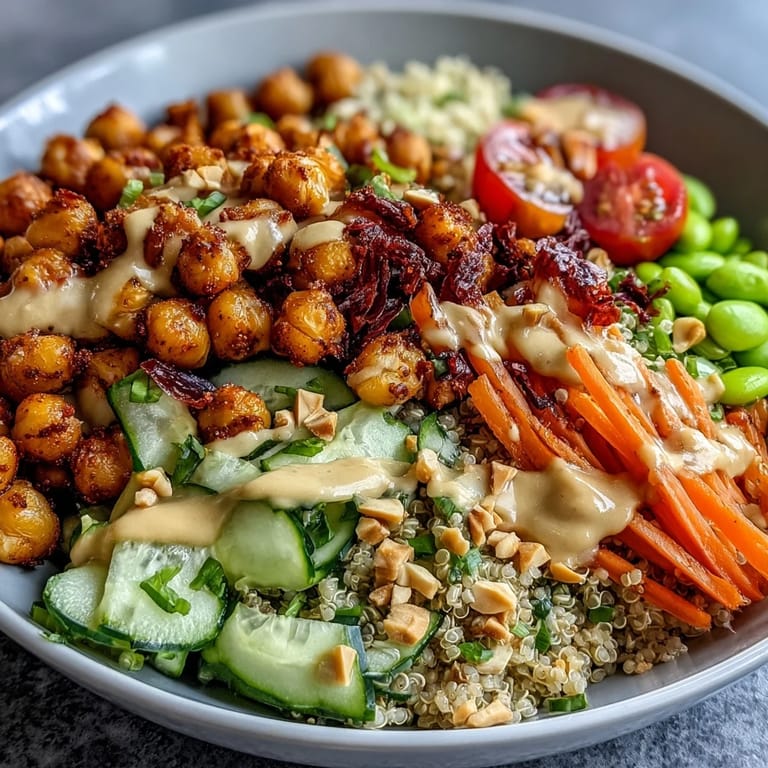
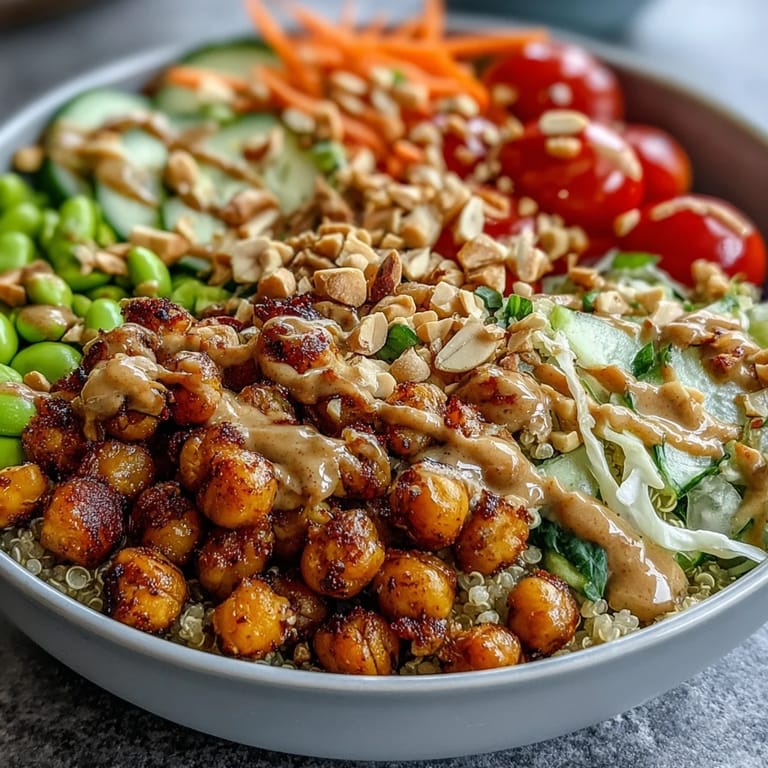
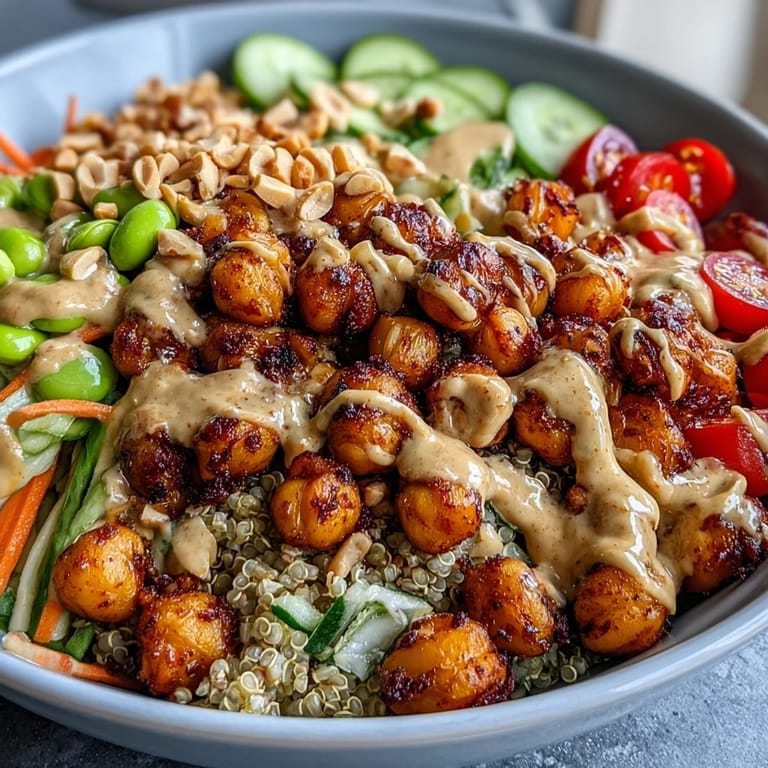
- Divide the cooked grains among four bowls, then arrange the roasted chickpeas and all the fresh vegetables on top in sections so it looks beautiful and colorful. Drizzle generously with the peanut sauce, then scatter chopped peanuts, sesame seeds, and cilantro over everything, finishing with a lime wedge on the side.
 Pin It
I brought these bowls to a potluck once, worried they'd seem too simple next to everyone's elaborate dishes. But people kept coming back for seconds, asking for the recipe, and one friend admitted she'd been eating sad desk salads for weeks and forgot food could feel this vibrant. Watching her pile her bowl high and grin between bites reminded me that sometimes the best thing you can offer is something fresh, colorful, and unapologetically satisfying. That night, my simple bowl felt like a small gift I hadn't planned to give.
Storing and Reheating
I always make extra components and store them separately so they stay fresh and I can mix and match throughout the week. The roasted chickpeas keep in an airtight container at room temperature for up to three days, though they lose some crispness, and a quick reheat in a hot skillet brings them back to life. The peanut sauce stays perfect in the fridge for a week, and I thin it with a splash of water if it thickens up too much. Keep the fresh vegetables and cooked grains in separate containers, then assemble bowls on demand so nothing gets soggy. Cold or warm, these bowls hold up beautifully and somehow taste even better the next day when the flavors have mingled.
Swaps and Variations
This bowl is endlessly adaptable, which is why it never gets boring in my kitchen. Swap the brown rice for cauliflower rice if you want something lighter, or use farro or couscous if that's what you're craving. Add handfuls of baby spinach, kale, or arugula for extra greens, or toss in roasted sweet potato cubes if you want something heartier. The peanut sauce works just as well with almond or cashew butter if you have a peanut allergy, and you can dial the spice up or down depending on your mood. I've even made this with leftover rotisserie chicken on top when I wanted extra protein, and it was just as good.
Serving Suggestions
These bowls are complete on their own, but there are little touches that make them feel even more special when you're in the mood to go the extra mile. A cold glass of iced green tea or a crisp Riesling pairs beautifully with the rich peanut sauce and fresh vegetables. Sometimes I serve them with extra lime wedges and a small dish of chili oil on the side for people who want more heat. If you're feeding a crowd, set up a DIY bowl bar with all the components laid out so everyone can build their own, it turns dinner into an event.
- Serve with steamed dumplings or spring rolls on the side for a full feast.
- Add a drizzle of extra sesame oil or chili crunch for more depth and texture.
- Pair with a light cucumber salad dressed in rice vinegar for a refreshing contrast.
 Pin It
 This bowl has become my answer to almost everything, the nights I'm too tired to think, the afternoons I need to feel nourished, the moments I want something that tastes like care without requiring much effort. I hope it becomes that for you too.
Recipe Questions & Answers
- → Can I make this bowl ahead of time?
Yes, you can prepare components in advance. Roast chickpeas and cook grains up to 3 days ahead. Store vegetables separately and assemble just before serving to maintain crispness.
- → What can I substitute for peanut butter?
Almond butter, cashew butter, or sunflower seed butter work well as alternatives. Tahini also creates a delicious creamy sauce with a slightly different flavor profile.
- → Is this bowl gluten-free?
Simply replace soy sauce with tamari to make this completely gluten-free. All other ingredients naturally fit a gluten-free lifestyle.
- → How can I add more protein?
Include grilled tofu, tempeh, or baked chicken. You can also increase edamame portion or add hemp seeds and nutritional yeast to the grain base.
- → Can the sauce be made spicy?
Absolutely. Increase sriracha amount or add crushed red pepper flakes. Fresh minced jalapeño or a splash of hot sauce also works beautifully in the peanut sauce.
- → What other grains work well?
Farro, bulgur, millet, or cauliflower rice make excellent bases. Each offers unique textures while absorbing the flavorful peanut sauce wonderfully.