 Pin It
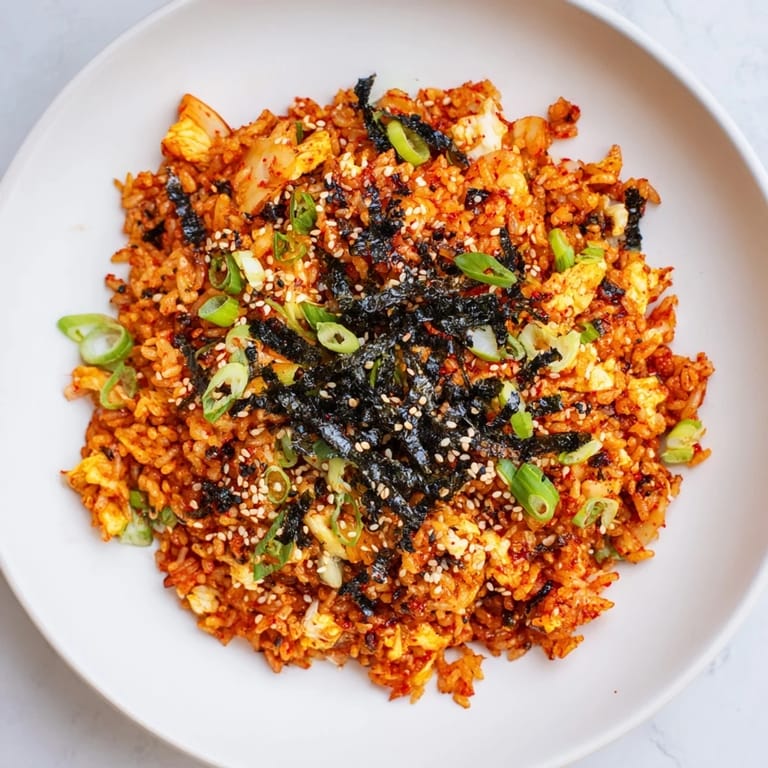
 My tiny apartment kitchen smelled like fermenting cabbage for weeks after I first discovered kimchi fried rice during college. My Korean roommate had left some jarred kimchi in the fridge, and I found myself staring at leftover takeout rice one midnight, wondering what would happen if I threw them together in a pan. That spontaneous experiment woke up my entire palate in ways I didn't know were possible, turning plain leftovers into something that felt alive and vibrant on my tongue.
Last winter, my sister came over during a particularly brutal cold spell, complaining that everything she ate tasted like cardboard. I made this fried rice, watching her eyes widen at that first steamy spoonful. She sat at my counter, curled around her bowl, and asked me to teach her the recipe right then and there because she needed something that actually tasted like something in her life.
Ingredients
- 2 cups cold cooked white rice: Day-old rice grains separate beautifully instead of turning into mush
- 1 cup napa cabbage kimchi: The funkier and more fermented, the deeper your flavor will be
- 2 large eggs: They add richness and help bind everything together
- 1/2 small onion: Finely diced so it melts into the rice
- 2 green onions: Use white parts for cooking, green parts for fresh garnish
- 2 tbsp gochujang: Korean chili paste brings sweet heat and umami depth
- 1 tbsp soy sauce: Adds saltiness and that fermented soy note
- 1 tsp toasted sesame oil: Finish with this for nutty aroma
- 1 tbsp vegetable oil: For high-heat frying
Tired of Takeout? 🥡
Get 10 meals you can make faster than delivery arrives. Seriously.
One email. No spam. Unsubscribe anytime.
Instructions
- Build your flavor base:
- Heat vegetable oil in a large skillet or wok over medium-high heat, then add onion, white parts of green onion, and carrot. Sauté for 2 to 3 minutes until softened and fragrant.
- Wake up the kimchi:
- Add chopped kimchi and stir-fry for 2 to 3 minutes until it's fragrant and starting to caramelize at the edges.
- Create the sauce:
- Stir in gochujang, soy sauce, and sugar if using. Mix everything thoroughly until the kimchi is evenly coated.
- Add the eggs:
- Push the mixture to one side of the pan, crack eggs into the empty space, and scramble until just set.
- Bring it together:
- Add cold rice, breaking up any clumps with your spatula. Combine everything thoroughly, then pour in kimchi juice.
- Finish strong:
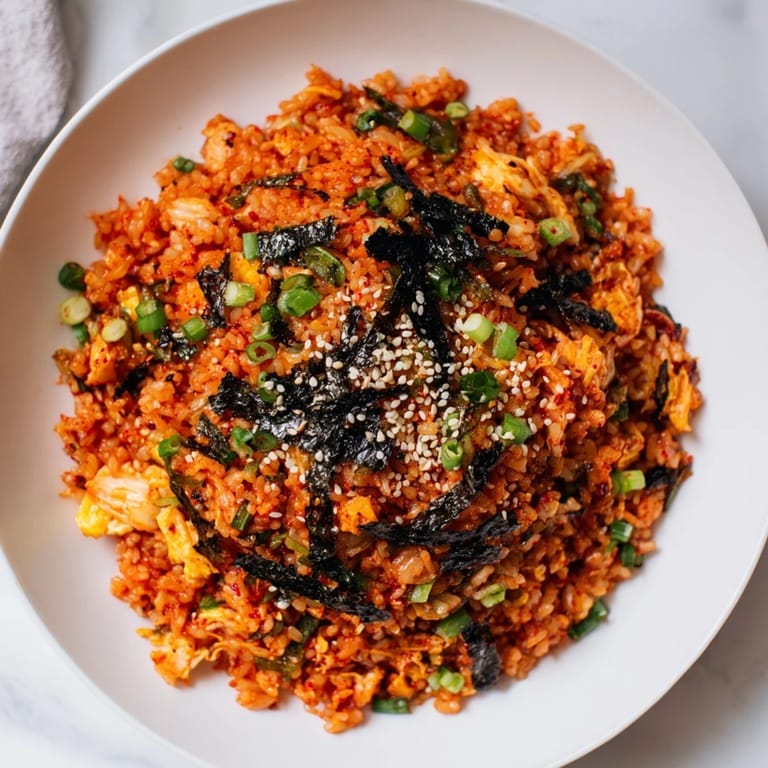
- Stir-fry for 3 to 4 minutes until rice is heated through and evenly coated. Drizzle with sesame oil and fold in green parts of green onion.
 Pin It
  Pin It
This recipe became my go-to for friends recovering from the flu or heartbreak or just a terrible week at work. Something about that combination of hot rice, tangy spice, and comfort feels like a hug in a bowl.
Getting The Rice Right
I learned through plenty of disappointing batches that rice moisture makes or breaks this dish. Spread your cooked rice on a baking sheet and refrigerate it uncovered for several hours or overnight. The grains dry out just enough to stay separate and get those crispy edges everyone fights over.
Building Your Kimchi Stash
Keep an eye out for kimchi that's been fermenting longer at Asian markets. Those jars labeled 'aged' or sitting near the back of the shelf have developed complexity that newer kimchi can't match. The funkier it smells, the more depth your finished dish will have.
Making It Your Own
Once you master the basic technique, this recipe becomes a canvas for whatever you have on hand. I've thrown in frozen peas, corn, diced bell peppers, even shredded Brussels sprouts when that's what my fridge offered. The kimchi carries the show.
- Fry a sunny-side up egg to place on top instead of scrambling it into the rice
- Crisp up some diced Spam or bacon if you want extra smoky richness
- Keep extra kimchi juice handy in case your rice needs more moisture while cooking
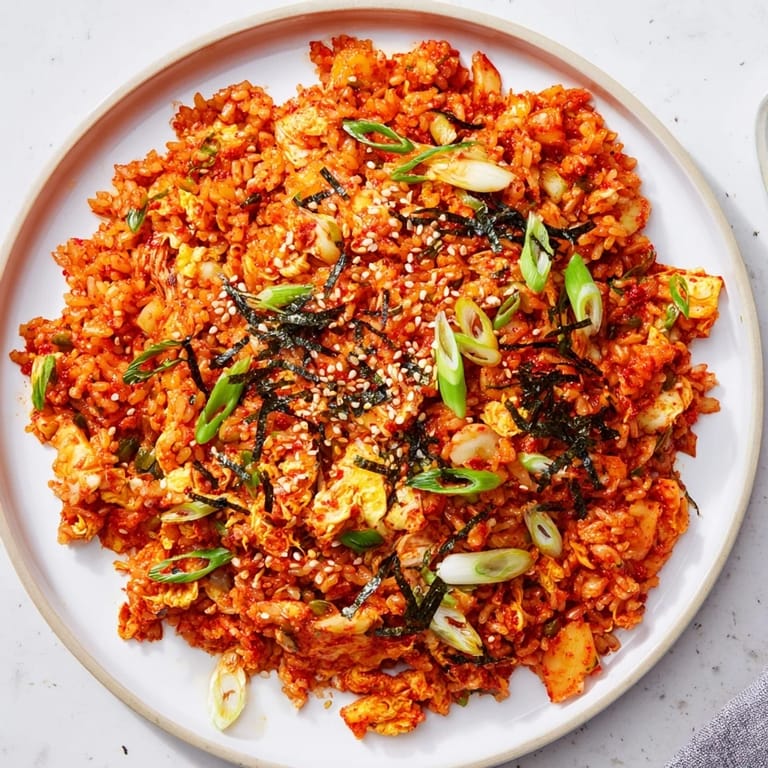 Pin It
 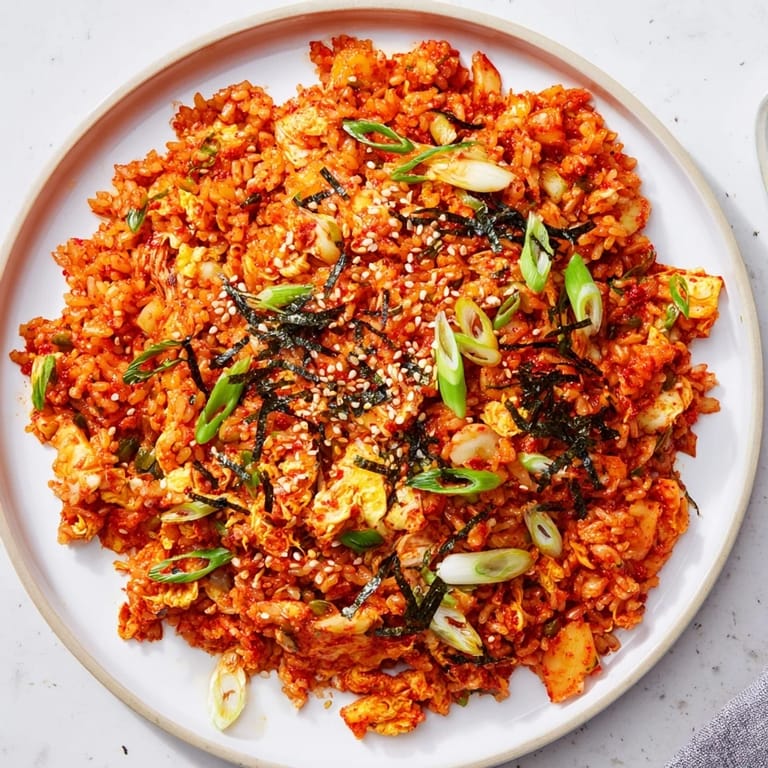 Pin It
 Gather your friends around the stove and let everyone customize their own bowl with extra kimchi, sesame seeds, or maybe even a soft runny egg on top.
Recipe Questions & Answers
- → Can I use freshly cooked rice instead of day-old?
Freshly cooked rice tends to become mushy when fried. Day-old, refrigerated rice has dried out slightly, which helps separate the grains and achieve the proper texture. If you must use fresh rice, spread it on a baking sheet and refrigerate for 30-60 minutes to dry before cooking.
- → How can I make this dish vegan?
Replace the eggs with firm tofu cubes or simply omit them. Ensure your kimchi is vegan-friendly by checking labels for fish sauce or shrimp paste. Most gochujang brands are naturally vegan, but verify the ingredients list to be certain.
- → What can I substitute for gochujang?
Mix red pepper flakes with a small amount of miso paste and a touch of sugar to approximate gochujang's flavor. Sriracha adds heat but lacks the fermented depth. For the closest match, visit an Asian market or order authentic gochujang online.
- → How spicy is this dish?
Two tablespoons of gochujang provides a moderate heat level—warming rather than overwhelming. Reduce to one tablespoon for milder flavor, or increase to three tablespoons for more intense spice. Always taste as you go, since kimchi and gochujang brands vary in heat.
- → Can I freeze kimchi fried rice?
Yes, this freezes well for up to three months. Cool completely, then portion into airtight containers or freezer bags. Thaw overnight in the refrigerator before reheating in a skillet or microwave. The texture may soften slightly but remains enjoyable.
- → What protein options work best?
Cooked pork belly adds richness, while diced Spam provides convenience and salty depth. Firm tofu works well for vegetarians, absorbing the savory sauce. Shredded chicken, beef, or even edamame can substitute based on preference and dietary needs.