 Pin It
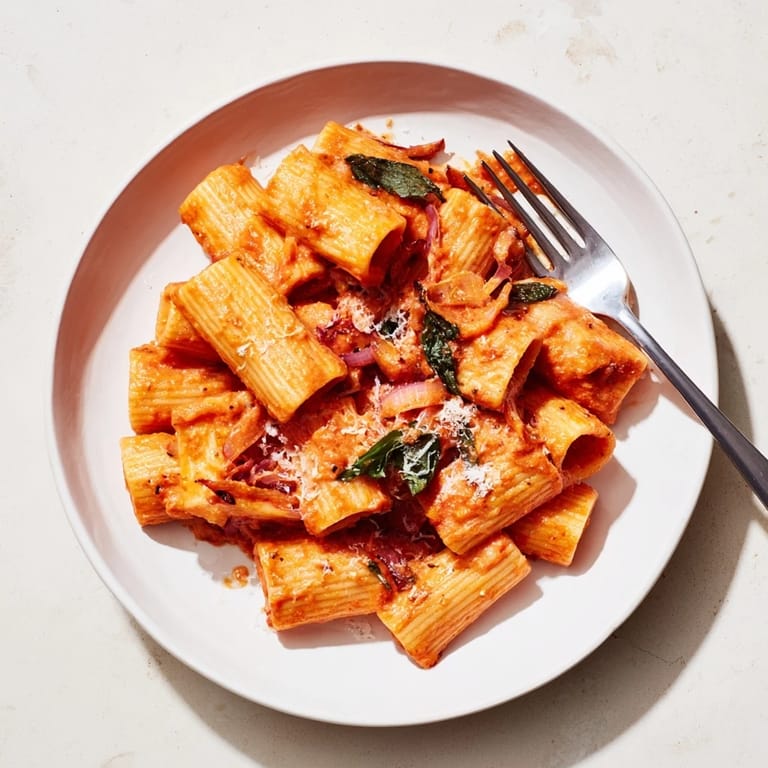
 My daughter came home from college one Friday evening craving something spicy but comforting, and I threw together this rigatoni with what I had in the pantry. The kitchen filled with the smell of garlic and red pepper flakes, and she stood by the stove, stealing bites straight from the pan. By the time we sat down, half of it was already gone. It's been our go-to ever since for nights when we want something that feels indulgent without the fuss.
I once made this for a small dinner party, doubling the batch and worrying it wouldn't be enough. Everyone went quiet after the first bite, then someone asked if I'd opened a secret Italian restaurant in my kitchen. We ended up with plenty of leftovers, which I reheated the next day with a splash of pasta water. It tasted even better, the flavors having melded overnight into something almost velvety.
Ingredients
- Rigatoni pasta (400 g): The wide tubes and ridges grab onto the sauce beautifully, and they hold up well without getting mushy if you cook them just to al dente.
- Olive oil (2 tbsp): A good quality olive oil adds a fruity base that balances the acidity of the tomatoes and helps bloom the garlic.
- Yellow onion (1 small, finely chopped): Finely chopping it helps it melt into the sauce, adding sweetness without chunky bits that distract from the creamy texture.
- Garlic (3 cloves, minced): Fresh garlic is essential here, it gets fragrant quickly and infuses the oil with a warmth that dried garlic just can't match.
- Crushed red pepper flakes (1 tsp): Start with less if you're cautious, you can always add more, but you can't take it back once the heat builds.
- Tomato paste (2 tbsp): Cooking it for a couple of minutes caramelizes the sugars and deepens the flavor, turning it from tangy to rich.
- Canned crushed tomatoes (400 g): I prefer crushed over diced because they break down into a smoother sauce that coats the pasta evenly.
- Heavy cream (120 ml): This is what transforms the sauce from bright and acidic to luxurious and silky, tempering the heat just enough.
- Parmesan cheese (30 g, grated): Freshly grated melts into the sauce and adds a nutty, salty depth that pre-grated stuff never quite delivers.
- Fresh basil leaves: Tearing them at the last second keeps their flavor bright and adds a pop of green that makes the dish look as good as it tastes.
Tired of Takeout? 🥡
Get 10 meals you can make faster than delivery arrives. Seriously.
One email. No spam. Unsubscribe anytime.
Instructions
- Boil the pasta:
- Bring a large pot of salted water to a rolling boil and cook the rigatoni until al dente, following the package timing. Before draining, scoop out half a cup of the starchy pasta water, it's your secret weapon for adjusting the sauce later.
- Sauté the aromatics:
- Heat the olive oil in a large skillet over medium heat, then add the chopped onion and cook until it turns soft and translucent, about three to four minutes. Stir in the garlic and red pepper flakes, letting them sizzle for a minute until the kitchen smells amazing.
- Build the tomato base:
- Add the tomato paste and stir it around for two minutes, letting it darken slightly and lose its raw edge. Pour in the crushed tomatoes, then let the sauce simmer gently for eight to ten minutes, stirring now and then until it thickens.
- Make it creamy:
- Lower the heat and stir in the heavy cream and Parmesan, watching the sauce turn from bright red to a soft coral. Season with salt and pepper, then let it simmer for another two to three minutes until everything melds together.
- Combine and serve:
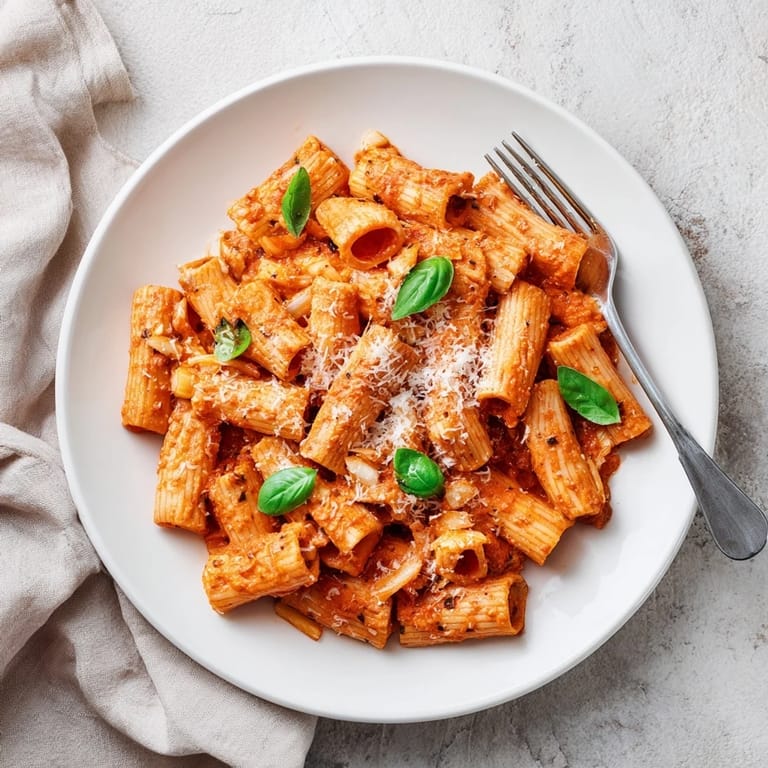
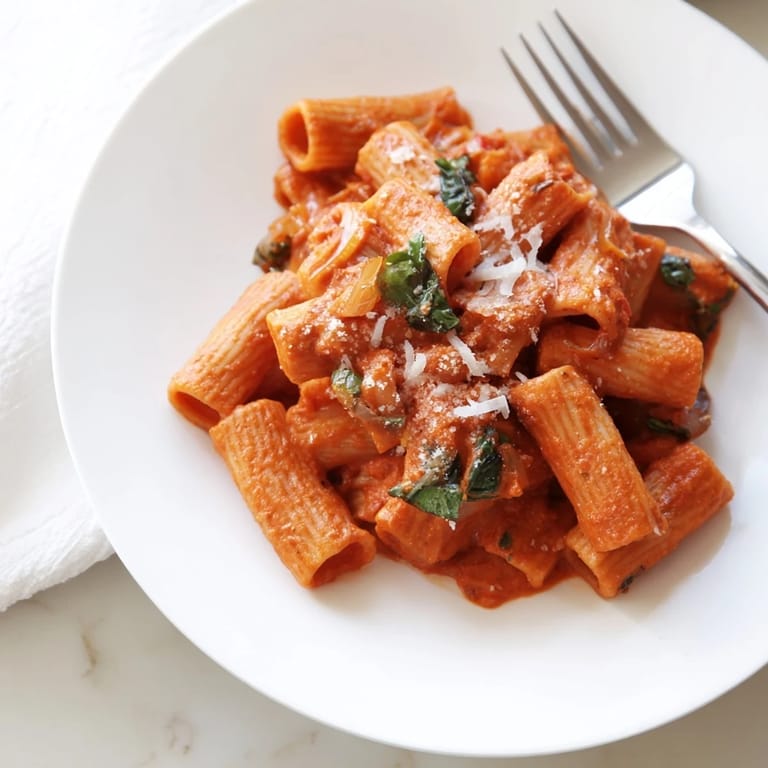
- Toss the drained rigatoni into the sauce, stirring until every piece is coated. If it looks too thick, add a splash of that reserved pasta water and stir until it reaches a silky, clingy consistency, then serve hot with fresh basil and extra Parmesan on top.
 Pin It
One winter evening, I made this after a long day and ate it straight from the skillet while standing at the counter. The heat from the pepper flakes warmed me from the inside out, and I realized that sometimes the best meals are the ones you don't overthink. It's become my comfort dish when I need something that feels like a hug but has a little kick to keep things interesting.
How to Adjust the Heat
The first time I made this, I added a full tablespoon of red pepper flakes thinking more was better, and my eyes watered with every bite. Now I start with half a teaspoon, taste the sauce, and add more gradually. If you accidentally go overboard, stirring in an extra splash of cream or a pinch of sugar can tame the fire without losing the flavor. Everyone's heat tolerance is different, so make it yours.
Making It Ahead
I've made the sauce a day in advance and stored it in the fridge, which actually improves the flavor as everything has time to settle. When you're ready to serve, just reheat it gently on the stove, cook fresh pasta, and toss them together with a bit of pasta water. Leftover rigatoni reheats surprisingly well in a skillet with a tablespoon of water, bringing back that creamy texture without drying out.
Serving Suggestions
This pasta is rich enough to stand on its own, but I like to serve it with a simple arugula salad dressed in lemon and olive oil to cut through the creaminess. A crusty baguette for soaking up extra sauce never hurts, and a chilled glass of Pinot Grigio balances the spice beautifully. If you want to make it a heartier meal, sautéing some Italian sausage or pancetta with the onions adds a savory, meaty layer that my husband requests every time.
- Pair with a crisp green salad to balance the richness.
- Serve with garlic bread for soaking up every bit of sauce.
- Top with extra red pepper flakes if you like it fiery.
 Pin It
 This spicy rigatoni has earned its spot in my weekly rotation, and I hope it finds a place in yours too. It's proof that a handful of pantry staples and a little heat can turn an ordinary evening into something worth savoring.
Recipe Questions & Answers
- → Can I adjust the spice level?
Absolutely. The red pepper flakes determine the heat level. Start with 1 teaspoon and add more gradually to your preference, or reduce to ½ teaspoon for milder results.
- → What pasta shapes work as substitutes?
Penne and ziti are excellent alternatives to rigatoni. Any medium-sized tubular pasta will hold the creamy sauce well. Avoid thin pastas like spaghetti that don't capture the sauce effectively.
- → How do I make this non-vegetarian?
Dice pancetta or Italian sausage and sauté with the onions at the beginning. Cook until crispy before adding garlic. This adds depth and richness to the dish without altering the cooking method.
- → Why should I reserve pasta water?
Pasta water contains starch that helps emulsify the sauce and creates a silkier consistency. It allows you to adjust the sauce thickness perfectly when combining with the cooked pasta.
- → What wine pairs well with this dish?
A crisp white wine like Pinot Grigio complements the creamy tomato sauce beautifully. The acidity cuts through the richness while the minerality balances the spice notes.
- → Can I prepare the sauce ahead?
Yes, prepare the sauce through step 5 and refrigerate for up to 24 hours. Reheat gently on low heat, then add the cream and cheese just before serving to maintain the creamy texture.