 Pin It
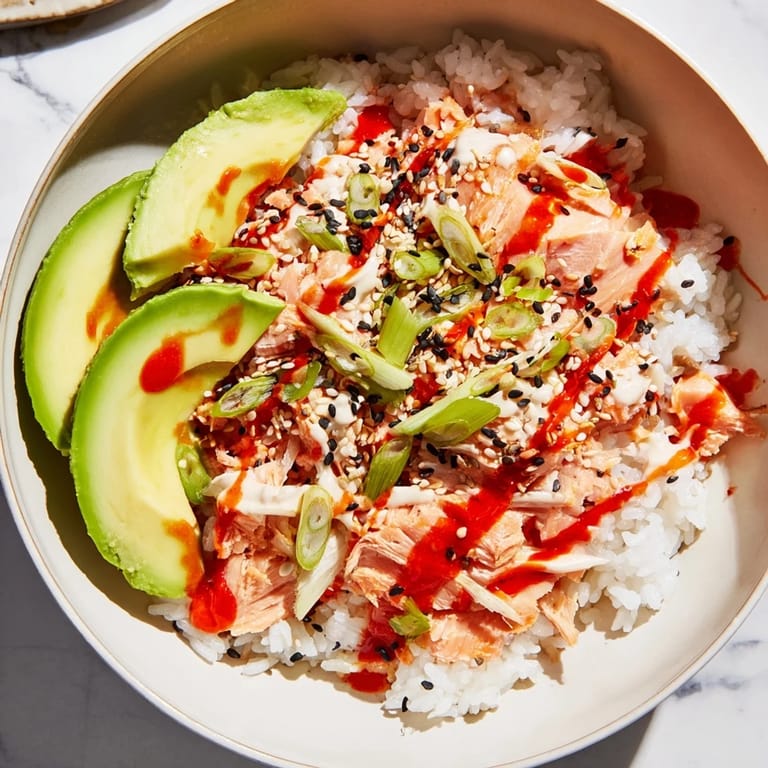
 I stumbled onto this bowl while scrolling through my phone at midnight, procrastinating on actual adulting, and thought it looked way too simple to be real. The next evening, with leftover salmon from dinner and rice taking up half my fridge, I figured I'd give it a shot—and honestly, the moment I mixed that warm rice with flaked salmon and hit it with sesame oil, I got it. There's something about how the heat pulls everything together in under two minutes that makes you feel like you've cracked some secret code.
I made this for my roommate on a random Tuesday when she'd had a genuinely terrible day, and watching her face when she took that first bite—mixing the creamy mayo with the salty soy and flaky fish—reminded me that the best meals aren't the complicated ones, they're the ones that actually taste good and don't require you to stand at the stove for hours. She asked for the recipe before she'd even finished eating.
Ingredients
- Cooked salmon fillet (about 170 g / 6 oz): This is your protein anchor—I learned the hard way that room temperature salmon loses its appeal fast, so always work with either warm or well-chilled pieces.
- Cooked white rice, 2 cups (preferably leftover and chilled): Cold leftover rice actually works better than fresh because the grains stay separate; if your rice is fresh, spread it on a plate to cool first.
- Soy sauce, 1 tablespoon: This is where the umami lives, the thing that makes you keep eating despite being full.
- Sesame oil, 1 teaspoon: Use the fragrant kind, not the cooking oil—a little goes an enormous way and transforms the whole bowl.
- Japanese mayonnaise (like Kewpie), 1 tablespoon: The egg yolk ratio is higher than American mayo, giving it this silky richness that actually makes sense when mixed with warm rice.
- Sriracha or chili sauce, 1 teaspoon (optional): This is your heat adjuster; I use it on nights when I need something to shake me awake.
- Avocado, 1 (sliced): The cooling element that keeps each bite from feeling one-note.
- Roasted seaweed (nori), 1 sheet (cut into squares): Use this as your edible wrapper for scooping—it adds a mineral, oceanic note that ties everything together.
- Toasted sesame seeds, 1 teaspoon: Toast them yourself if you can; the difference between pre-toasted and fresh-toasted is the difference between okay and crave-it-again.
- Spring onions, 2 (thinly sliced): Freshness on top, sharp enough to cut through the richness.
- Pickled ginger (optional): A palate cleanser that works harder than it looks, especially if you're eating multiple bowls.
- Lemon or lime wedges (optional): Keep these on the side; sometimes you want to squeeze brightness in, sometimes you don't.
Tired of Takeout? 🥡
Get 10 meals you can make faster than delivery arrives. Seriously.
One email. No spam. Unsubscribe anytime.
Instructions
- Flake the salmon:
- Place your salmon in a microwave-safe bowl and use a fork to break it into pieces—don't overthink this, you want it in small, varied sizes so it distributes evenly through the rice. The fork should move through it easily; if it's tough or stringy, it might've been overcooked to begin with.
- Layer the rice:
- Pile the cooked rice right on top of your salmon without mixing yet. If it's leftover rice that's been in the fridge, sprinkle just a tiny bit of water over it to help it steam.
- Warm it together:
- Cover the bowl (microwave-safe plate or plastic wrap both work) and microwave on high for 1–2 minutes until everything's heated through. You're not cooking anything here, just bringing it up to that temperature where everything wants to combine.
- Build the sauce:
- Pour the soy sauce and sesame oil directly into the warm bowl and mix thoroughly—you want the oil to coat every grain and the salt to distribute evenly. This is where the magic happens, when the warmth activates those flavors.
- Add richness:
- Drizzle the mayo over the top and add Sriracha if you want heat. Mix it all together—the creaminess should coat everything without making it feel heavy.
- Layer your toppings:
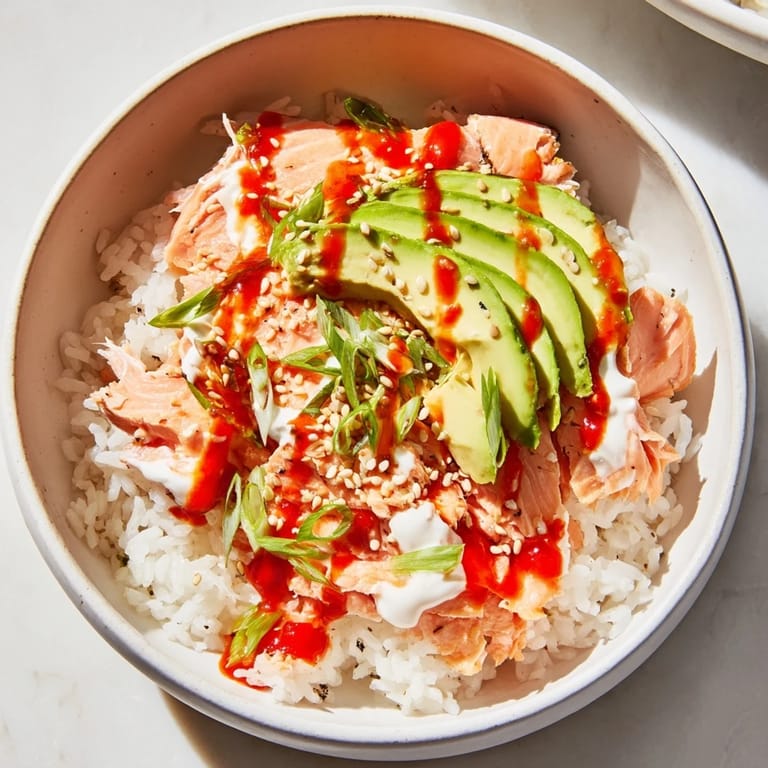
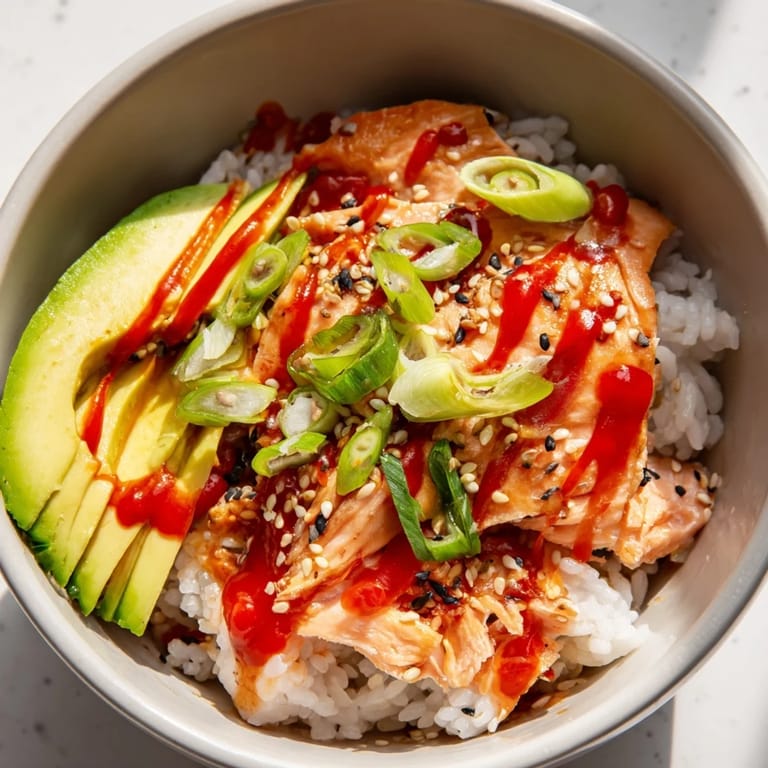
- Arrange the avocado, spring onions, sesame seeds, and pickled ginger on top in whatever pattern appeals to you. These aren't just garnish, they're essential texture and flavor contrasts that make each spoonful interesting.
- Serve with seaweed:
- Have your nori sheets and lemon wedges nearby. Use the seaweed to scoop up rice and salmon instead of a spoon—it adds texture and lets you control how much you're eating with each bite.
 Pin It
I made this on a Friday night when it was too hot to cook anything complicated, and something about assembling a beautiful bowl at my kitchen counter—slicing the avocado, scattering those toasted seeds, arranging everything like it actually mattered—made me feel better than I had all week. It's one of those meals that doesn't ask much of you but somehow gives back more than you'd expect.
How to Make This Feel Like Your Own
This bowl is a canvas more than a rigid recipe, and that's kind of the point. Once you've made it a few times and know how the soy and sesame feel together, you can start riffing on the vegetables—I've added thinly sliced cucumber, grated carrots, or even kimchi depending on what's in my fridge and what mood I'm in. Some nights I skip the mayo if I'm not feeling the richness, other nights I add extra because why not. The base stays the same, but the bowl becomes a conversation between what you have and what you're craving.
Salmon: Fresh vs. Leftover vs. Shortcuts
You can absolutely cook salmon specifically for this bowl—it takes about 12 minutes in the oven at 400°F and you'll end up with something delicate and perfect—but honestly, the best version I've made used salmon that was already cooked the night before. There's less pressure that way, less timing to think about. If fresh salmon isn't in your budget or you're out of time, canned salmon works in a pinch and actually has a different, slightly mineral quality that some people prefer. Smoked salmon is another option if you want something with more character, though it tends to be saltier so dial back the soy sauce.
Rice, Seasoning, and the Small Details That Shift Everything
The rice is where you establish your baseline—white rice is traditional and neutral, but brown rice adds a chewiness and earthiness that some people find more satisfying. Sesame oil is non-negotiable because it's doing the heavy lifting flavor-wise, and there's a massive difference between the toasted kind (what you want) and the clear cooking kind (not what you want). Japanese mayo creates a texture that American mayo simply cannot achieve, but if you genuinely cannot find Kewpie, mix regular mayo with a tiny bit of rice vinegar and you'll get closer. These seem like small choices until you taste the difference.
- If your leftover rice has been in the fridge for more than three days, it's time to let it go and make fresh.
- Toast your own sesame seeds in a dry pan for two minutes if you can—the aroma alone will tell you if you've made the right call.
- Keep a bottle of good sesame oil in your pantry, it pays for itself across dozens of bowls.
 Pin It
 This bowl has become a steady in my rotation for nights when I need something that tastes intentional but doesn't demand much from me. There's real comfort in that.
Recipe Questions & Answers
- → Can I use leftover rice for this dish?
Yes, chilled leftover rice works perfectly and helps maintain the right texture when reheated.
- → What alternatives to soy sauce can I use?
Tamari offers a gluten-free option without sacrificing the savory depth soy sauce provides.
- → How can I add more vegetables to this bowl?
Try incorporating kimchi, shredded carrots, or diced cucumber for extra freshness and crunch.
- → Is it possible to prepare this dish without a microwave?
Yes, warming the salmon and rice gently on the stovetop works well, just be careful to avoid drying out the salmon.
- → What toppings enhance the flavor and texture?
Avocado slices, toasted sesame seeds, pickled ginger, spring onions, and nori sheets add creaminess, nuttiness, tanginess, and crunch.