 Pin It
 One hectic Tuesday morning, I stood in front of my fridge realizing I'd skipped breakfast and had exactly seven minutes before a meeting. Instead of reaching for a protein bar, something clicked, and I grabbed my mug, protein powder, and an egg. What emerged from the microwave two minutes later was warm, fluffy, and tasted suspiciously like a cinnamon roll, except it actually had more protein than my usual lunch. That tiny mug cake became my secret weapon for mornings when hunger and time collide.
I made this for my roommate after she mentioned feeling tired at 3 p.m. every afternoon, and watching her eyes light up when she tasted that cinnamon-sugar center made me realize this isn't just efficient nutrition, it's genuinely crave-worthy. She started making her own variations with different yogurt flavors, and suddenly we had this quiet tradition of afternoon mug cakes and real conversations instead of grabbing vending machine snacks.
Ingredients
- Vanilla protein powder (30 g, 1 scoop): This is the backbone of the whole thing, so pick one you actually enjoy drinking because you'll taste it clearly in a small mug cake.
- Oat flour (2 tbsp, 15 g): It creates that tender crumb texture without heaviness; regular flour works but oat flour keeps things lighter.
- Baking powder (1/2 tsp): Don't skip this or your mug cake becomes dense and gummy instead of fluffy.
- Ground cinnamon (1/4 tsp in batter, 1/2 tsp in swirl): Buy fresh cinnamon if you can because stale spice won't deliver that warmth you're after.
- Granulated sweetener (1 tbsp, 12 g): Erythritol works beautifully here, though regular sugar is fine if you don't mind the carbs.
- Egg (1 large): Room temperature eggs mix more smoothly and create a better crumb, though you probably won't notice a huge difference in a mug cake.
- Milk (3 tbsp, 45 ml): Dairy or non-dairy both work equally well; I use whatever I have open.
- Unsalted butter (1/2 tbsp, 7 g melted): This carries the cinnamon swirl flavor, so don't cheap out on the butter.
- Brown sugar or coconut sugar (1 tbsp, 12 g): Brown sugar gives deeper molasses notes, while coconut sugar adds subtle earthiness.
- Light cream cheese (1 tbsp, 15 g softened): Softening it first prevents lumps and creates that smooth, spreadable topping.
- Greek yogurt (1/2 tbsp, 7 g): This keeps the topping creamy without adding tons of fat while boosting protein.
- Powdered sweetener (1/2 tbsp, 4 g): Powdered versions blend into the topping more seamlessly than granulated.
Tired of Takeout? 🥡
Get 10 meals you can make faster than delivery arrives. Seriously.
One email. No spam. Unsubscribe anytime.
Instructions
- Combine your dry ingredients:
- Whisk protein powder, oat flour, baking powder, cinnamon, salt, and sweetener in your microwave-safe mug until the mixture looks uniform and feels homogenous. This prevents clumpy protein flavor in your finished cake.
- Mix in the wet components:
- Crack in the egg and pour the milk, then whisk everything together until you reach a smooth batter with absolutely no dry streaks hiding at the bottom. This takes about 30 seconds of honest whisking.
- Prepare the cinnamon swirl:
- In a small bowl, stir melted butter, brown sugar, and cinnamon together until it forms a thick, paste-like mixture that won't drip straight to the bottom of the mug. The texture should feel deliberately goopy.
- Create the swirl pattern:
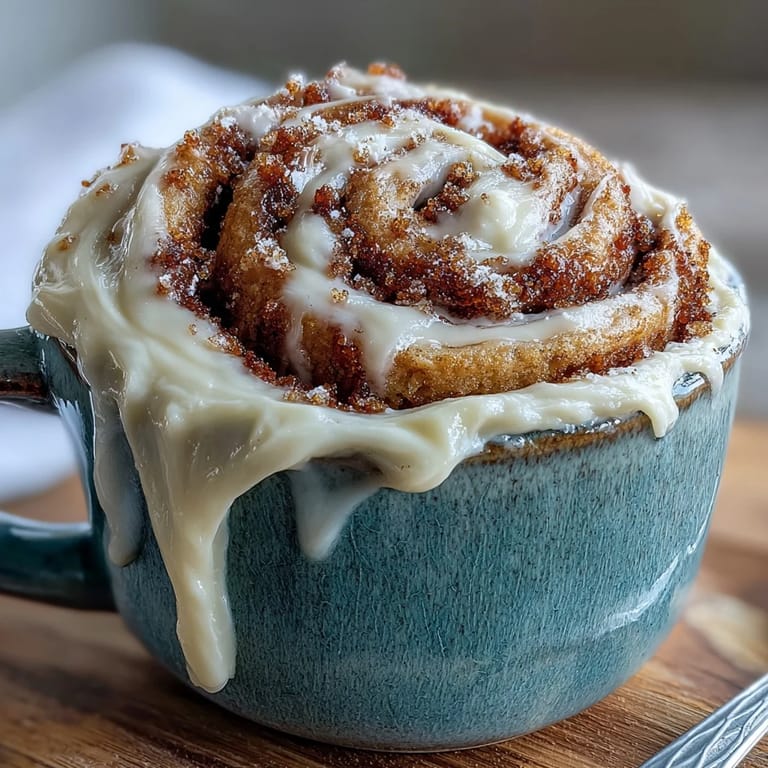
- Pour the cinnamon mixture in a spiral over your batter, then use a toothpick or fork to gently drag through it in a few places, creating those signature swirls. Don't overwork it or you'll lose the distinct layers.
- Microwave into existence:
- Place the mug in your microwave and cook on high for 60 to 90 seconds, checking if the top springs back when lightly touched. Every microwave runs differently, so start at 60 seconds and add 15-second increments if needed.
- Make the cream cheese topping:
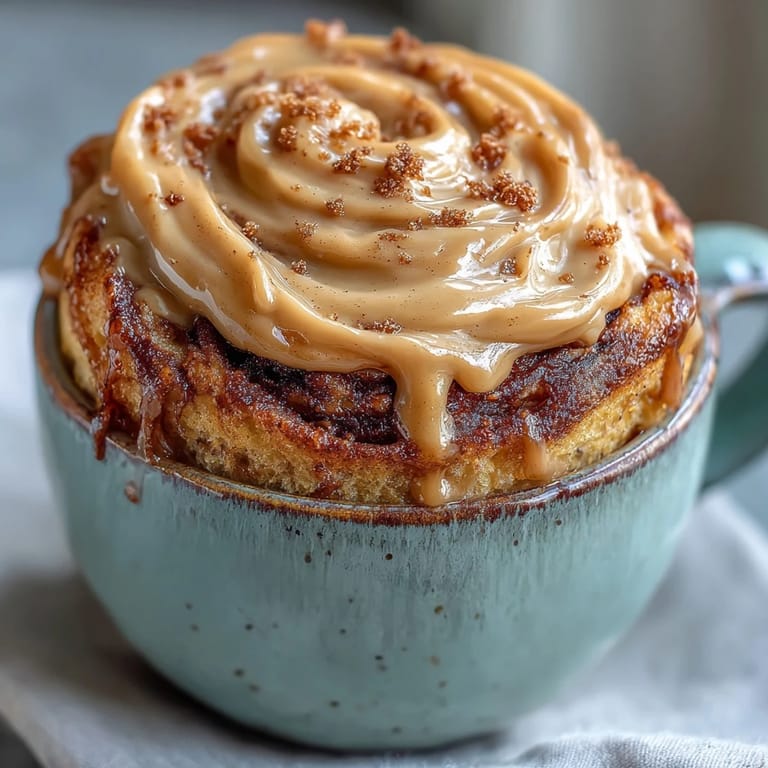
- While the cake cooks, mix softened cream cheese, Greek yogurt, and powdered sweetener in another bowl until completely smooth and spreadable. Lumpy topping defeats the whole purpose of this easy recipe.
- Finish and serve:
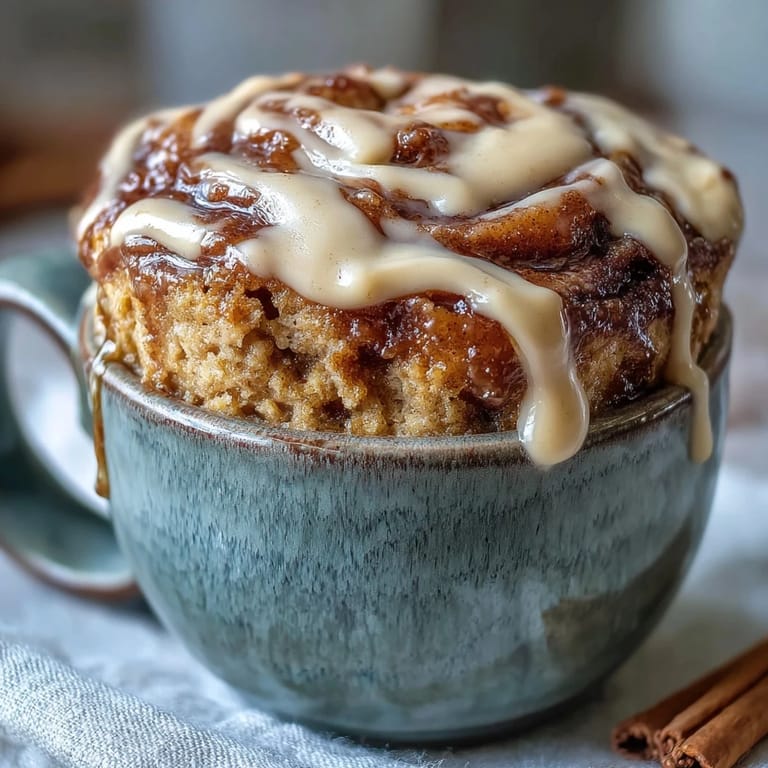
- Spread or pipe that creamy topping over the warm mug cake and eat it immediately while the cake is still steaming and the topping begins to melt into the cinnamon swirls. This moment is everything.
 Pin It
There's something quietly beautiful about cracking a warm mug cake with a spoon and watching that cream cheese topping melt into every crevice while you sit at your desk or kitchen counter. It transformed my relationship with breakfast from something rushed into something small but genuinely nourishing.
Timing That Actually Works
I learned the hard way that measuring your dry ingredients while your egg and milk sit out for 30 seconds makes everything mix way smoother because room temperature components blend together without the resistance of cold eggs. The actual microwave time is deceptively short, so having everything prepped and ready means you go from hungry to satisfied in roughly the time it takes to pour coffee. Most mornings I use the cooking time to get dressed or respond to a text, then come back to a finished breakfast waiting for me.
Flavor Variations That Actually Taste Different
Once you nail the basic mug cake, the fun begins, and I've discovered that protein powder flavor matters way more than recipes usually mention. Cake batter powder creates an entirely different vibe than vanilla, while chocolate protein actually pairs beautifully if you swap the cinnamon swirl for a peanut butter version. The cream cheese topping is flexible enough to handle different sweetness levels, so if your protein powder tastes particularly sweet, use less powdered sweetener in the topping.
Storage and Make-Ahead Thoughts
These mug cakes are best eaten immediately because they firm up as they cool, losing some of that tender crumb quality that makes them special. However, if you need to prep ahead, you can mix and store the dry ingredients in a small container and keep your wet ingredients measured separately, then just combine and microwave whenever hunger strikes. The cream cheese topping doesn't store well, so make that fresh right before serving.
- Refrigerating a finished mug cake changes its texture completely, so eat fresh or accept a denser, chewier consistency the next day.
- Double batches work fine if you have two microwave-safe mugs and don't mind cooking them separately since they need individual microwave time.
- The topping can be made while the cake cooks, so truly nothing takes longer than two minutes of actual hands-on cooking time.
 Pin It
 This tiny mug cake taught me that nutrition and pleasure don't have to be enemies, and that sometimes the quickest solution is also the most satisfying. Keep making these when you need them, adjust the flavors when you're feeling adventurous, and remember that breakfast can genuinely taste like a cinnamon roll while feeding your body what it actually needs.
Recipe Questions & Answers
- → Can I use different protein powder flavors?
Yes, vanilla works best as a neutral base, but chocolate or unflavored protein powder also work well. Adjust the sweetener amount if using flavored powders that may contain added sweetness.
- → Why did my mug cake turn out rubbery?
Overcooking in the microwave causes rubbery texture. Start with 60 seconds and check—the cake should spring back when touched but still feel moist. Every microwave varies, so you may need to adjust timing.
- → Can I make this without a microwave?
You can bake the batter in a small ramekin at 350°F (175°C) for 12-15 minutes. The texture will be slightly more traditional, but watch closely as it may dry out faster than the microwave version.
- → How do I store leftovers?
This mug cake is best enjoyed immediately while warm. The texture changes significantly once refrigerated. If you must save it, wrap tightly and reheat in the microwave for 15-20 seconds, though fresh is always better.
- → Can I double the recipe?
Making two separate mug cakes works better than doubling in one mug. The center won't cook properly if the batter is too deep. Simply prepare two mugs and microwave them individually or sequentially.
- → What flour substitutes work best?
Almond flour creates a lower-carb version with a slightly denser texture. Coconut flour absorbs more liquid, so you'd need to increase the milk. Wheat flour works as a 1:1 swap for oat flour if you don't need gluten-free.