 Pin It
 My sister called in a panic on Sunday morning, asking if I could feed eight people by noon. I rifled through the fridge and found ham, cheese, and bread, then remembered how my French roommate in Lyon used to transform leftovers into something golden and magnificent. This casserole was born from that moment, though I've tweaked it a dozen times since. It's the kind of dish that looks impressive but asks almost nothing of you except patience and a decent béchamel.
That first time I made it for my sister and her crew, I was genuinely nervous about the béchamel breaking or the bread getting soggy. But as it baked, this incredible smell filled my kitchen, and when I pulled it from the oven all puffy and burnished, even my skeptical brother-in-law went quiet for a moment. Food doesn't need to be complicated to matter.
Ingredients
- White sandwich bread (12 slices, crusts removed): The crust gets in the way here, so take five seconds to trim them; the soft interior soaks up the custard beautifully without falling apart.
- Unsalted butter (2 tbsp softened, plus extra for greasing): Softened butter spreads like a dream on cool bread and won't tear it, so leave it on the counter while you prep everything else.
- Gruyère cheese (1 1/2 cups grated): This is the heart of it all—Gruyère melts with this nutty, complex flavor that Swiss cheese tries to mimic but never quite reaches.
- Whole milk (1 cup for custard, 1 1/4 cups for béchamel): Don't use skim or low-fat; you need the richness, and honestly, the difference is worth it.
- Heavy cream (1/2 cup): This lifts everything into luxurious territory without being heavy.
- Eggs (3 large): They bind the custard layer and give the whole thing structure as it bakes.
- Cooked ham (8 slices): Quality matters here; ask the deli counter for a good slice thickness so you get actual ham flavor, not just texture.
- Béchamel butter (2 tbsp): This is separate from the bread-buttering butter, so don't confuse your amounts.
- All-purpose flour (2 tbsp): The thickening agent that makes béchamel smooth instead of runny.
- Ground nutmeg (1/4 tsp): A whisper of nutmeg is the secret that people taste but can't identify; it's what separates good béchamel from forgettable.
- Salt and black pepper: Taste as you go because everyone's palate is different, and you might want more than the recipe suggests.
Tired of Takeout? 🥡
Get 10 meals you can make faster than delivery arrives. Seriously.
One email. No spam. Unsubscribe anytime.
Instructions
- Get your mise en place ready:
- Preheat the oven to 375°F and butter a 9x13-inch baking dish; setting yourself up now means no scrambling later when your hands are wet or eggy.
- Build the béchamel:
- Melt 2 tbsp butter in a saucepan over medium heat, then whisk in flour and let it cook for exactly one minute—this removes the raw flour taste without browning it. Gradually add 1 1/4 cups milk while whisking constantly, and you'll feel it thicken in your hands around three to four minutes when the whisk starts leaving trails on the bottom of the pan. Season with nutmeg, salt, and pepper, then set it aside to cool slightly.
- Butter and layer the bread:
- Spread softened butter on one side of each bread slice, then arrange half of them buttered-side down in your prepared dish. You're building a foundation that will hold everything together.
- Add the ham and cheese:
- Layer half your ham slices over the bread, then sprinkle half the Gruyère cheese, then repeat with the remaining bread (butter side down), ham, and cheese to create distinct layers that will fuse as it bakes.
- Pour the custard mixture:
- Whisk together the eggs, 1 cup milk, cream, and a pinch of salt in a bowl, then pour it evenly over the entire casserole and press gently with the back of a spoon to help the bread absorb it. This is what transforms it from a sandwich into something with custard-soaked soul.
- Spread the béchamel on top:
- Pour your cooled béchamel sauce over the casserole and spread it evenly with a spatula, making sure it reaches into the corners.
- Bake until golden:
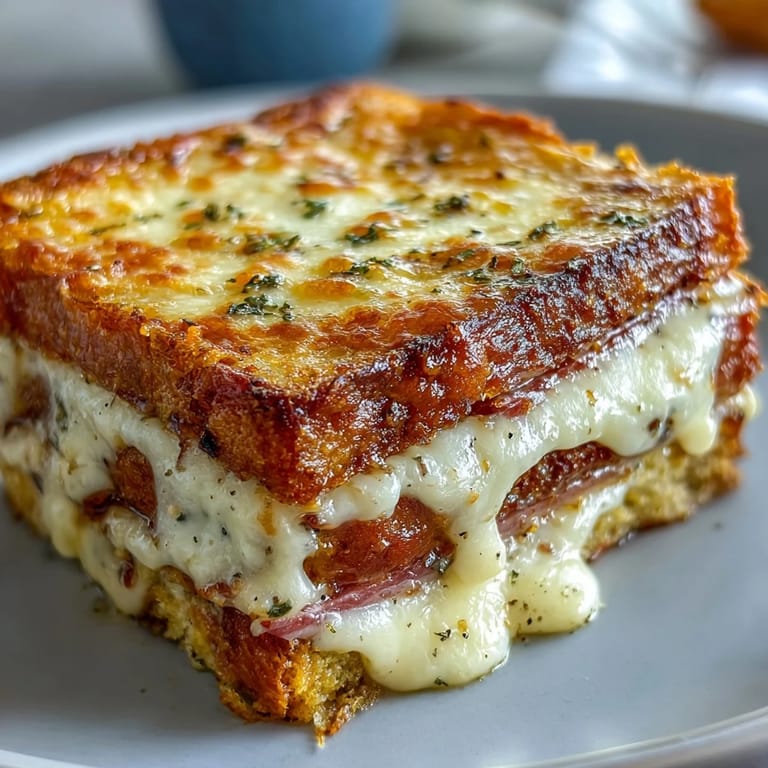
- Bake uncovered for 35 to 40 minutes until the top is puffed, deeply golden, and bubbling around the edges—you want it to look almost too good to cut into. Let it rest for 10 minutes; this gives the interior time to set so it doesn't fall apart when you serve it.
 Pin It
There's a moment, about 35 minutes into baking, when you open the oven door and the smell hits you like a warm wave—butter, nutmeg, melted cheese—and you know something good is about to emerge. My mother stood at my stove that first time and didn't say much, just smiled, which meant everything.
Make It Your Own
The beauty of this casserole is that it's a canvas. I've stirred sautéed mushrooms into the béchamel for earthy depth, layered in fresh spinach wilted with garlic, or added a teaspoon of Dijon mustard between the bread layers for subtle bite. One winter, I sprinkled fresh thyme over the cheese before baking and it added this herbaceous note that made everyone pause and ask what made it taste so interesting.
Vegetarian and Allergy Adaptations
If ham isn't your thing, simply omit it and add more sautéed mushrooms, spinach, or even roasted red peppers for flavor and texture. For dairy-free versions, use plant-based milk and butter in both the custard and béchamel, and a good quality dairy-free Gruyère alternative; it won't be identical, but it absolutely works. Gluten-free bread layers just as well, though you might notice it soaks up more of the custard, so this isn't a bad thing.
Serving Suggestions and Wine Pairing
Serve this alongside a crisp green salad dressed with a simple vinaigrette to cut through the richness, and honestly, a glass of Chardonnay or dry white wine is the perfect companion. I've also made it for casual weeknight dinners with just crusty bread on the side and a tomato salad, and it felt just as special as when I dressed it up for guests.
- Cut it into squares while it's still slightly warm so the layers stay intact.
- Leftovers reheat beautifully in a 325°F oven for about 15 minutes, though nothing compares to fresh from the oven.
- You can assemble this the night before, cover it with plastic wrap, and bake it the next morning, which makes it perfect for entertaining.
 Pin It
 This casserole taught me that feeding people well doesn't require a culinary degree or hours of labor. Sometimes the most meaningful dishes are the ones that let you actually enjoy the company instead of stressing in the kitchen.
Recipe Questions & Answers
- → Can I prepare this casserole ahead of time?
Yes, assemble the casserole up to 24 hours in advance, cover tightly, and refrigerate. Let it sit at room temperature for 30 minutes before baking, and add 5-10 minutes to the baking time if needed.
- → What cheese can I substitute for Gruyère?
Swiss cheese, Emmental, or Comté work beautifully as alternatives. For a sharper flavor, try a combination of Gruyère and aged cheddar.
- → How do I make this vegetarian?
Omit the ham and add sautéed mushrooms, caramelized onions, or wilted spinach between the bread layers for a satisfying meat-free version.
- → Can I use a different type of bread?
Brioche or sourdough make excellent substitutes for white sandwich bread, adding extra richness or tang. Just ensure slices are similar in thickness.
- → What should I serve with this casserole?
A crisp green salad with Dijon vinaigrette balances the richness perfectly. Fresh fruit, roasted asparagus, or a light arugula salad are also excellent accompaniments.
- → How do I store leftovers?
Cover and refrigerate for up to 3 days. Reheat individual portions in the microwave or warm the entire dish covered in a 350°F oven until heated through.