 Pin It
 My first encounter with dukkah-spiced eggs happened on a Sunday morning at a tiny Cairo-inspired café tucked between vintage shops. The proprietor, a woman named Layla, set down a plate and simply said, "Taste." What struck me wasn't just the eggs themselves—it was the sudden burst of toasted hazelnuts and sesame when I bit through the soft yolk, a crunch that felt both expected and thrilling. I spent the next week hunting for dukkah at Middle Eastern markets, determined to recreate that moment at home, and I've been making these eggs ever since.
I made these for my friend Marcus one Tuesday when he was going through a rough spell, and he sat at my kitchen counter absolutely quiet until he finished the plate. Then he looked up and asked me to teach him how to make them, so we did it together right there, and suddenly he was laughing about how satisfying it was to crack the eggs into the ice water. Cooking for someone who really needs it changes how you see a recipe—it stops being about technique and becomes about care.
Ingredients
- 8 large eggs: The foundation of everything—pick the best quality you can find, as their freshness and yolk color will shine through the dukkah.
- 3 tbsp dukkah spice mix: This is where the magic lives; you can buy it or make it, and homemade will reward you with a deeper, more intentional flavor.
- 2 tbsp fresh parsley, finely chopped: The mild backbone that lets the other herbs shine without competing.
- 2 tbsp fresh cilantro, finely chopped: Brings a subtle citrus note that lifts the entire dish.
- 2 tbsp fresh mint, finely chopped: A whisper of cool herbaceousness that surprises your palate in the best way.
- 2 tbsp extra virgin olive oil: Don't skimp here—this is a starring ingredient, not a supporting player.
- Sea salt and freshly ground black pepper, to taste: The final adjustments that make the dish sing.
- Crusty bread or pita, optional: For dipping and soaking up every precious drop of yolk and oil.
Tired of Takeout? 🥡
Get 10 meals you can make faster than delivery arrives. Seriously.
One email. No spam. Unsubscribe anytime.
Instructions
- Bring water to a gentle boil:
- Fill a medium saucepan with enough water to cover the eggs by about an inch, then turn the heat to medium-high. Once you see those first bubbles breaking the surface, you're ready for the eggs.
- Lower in the eggs with care:
- Use a spoon to gently nestle each egg into the water—you'll feel the subtle resistance as the water embraces them. Maintain a gentle simmer; aggressive boiling can cause cracks and uneven cooking.
- Time your cook:
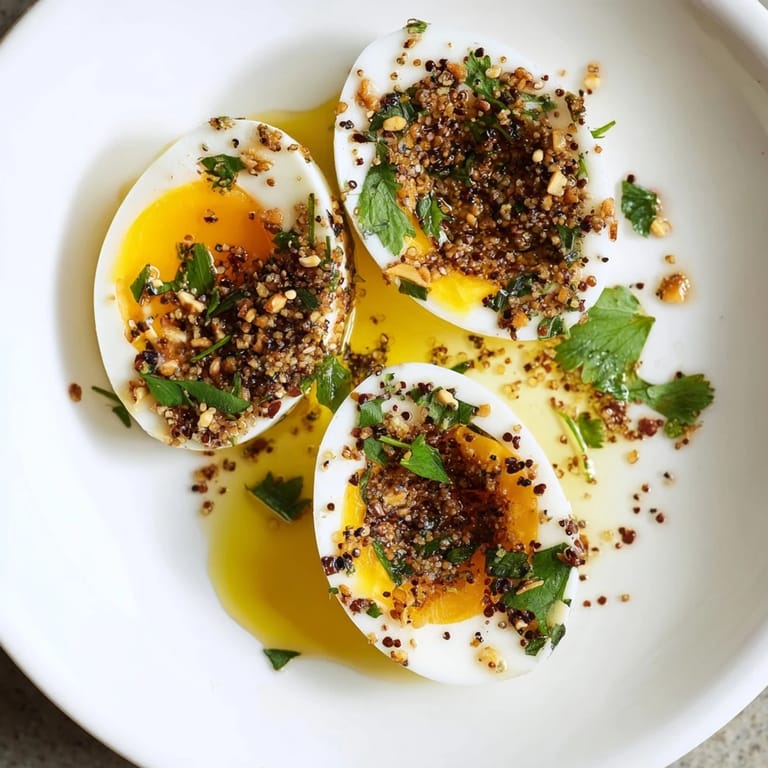
- Seven minutes gives you that jammy, runny center that oozes when you cut through; nine minutes yields a firmer yolk that's still creamy. Set a timer and trust it.
- Shock them in ice water:
- The ice bath stops the cooking immediately, preserving that perfect texture you just worked for. You'll feel the eggs cool in your palm as you transfer them—a small sensory signal that they're ready to peel.
- Peel gently under cool water:
- Work over a bowl of cool water and take your time; rushing this step can damage the delicate whites. The water helps loosen the membrane and makes the whole process feel less likely to go wrong.
- Arrange and drizzle:
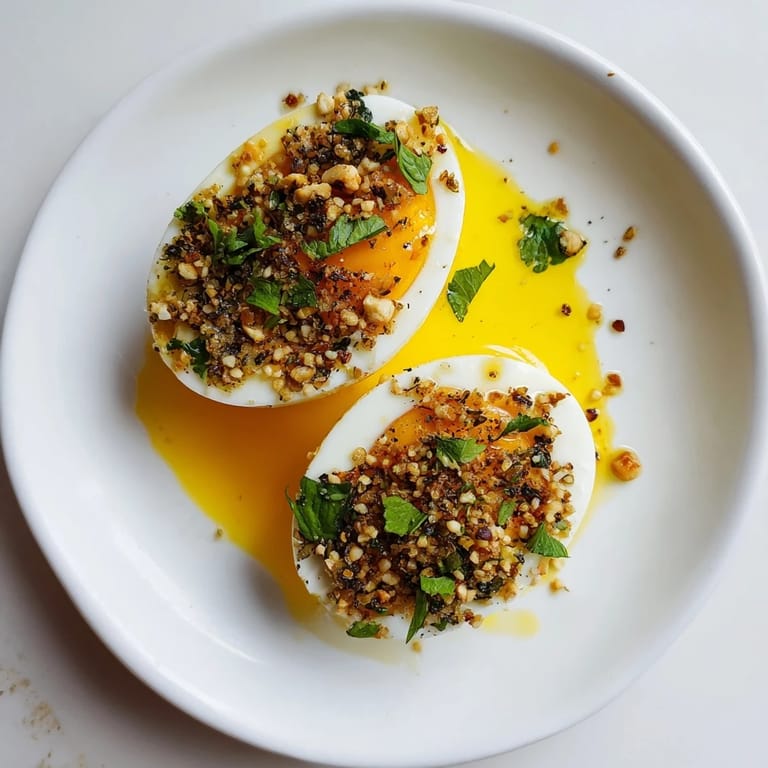
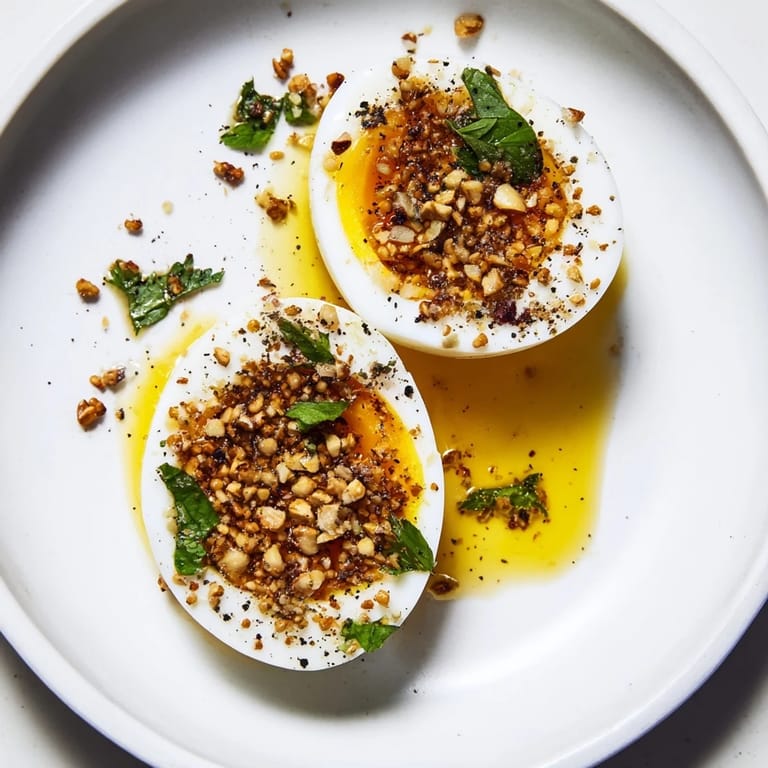
- Slice each egg in half lengthwise and lay them out on your serving platter in a pattern that pleases your eye. Drizzle the olive oil across them, watching how it pools slightly around each yolk.
- Top with dukkah and herbs:
- Be generous with the dukkah—this is not the time for timidity—then scatter the fresh herbs over everything. The combination should look abundant and inviting, like you've just brought something special to the table.
- Season and serve immediately:
- Taste as you go, adding salt and pepper to balance everything. Serve right away while the eggs are still warm and the herbs are still bright.
 Pin It
There's a moment, just after I scatter the herbs and lean back to look at the platter, when I feel a small sense of accomplishment that's entirely disproportionate to the effort. It's not about complexity—it's about how something so simple can feel so intentional, so thoughtfully made. That's when I know I'm cooking it right.
Making Your Own Dukkah
I spent a whole afternoon making dukkah from scratch once, and the smell that rose from the dry pan was so intoxicating that my roommate came wandering out of her office to investigate. Toast two tablespoons of hazelnuts, two tablespoons of sesame seeds, one tablespoon each of coriander and cumin seeds, one teaspoon of black peppercorns, and one teaspoon of fennel seeds in a dry pan over medium heat, stirring occasionally until the whole mixture becomes fragrant and the seeds begin to pop slightly. Let it cool completely, then pulse it in a food processor with half a teaspoon of sea salt until you reach a texture that's coarsely ground—not quite powder, but not chunky either. Store it in an airtight jar and use it on everything from roasted vegetables to yogurt to, of course, these eggs.
Variations That Keep Things Interesting
The beauty of this recipe is its flexibility, which I discovered almost by accident one morning when I realized I'd overcooked the eggs slightly. Rather than start over, I tried serving them halved but not fully cooked through, almost like a very soft boiled egg you crack open and scoop with a spoon, and it created an entirely different textural experience that was somehow even better. You can also poach them instead if you're feeling adventurous, or go fully hard-boiled for something you can pack into a lunch box with more confidence.
The Perfect Accompaniments
These eggs sing alongside good bread—the kind that's still warm and has a proper crust that crackles when you bite it. A squeeze of lemon juice before serving brightens everything without overwhelming the delicate spice balance, and I've learned that pairing this with a cup of strong coffee or mint tea creates a moment that feels almost ceremonial, even on an ordinary Tuesday morning.
- Crusty bread or warm pita is essential for soaking up every bit of yolk and olive oil.
- A squeeze of fresh lemon juice adds brightness without drowning out the dukkah's complexity.
- Serve with strong coffee or fresh mint tea for the full experience.
 Pin It
 This is the kind of breakfast that reminds you to slow down, to pay attention to flavors and textures, and to understand that feeding yourself well is a small act of kindness. Make it when you want to feel cared for, or make it for someone else when they need that comfort.
Recipe Questions & Answers
- → What is dukkah and how does it enhance eggs?
Dukkah is an Egyptian blend of nuts, seeds, and spices that adds a crunchy texture and warm, aromatic flavor to eggs, enriching each bite.
- → How long should eggs be cooked for jammy yolks?
Simmer eggs gently for 7 minutes to achieve jammy, soft yolks that complement the crunchy dukkah topping.
- → Can I make the dukkah spice mix at home?
Yes, to make homemade dukkah, toast hazelnuts, sesame seeds, coriander, cumin, black peppercorns, and fennel seeds, then pulse with sea salt for a fresh blend.
- → What fresh herbs work best with dukkah-spiced eggs?
Parsley, cilantro, and mint provide a fresh, vibrant contrast to the rich and nutty dukkah, brightening the overall flavor.
- → What serving suggestions complement this dish?
Serve with crusty bread or warm pita to enjoy the full textural contrast and soak up the flavorful olive oil and spices.
- → Are these eggs suitable for gluten-free diets?
Yes, the main ingredients are naturally gluten-free; just avoid serving with gluten-containing breads if needed.