 Pin It
 There's something about the smell of tahini hitting the food processor that takes me back to a tiny kitchen in Athens, where I watched my neighbor blend hummus with the confidence of someone who'd made it a thousand times. She never measured anything—just tasted as she went, adjusting the lemon and garlic until it sang. Years later, I finally understood what she meant when she said hummus should taste like a hug. This version, piled high with charred vegetables and toasted pine nuts, is my love letter to that moment.
I made this for a potluck once where I arrived late, slightly frazzled, and someone had already filled the table with heavy casseroles. I set down this humble platter, and within ten minutes it was nearly gone—people kept coming back, swirling vegetables through hummus like they were discovering it for the first time. That's when I realized comfort food doesn't always need to be complicated.
Ingredients
- Canned chickpeas: Drain and rinse them well—this removes the starchy liquid that can make hummus gluey instead of silky.
- Tahini: This is where the magic lives; buy a good one and stir it often because the oil separates.
- Fresh lemon juice: Bottled won't cut it here—the acid needs to be bright and alive.
- Garlic: One small clove is enough; too much overwhelms the delicate nuttiness.
- Extra-virgin olive oil: Use something you'd actually taste on its own, not the industrial stuff.
- Ground cumin: Toast it in a dry skillet first if you have time; it wakes up immediately.
- Bell pepper, zucchini, red onion, eggplant: Cut them roughly the same size so they finish roasting at the same time.
- Smoked paprika: This is what gives the vegetables their haunted, campfire quality—don't skip it.
- Pine nuts: Toast these yourself; pre-toasted ones taste like cardboard and regret.
- Fresh parsley: The brightness matters more than the amount.
- Sumac or zaatar: Optional, but if you find it, grab it—a sprinkle changes everything.
Tired of Takeout? 🥡
Get 10 meals you can make faster than delivery arrives. Seriously.
One email. No spam. Unsubscribe anytime.
Instructions
- Heat your oven like you mean it:
- Get it to 425°F and let it sit for a full ten minutes so the baking sheet gets properly hot. This is what creates those charred, almost-burnt edges that make roasted vegetables worth your time.
- Prep your vegetables:
- Cut them into pieces that are roughly the same size—about one to one-and-a-half inches—so everything finishes at the same moment. Toss with oil, smoked paprika, salt, and pepper, then spread them out without crowding; they need space to breathe and char.
- Let them roast untouched:
- After about twelve minutes, give them one good stir, then leave them alone for the remaining time. That's how you get those crispy, caramelized edges instead of steamed vegetables.
- Build your hummus while vegetables cook:
- Combine chickpeas, tahini, lemon juice, garlic, olive oil, cumin, and salt in a food processor and blend until completely smooth. Add cold water one tablespoon at a time until you have something between yogurt and pudding—thick but creamy.
- Toast the pine nuts gently:
- Use a dry skillet over medium heat and stir constantly for two to three minutes until golden and fragrant. They burn fast, so stay close and listen for when they stop smelling nutty and start smelling acrid.
- Make it beautiful:
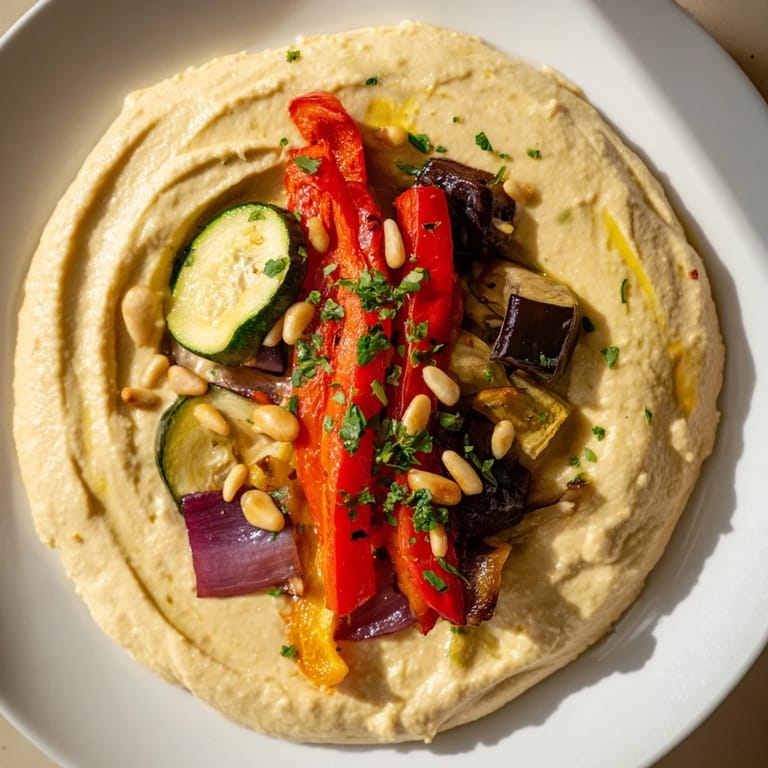
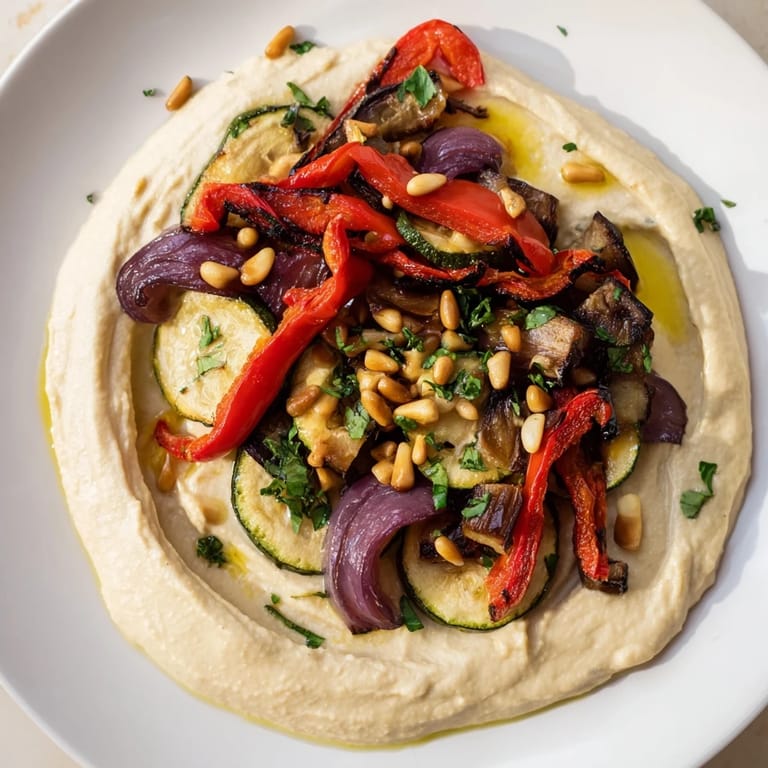
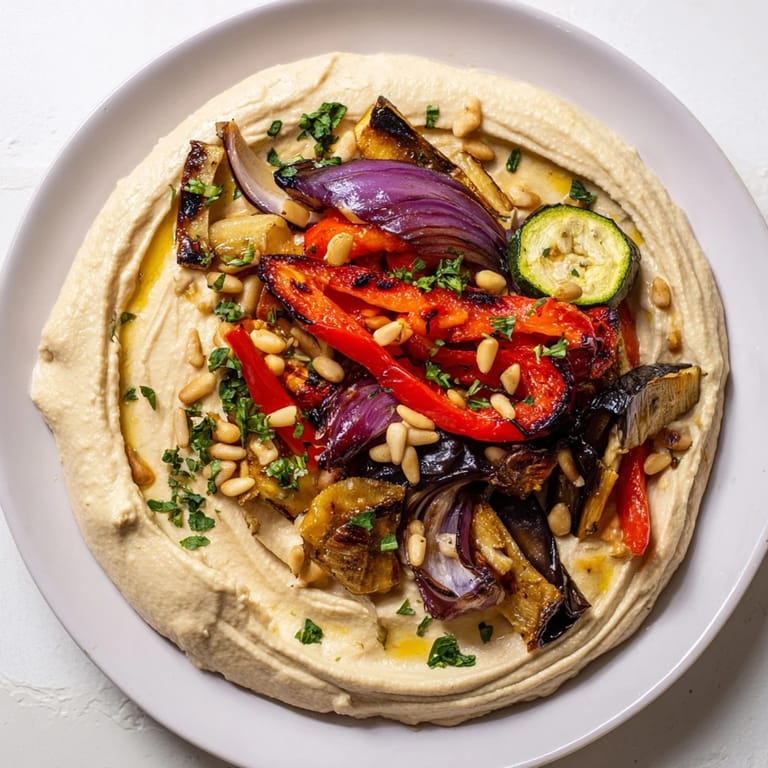
- Spread the hummus onto your serving dish in a shallow swoosh using the back of a spoon, then pile the warm roasted vegetables on top like you're making a crown.
- Finish with respect:
- Scatter pine nuts and parsley, dust with sumac if you have it, and drizzle generously with good olive oil. Serve while the vegetables are still warm, with pita or just a spoon.
 Pin It
My friend once asked why I always served this with such ceremony, spreading it on the best plate we had, and I realized I wasn't being fancy—I was just respecting the moment. There's something about hummus and vegetables that feels almost sacred, like you're sharing something honest and whole.
Roasting Is About Trust
The first time I made roasted vegetables, I checked them every two minutes, convinced they'd burn. They didn't; they just steamed and disappointed me instead. Now I trust the heat and the time—set the timer, walk away, and let the oven do what it's designed to do. That's when magic happens.
The Hummus Philosophy
People get nervous about making hummus from scratch, but it's genuinely forgiving. Too thick? Add water. Too thin? Blend longer. Tastes bland? That's lemon juice's job to fix. The food processor does the hard work; you're just here to taste and adjust until it feels right.
Serving Suggestions and Variations
This dish adapts beautifully to whatever your market has that day. In summer, use zucchini and tomatoes. In fall, roast carrots, cauliflower, and Brussels sprouts. Even mushrooms work—they get crispy and almost meaty. The technique stays the same; only the vegetables change. Serve it as a dip with pita and vegetables, spoon it onto thick toast for lunch, or pile it alongside grains for a vegetarian dinner that feels complete.
- If you want more heat, stir a spoonful of harissa into the hummus or sprinkle chili flakes on top.
- Make this up to four hours ahead and store in the fridge; add the vegetables and nuts just before serving so they stay crisp.
- Double the batch if you're feeding a crowd—this always disappears faster than you expect.
 Pin It
 This is the kind of food that brings people together quietly, without making a fuss about it. Make it when you want to nourish someone—including yourself.
Recipe Questions & Answers
- → How do I achieve a smooth hummus texture?
Use a food processor and add cold water gradually while blending to reach a creamy and silky consistency.
- → What vegetables work best for roasting in this dish?
Bell peppers, zucchini, eggplant, and red onions roast beautifully, developing smoky, tender textures that complement the hummus.
- → Can I substitute the pine nuts with other toppings?
Yes, toasted pumpkin seeds or chopped walnuts provide a similar crunch and nutty flavor.
- → How is the smoky flavor developed in the vegetables?
Roasting at a high temperature until slightly charred enhances a natural smoky taste in the vegetables.
- → Is this dish suitable for dietary restrictions?
Yes, it’s vegan and gluten-free when served without bread or with gluten-free accompaniments.