 Pin It
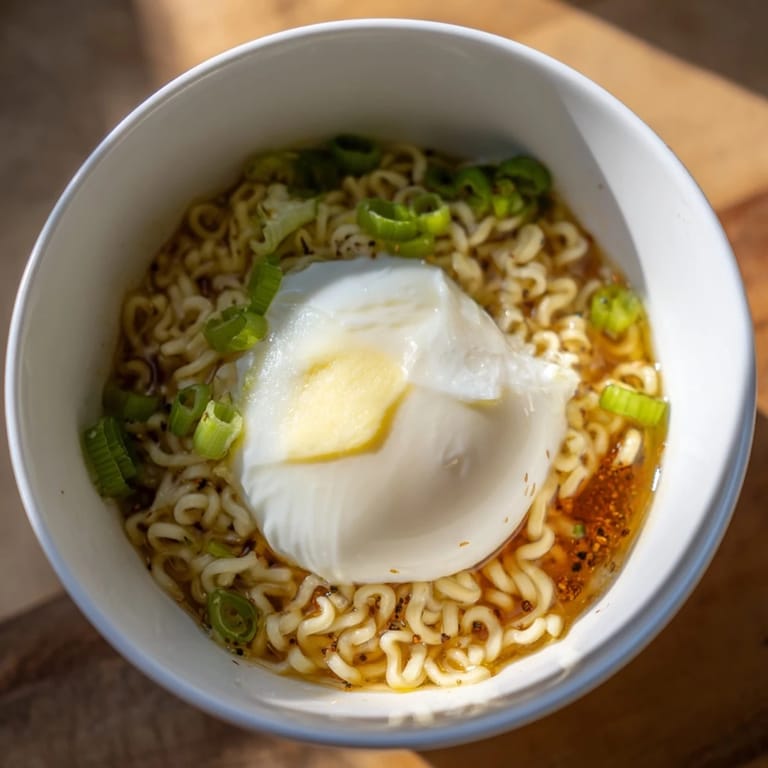
 There's a specific Tuesday evening I think of whenever I make this—the night my roommate came home exhausted from a double shift and I had maybe ten minutes to turn something edible on the stove. I'd always dismissed instant ramen as just survival food until that moment, when I cracked an egg into the simmering broth and watched the white set into ribbons while the yolk stayed golden and runny. That small gesture of butter melting into the seasoning transformed everything, and suddenly it didn't feel like compromise food anymore. It tasted intentional.
What stuck with me most was watching someone who thought they were too tired to eat sit down and finish the whole bowl in silence. The kind of quiet that means comfort. I started making this whenever friends seemed overwhelmed, and it became this small ritual—nothing fancy, but it made people feel seen. Now I can't make it without remembering that kitchen moment.
Ingredients
- Instant Ramen Noodles: One package of any flavor works, though I've learned that slightly saltier brands leave more room for the butter and egg to shine through.
- Water: Two cups—measure it out rather than eyeballing, because the ratio of broth to noodles actually changes how silky everything becomes.
- Ramen Seasoning Packet: Don't skip it, even if you think it's too salty; it's the backbone of the whole flavor profile.
- Unsalted Butter: One tablespoon is the magic number—I learned this the hard way after trying half a stick once.
- Egg: One large egg, as fresh as you can find it; older eggs are harder to crack cleanly into hot liquid.
- Scallion: Thinly sliced, for brightness and that fresh bite that keeps the dish from feeling heavy.
- Chili Flakes or Chili Oil: Optional but honestly worth keeping nearby; a small sprinkle changes everything depending on your mood.
- Soy Sauce: To taste, for when you want to deepen the savory notes without more salt.
Tired of Takeout? 🥡
Get 10 meals you can make faster than delivery arrives. Seriously.
One email. No spam. Unsubscribe anytime.
Instructions
- Boil Your Water First:
- Pour two cups into a small saucepan and let it come to a rolling boil—you want it actually bubbling, not just steaming. This takes about 4 minutes if you're starting from cold water.
- Add the Noodles:
- Break them up as you drop them in and stir once so nothing sticks to the bottom. Set a timer for however long the package says, usually 2 to 3 minutes.
- Watch for the Right Moment:
- When the noodles are almost tender but still have a tiny bit of firmness, reduce the heat to low. This is the crucial part—you need the water warm but not aggressively boiling.
- Crack the Egg In Gently:
- Crack it right into the broth without stirring. Cover the pan immediately and let it sit for 1 to 2 minutes, until the white firms up and the yolk jiggles when you gently shake the pan.
- Melt in the Butter and Seasoning:
- Stir the butter and seasoning packet until they're completely incorporated and the whole thing smells rich and savory. The butter should melt almost instantly from the residual heat.
- Pour into a Bowl:
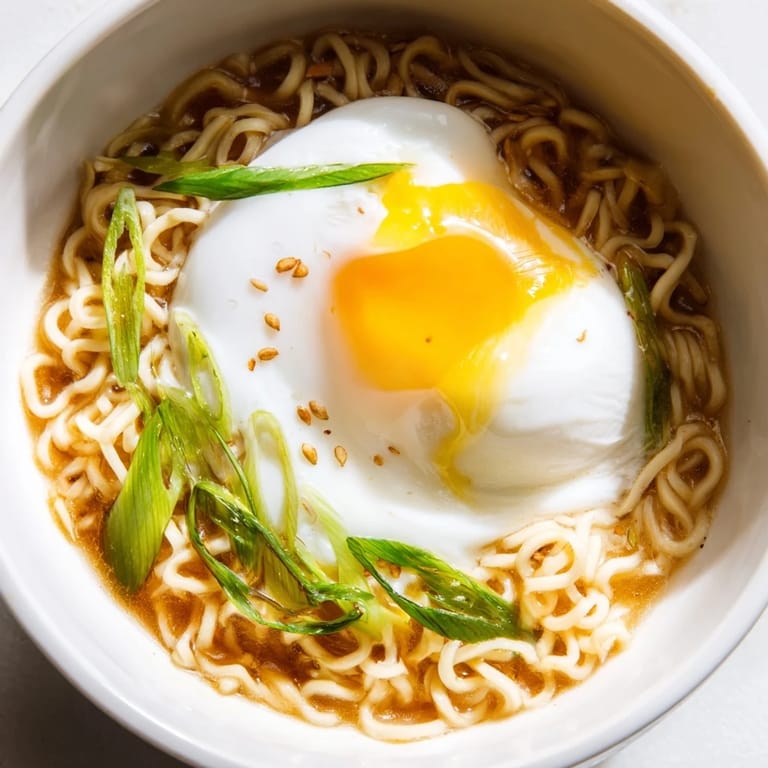
- Transfer everything carefully so your egg stays intact, then top with scallions and any heat or extra flavor you're craving. Serve right away while it's still steaming.
 Pin It
The best part happened months later when that same roommate made it for someone else and told them it was my recipe. I wasn't there, but they called to tell me about it, and I realized the meal had somehow become bigger than just efficiency. It had become kindness between people.
Why the Egg Matters So Much
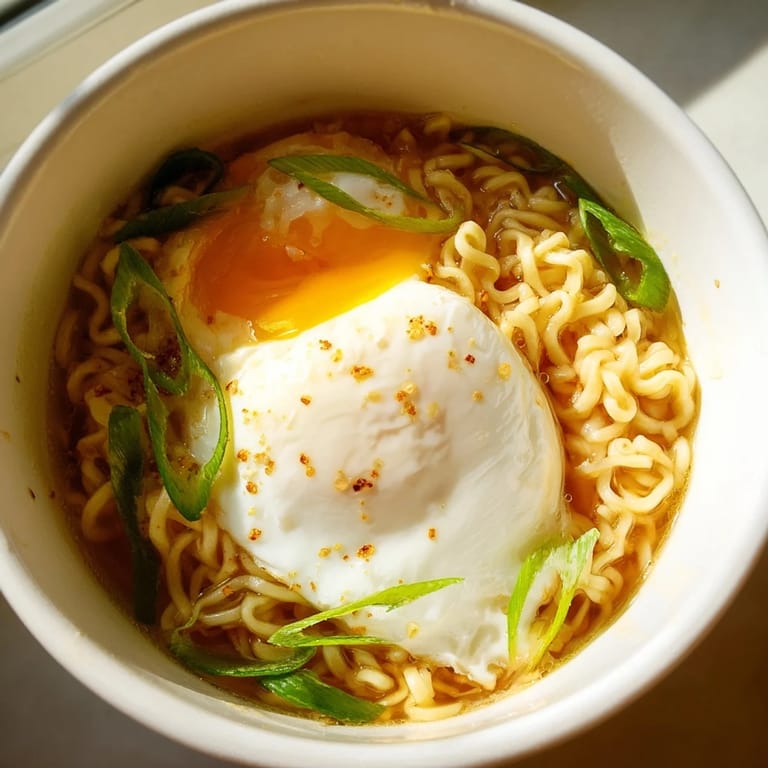
An egg in instant ramen isn't just protein—it's texture, it's richness, and it's the difference between eating something functional and eating something you actually want. The white becomes silky ribbons that catch the broth, and the yolk breaks open to create this creamy sauce that coats each bite. I've tried poaching the egg separately and dropping it in, and it never tastes the same as cooking it directly in the broth. The method matters.
Timing Your Toppings Right
There's a rhythm to this dish that takes maybe one or two attempts to feel natural. The scallions go on at the very end so they stay bright and crisp instead of wilting into the heat. If you're using chili oil or extra flavorings, this is when they make the biggest impact—they'll flavor the whole bite when everything's still hot and receptive. I used to add everything at once until I realized that the order actually changed how it tasted.
Variations That Work
The beauty of this recipe is that it's a foundation you can build on without losing the heart of it. Fresh spinach wilts into the broth in the last minute, adding color and something green. Corn kernels or sliced mushrooms add substance without making it complicated. Sometimes I'll add a splash of sesame oil at the very end, and that one change shifts the entire flavor profile toward something more aromatic and warm. The egg and butter stay constant—they're the things that make it feel elevated instead of basic.
- Spinach, corn, or mushrooms add nutrition without changing the cooking time.
- A drizzle of toasted sesame oil in the bowl transforms the whole flavor experience.
- White miso mixed into the water before the noodles adds umami depth that your taste buds will notice immediately.
 Pin It
 This is the kind of meal that fills you up in more ways than nutrition can measure. When you make it for someone, they'll remember it.
Recipe Questions & Answers
- → How do I get the egg silky and soft?
Crack the egg into simmering broth without stirring, cover, and cook 1-2 minutes until the white sets but yolk stays soft.
- → Can I add vegetables to this dish?
Yes, adding spinach, corn, or mushrooms boosts nutrition and complements the flavors well.
- → Is there an option to make the egg firmer?
Cook the covered egg for 3-4 minutes instead of 1-2 for a firmer texture.
- → What can enhance the broth’s flavor?
Stirring in butter adds richness; a drizzle of toasted sesame oil or soy sauce offers extra depth.
- → Can I adjust the spice level?
Add chili flakes or chili oil to taste for a spicy kick.
- → Does this method work with any instant noodles?
Yes, you can use any brand or flavor following the same cooking technique.