 Pin It
 My coworker Sarah came back from Seoul raving about Korean flavors in everything, and one Tuesday afternoon she casually mentioned it over lunch. I had a box of elbow macaroni sitting in my pantry and a jar of gochujang I'd been nervous about using, so I thought, why not see what happens? That first bowl was clumsy but electric—the creamy cheese sauce meeting those sweet-spicy turkey crumbles made my taste buds genuinely confused in the best way. Now it's become my go-to when I want something that feels both comforting and adventurous at the same time.
I made this for my sister's book club last month, and she asked me not to tell anyone I'd made it from scratch because she wanted to take credit. The whole room went quiet when people tasted it—not the polite quiet, but the kind where everyone's just thinking about their next bite. She finally confessed halfway through the evening, and now three people have texted me asking for the recipe, which honestly feels better than any pretend credit ever could.
Ingredients
- Elbow macaroni (300 g): The shape matters here because those little tubes catch every bit of sauce, but honestly any pasta that holds sauce will work in a pinch.
- Unsalted butter (2 tbsp): Starting fresh without added salt gives you control over the final seasoning, which is crucial when you're balancing spicy and creamy.
- All-purpose flour (2 tbsp): This is your thickener, and you need just enough to create a roux that doesn't taste floury.
- Whole milk (500 ml): Don't skip the whole milk—low-fat versions won't give you that velvety texture that makes this dish worth making.
- Sharp cheddar cheese (150 g) and mozzarella (60 g): The cheddar brings the flavor punch while the mozzarella keeps everything stretchy and luxurious.
- Dijon mustard (1 tsp): This tiny amount wakes up the cheese sauce without making it taste like mustard, trust me on this one.
- Ground turkey (400 g): If you can find it, get the 93-7 lean ratio so your turkey doesn't release a pool of grease into the pan.
- Gochujang (2 tbsp): This Korean chili paste is the star of the turkey layer, bringing both heat and this deep sweet umami quality that makes people ask what your secret ingredient is.
- Garlic (2 cloves) and ginger (1 tbsp): Mince these fine because they're going into a quick-cooking sauce, and you want them distributed evenly throughout.
- Soy sauce (1 tbsp) and rice vinegar (1 tbsp): Together they create brightness that cuts through the richness of the cheese sauce and keeps your palate interested.
- Honey (1 tbsp): This balances the heat of the gochujang and rounds out the sauce so it tastes complete rather than one-note.
- Toasted sesame oil (1 tsp): One teaspoon is all you need—this stuff is intense in the best way, and it's the thing that makes people say, there's something different about this.
- Scallions (3 whole): Slice these thin and use them fresh as a garnish because they bring a sharp green note that cuts through all that richness.
- Toasted sesame seeds (optional but encouraged): These add texture and a nutty finishing touch that makes the dish look intentional.
Tired of Takeout? 🥡
Get 10 meals you can make faster than delivery arrives. Seriously.
One email. No spam. Unsubscribe anytime.
Instructions
- Get your pasta going:
- Bring a large pot of salted water to a boil and cook your macaroni according to the package until it's al dente—you want it to have a tiny bit of resistance when you bite it because it'll soften slightly when mixed with the warm sauce. Drain it in a colander and set it aside, but don't rinse it because that starch helps the sauce cling to each piece.
- Brown your turkey:
- While the pasta's cooking, pour vegetable oil into a skillet over medium-high heat and let it get shimmering, then add your ground turkey and break it up with a spoon, cooking until it's completely no longer pink, which takes about five minutes. You're looking for golden bits where it's made contact with the pan, not gray and steamed—this is where the flavor starts.
- Build the turkey flavor:
- Add your minced garlic and grated ginger to the turkey and cook for exactly one minute until your whole kitchen smells like a Korean restaurant, then stir in the gochujang, soy sauce, honey, rice vinegar, and sesame oil all at once. Let this simmer for a few minutes until it darkens slightly and looks glossy—that's when you know the flavors have married together and the sauce has thickened enough to coat the back of a spoon.
- Make your roux:
- In a separate saucepan over medium heat, melt the butter and watch it foam, then sprinkle in the flour while whisking constantly so you don't end up with lumps—cook this for about one minute until it smells toasted and nutty. This base is what's going to thicken your milk and transform it into a proper sauce instead of just a puddle of cream.
- Transform milk into sauce:
- Gradually pour in the milk while whisking continuously, making sure each addition is smooth before you add more, and keep whisking for three to four minutes until the mixture visibly thickens and coats the back of a spoon. It should look like it could coat your mac when you stir it together, silky and unified rather than thin and watery.
- Melt in your cheese:
- Remove the pan from heat and stir in the cheddar, mozzarella, mustard, salt, and pepper, stirring until everything melts together into one creamy, golden sauce—if any cheese isn't melting smoothly, put the pan back over very low heat for a moment. Taste it and adjust seasoning because this is your last chance to get it right before everything comes together.
- Bring it together:
- Tip your cooked macaroni into the cheese sauce and stir gently but thoroughly so every piece gets coated and nothing's left swimming loose at the bottom. The warm pasta will warm everything up and help the sauce cling perfectly.
- Plate and crown it:
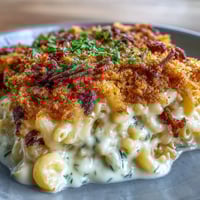
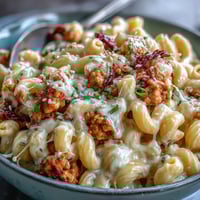
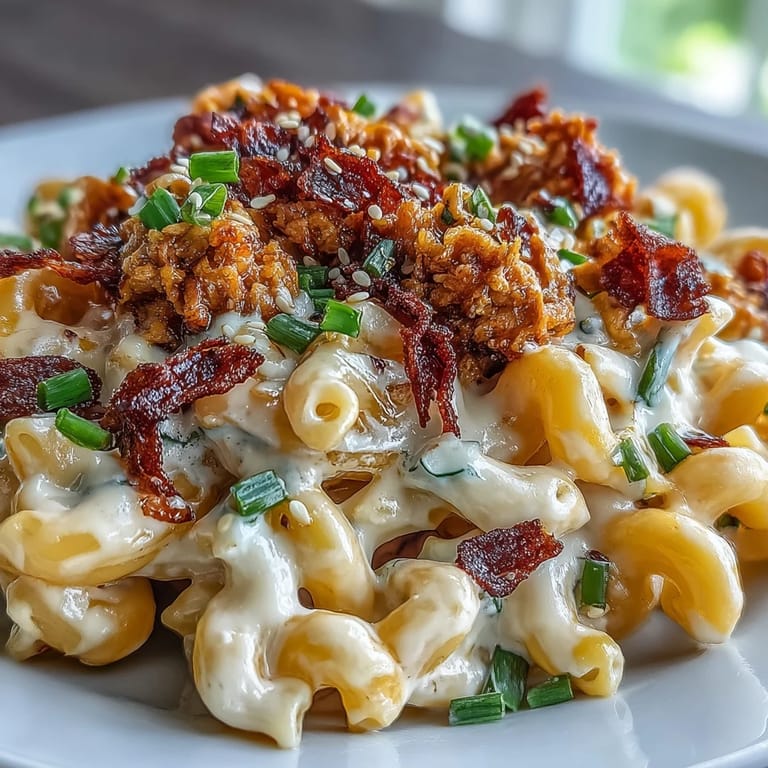
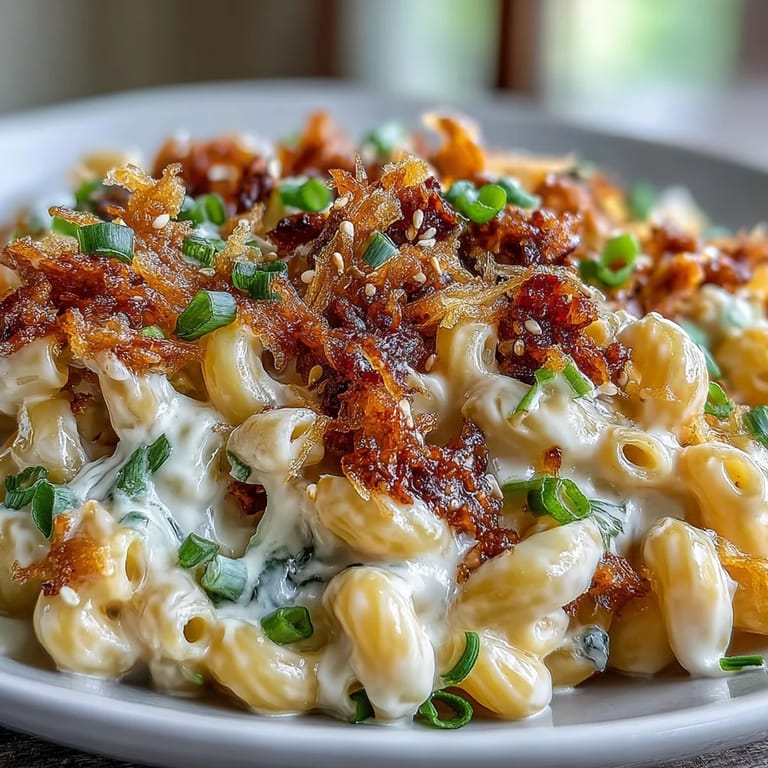
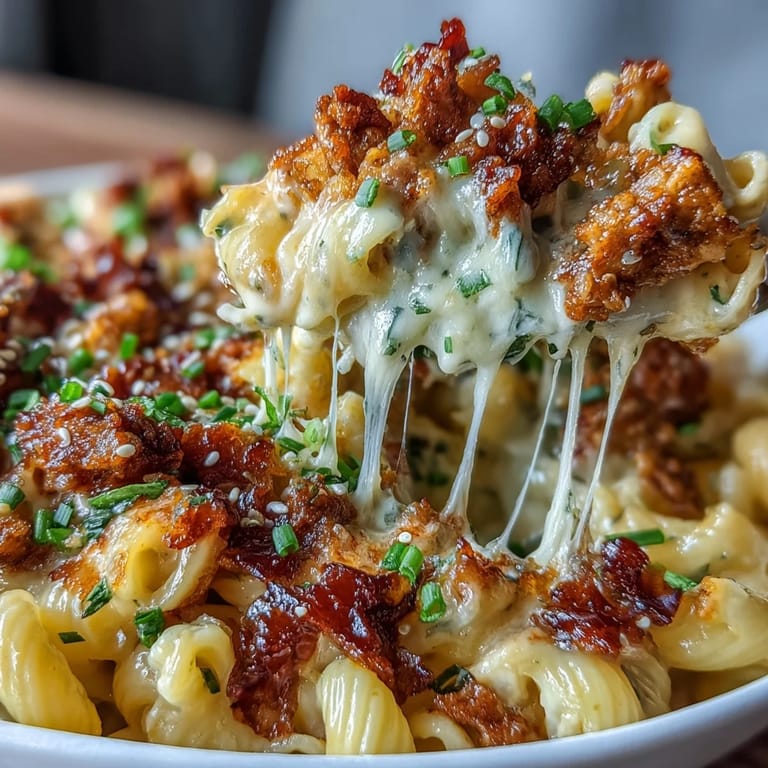
- Divide the mac and cheese among bowls and spoon a generous heap of the Korean turkey onto the top of each one, letting it rest there as a flavor crown rather than mixing it in completely. This way each bite is a choice between creamy and spicy, and they meet in the middle of your mouth.
- Finish with intention:
- Top each bowl with sliced scallions for brightness and sesame seeds if you have them, and serve immediately while everything's still steaming and the turkey's still glossy.
 Pin It
There's a moment in cooking when you realize something unexpected has become your thing, and that's what happened here. My mom now asks me to bring this to family dinners instead of my usual casseroles, which is its own kind of magic.
The Science of Fusion on a Plate
What makes this dish work is textural contrast and flavor intensity meeting through comfort. The creamy sauce coats your mouth and then the spicy turkey cuts through it, resetting your palate so you want another bite immediately. This is the same principle behind why Korean food is so often paired with rice or soups—the cool or creamy element balances the heat and makes the eating experience last longer instead of overwhelming you.
Timing Is Everything Here
The trickiest part of this whole recipe is coordinating so everything finishes at the same moment, because cold mac and cheese is sad and turkey sauce that's been sitting gets congealed. I've learned to start my pasta first, get that going, then begin the turkey while the pasta's cooking, and finally start the cheese sauce in the last few minutes. You want no more than five minutes between finishing your sauce and serving, so everyone's eating something that steams and tastes alive.
Making It Your Own
Once you understand the structure—creamy base, spicy meat layer, fresh garnish—you can play with this endlessly. I've made it with ground beef for a richer version, experimented with different cheese combinations, and even tried it with chicken, all of which work beautifully. The key is respecting the spice-to-cream ratio so no single flavor drowns out the others, which is the real lesson hiding inside this recipe.
- Add gochugaru (Korean chili flakes) directly to the turkey if you want pure heat without the depth of gochujang's fermented flavor.
- Substitute ground chicken for a lighter version, or use beef if you want something richer and deeper in flavor.
- Make it gluten-free by swapping regular pasta and flour for gluten-free versions and using tamari instead of soy sauce.
 Pin It
 This is the kind of dish that proves you don't need to choose between easy and interesting—sometimes they're the same thing. Make it once and you'll understand why it's become my answer to the question, what are you bringing?
Recipe Questions & Answers
- → Can I make the turkey topping ahead of time?
Yes, prepare the Korean turkey mixture up to 2 days in advance and store in the refrigerator. Reheat gently in a skillet before serving, adding a splash of water if needed to loosen the sauce.
- → What makes this different from regular mac and cheese?
The Korean-inspired turkey topping transforms this classic dish. Gochujang adds fermented chili depth and mild heat, while honey balances the flavors with sweetness. The result layers creamy comfort with bold umami notes.
- → Can I adjust the spice level?
Absolutely. Reduce gochujang to 1 tablespoon for milder flavor, or increase to 3 tablespoons for more heat. Add gochugaru flakes for extra spice. Honey helps balance any additional heat you add.
- → What proteins work as substitutes?
Ground chicken, beef, or pork all work beautifully in the Korean glaze. For a vegetarian version, use crumbled tofu or tempeh, or substitute with sautéed mushrooms for umami richness.
- → How do I store leftovers?
Keep components separate in airtight containers for up to 3 days. The cheese sauce may thicken when chilled—thin with a splash of milk when reheating. The turkey topping reheats beautifully in a skillet or microwave.
- → Can this be made gluten-free?
Yes. Use gluten-free macaroni and replace all-purpose flour with a 1:1 gluten-free flour blend. Substitute tamari for soy sauce and verify your gochujang is certified gluten-free.