 Pin It
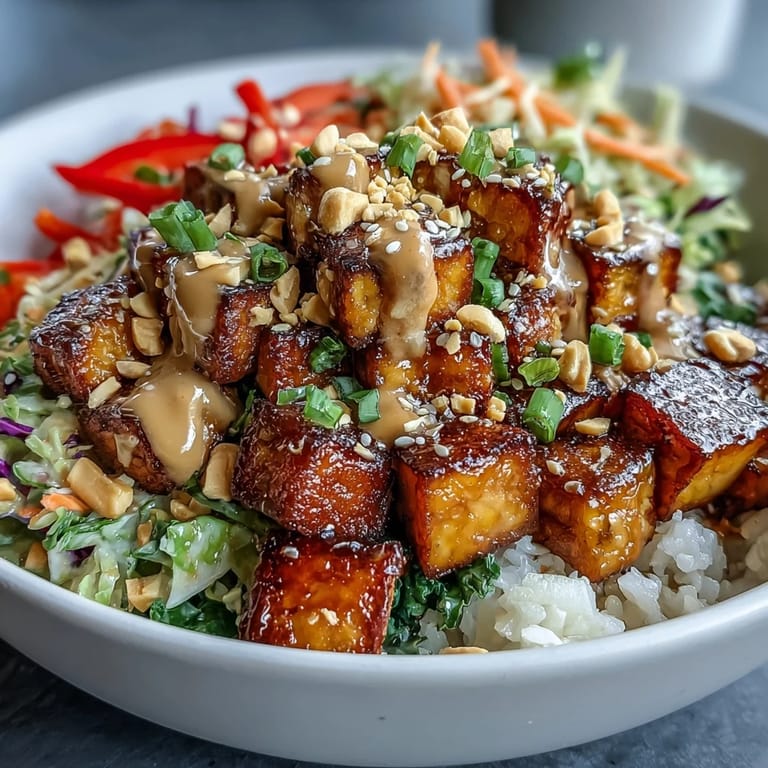
 The first bowl I assembled sat on my kitchen counter like a small work of art, bright purple cabbage curled against golden tofu, everything glistening under a swirl of peanut sauce. I'd been craving something filling but light, something that felt like taking care of myself without the fuss. My friend had mentioned these power bowls she ate after yoga, and I thought, why not try building one myself? That evening, with a podcast playing and the late sun slanting through the window, I learned that a good bowl is less about following rules and more about layering textures and colors until it just feels right. It became my go-to on nights when I wanted dinner to feel like a small celebration.
I made this for a small dinner with two friends who were skeptical about tofu. One of them poked at the crispy cubes with her fork, then took a bite and went quiet. She looked up and said, okay, I get it now. We sat around my little table, each of us customizing our bowls with extra cilantro or chili flakes, laughing about how we used to think healthy food had to be boring. That night proved that when you roast tofu until its actually crispy and drown everything in peanut sauce, even the doubters come around.
Ingredients
- Extra-firm tofu: Pressing it for at least 15 minutes removes excess moisture, which is the secret to getting those crispy, golden edges that make tofu worth eating.
- Cornstarch: This light coating transforms the tofu from soft to crispy when baked or pan-fried, giving it that satisfying crunch.
- Brown rice or quinoa: Both offer nutty flavor and a hearty base, quinoa cooks faster if youre in a rush, and brown rice holds up better if youre meal prepping.
- Purple cabbage: It adds a gorgeous pop of color and a crisp, slightly peppery bite that balances the richness of the peanut sauce.
- Edamame: These little green gems bring protein and a subtle sweetness, plus they make the bowl feel more complete.
- Peanut butter: Use creamy, not natural, for a smoother sauce, the kind that blends easily and clings to every vegetable.
- Soy sauce or tamari: Tamari keeps it gluten-free and tastes just as rich, adding that deep umami backbone the sauce needs.
- Maple syrup: A touch of sweetness rounds out the salty and tangy notes, making the sauce dangerously good.
- Toasted sesame oil: Just a teaspoon brings a warm, nutty aroma that makes the whole bowl smell like takeout.
- Fresh ginger and garlic: These two bring brightness and warmth, turning a simple peanut sauce into something you will want to lick off the spoon.
Tired of Takeout? 🥡
Get 10 meals you can make faster than delivery arrives. Seriously.
One email. No spam. Unsubscribe anytime.
Instructions
- Cook the grains:
- Start your rice or quinoa first so it has time to steam and fluff while you handle everything else. Use vegetable broth instead of water if you want an extra layer of flavor.
- Prep and coat the tofu:
- Pat the pressed tofu dry, cut it into cubes, then toss with cornstarch and a pinch of salt until every piece is lightly dusted. This step is non-negotiable if you want crispy tofu.
- Roast or pan-fry the tofu:
- Spread the cubes on a baking sheet and roast at 200 degrees Celsius, flipping halfway, until theyre golden and crisp on the edges. If youre pan-frying, let them sit undisturbed for a few minutes before flipping so they develop a proper crust.
- Make the peanut sauce:
- Whisk together peanut butter, soy sauce, maple syrup, rice vinegar, sesame oil, garlic, ginger, and warm water until smooth and pourable. Taste it and adjust, more water if its too thick, more maple if you want it sweeter.
- Prep the vegetables:
- Slice, julienne, or shred everything while the tofu cooks. Fresh, crisp vegetables make all the difference, so take your time with the knife work.
- Assemble the bowls:
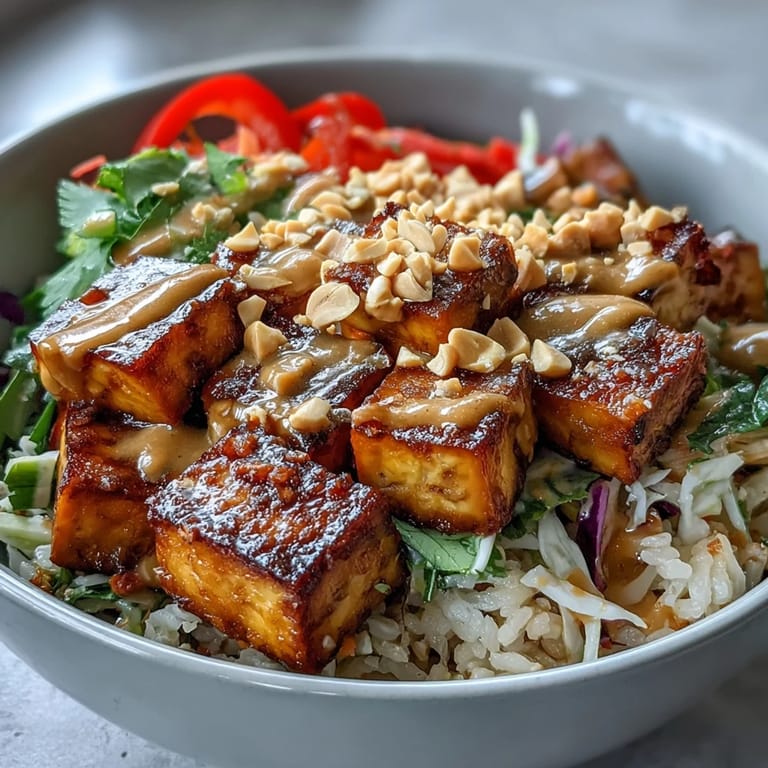
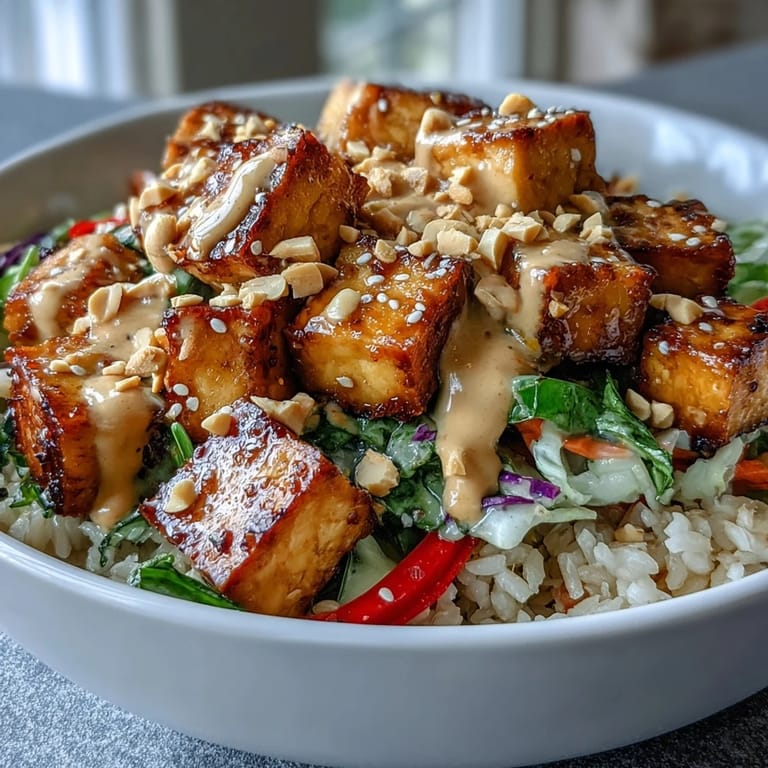
- Divide the grains among four bowls, then arrange the tofu and vegetables in sections around the edges. Drizzle the peanut sauce generously over everything, then finish with peanuts, sesame seeds, and fresh herbs.
 Pin It
One Sunday, I packed these bowls into containers and brought them to a potluck picnic. People kept asking for the recipe, and I realized it wasnt just about the food, it was about how the bowls looked and tasted like something youd order at a trendy cafe. A friend with a toddler told me she started making them at home because her kid would actually eat the vegetables when they were arranged like this. That made me smile, knowing something I stumbled into on a weeknight had become part of someone elses routine.
Choosing Your Base
Brown rice gives you that chewy, nutty texture that soaks up the peanut sauce beautifully, while quinoa cooks faster and adds a lighter, fluffier feel. I switch between them depending on my mood and how much time I have. If youre trying to cut carbs, cauliflower rice works too, though it does not absorb the sauce quite the same way. Whatever you choose, make sure its well-seasoned, even just a pinch of salt in the cooking water makes a difference.
Getting Tofu Right
Pressing tofu used to feel like a chore until I started just wrapping it in a clean towel and setting a heavy skillet on top for 15 minutes. The cornstarch coating is what gives it that crispy shell, almost like its been fried, but without all the oil. I learned the hard way that tossing it too gently leaves bald spots, so really get in there and make sure every cube is covered. Once its golden and crispy, the tofu becomes the star of the bowl, not just an afterthought.
Making It Your Own
This bowl is endlessly customizable, and thats part of why it never gets boring. Ive added roasted sweet potato, avocado slices, steamed broccoli, and even pickled radishes when I had them on hand. The peanut sauce is the constant, everything else can shift based on the season or whats about to go bad in the crisper drawer. Sometimes I skip the edamame and toss in chickpeas, or swap the cucumber for snap peas.
- Try adding a handful of fresh herbs like cilantro, mint, or Thai basil for brightness.
- A squeeze of lime right before eating wakes up all the flavors.
- If you want more heat, stir sriracha or sambal oelek directly into the peanut sauce.
 Pin It
 Now, whenever I need something nourishing that does not require much thought, I come back to this bowl. It reminds me that taking care of yourself can be colorful, delicious, and surprisingly simple.
Recipe Questions & Answers
- → Can I make the peanut sauce ahead of time?
Absolutely. The peanut sauce keeps well in the refrigerator for up to one week. Store in an airtight container and give it a good stir before using—you may need to add a splash of water to restore the creamy consistency.
- → What's the best way to get crispy tofu?
Pressing the tofu removes excess moisture, which is crucial for achieving crispiness. Coat the cubes lightly in cornstarch before cooking. For best results, bake at 200°C (400°F) for 20-25 minutes, flipping halfway, or pan-fry in a hot skillet with oil until golden brown on all sides.
- → Can I use other grains besides rice or quinoa?
Certainly. Try cauliflower rice for a low-carb alternative, noodles for an Asian-inspired twist, or even farro and barley for a hearty variation. Just adjust cooking times according to package instructions.
- → How can I add more protein to this bowl?
Beyond the tofu and edamame already included, you can add roasted chickpeas, hemp seeds sprinkled on top, or serve with a side of baked tempeh. Avocado also adds satisfying healthy fats and protein.
- → Is this bowl spicy?
The base bowl is mild with just a gentle warmth from ginger and optional chili flakes. For more heat, add sriracha to the peanut sauce, sprinkle red pepper flakes over the finished bowl, or serve with sliced fresh chilies.
- → Can I use frozen vegetables?
Yes, though fresh vegetables provide the best texture and crunch. If using frozen, thaw and pat them dry before adding to your bowl. Frozen edamame works perfectly—just steam according to package directions.