 Pin It
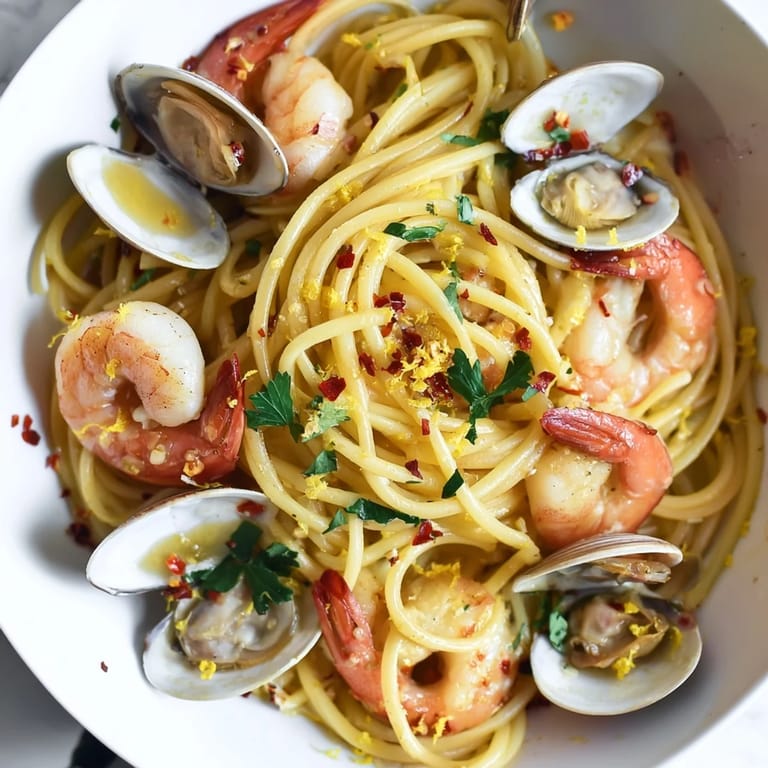
 There's something about the smell of garlic hitting hot olive oil that makes everything feel like an occasion. I discovered this seafood pasta aglio e olio years ago on a spontaneous trip to the Amalfi Coast, where a tiny restaurant tucked between limestone cliffs served it without fuss or pretension. The cook was barely paying attention, tossing everything together as if it were the hundredth time that day, but when that plate arrived, I understood why simplicity wins. Now whenever I make it, I'm chasing that same feeling—that moment when good ingredients and honest technique create something that tastes like a memory.
I made this for my partner on a Tuesday night when neither of us had energy for anything complicated, but we both needed something that felt special. The kitchen filled with steam and garlic perfume, and by the time we sat down, the whole mood had shifted. That's when I realized the best meals aren't about complexity; they're about showing up and letting good ingredients do the talking.
Ingredients
- Large shrimp (250 g): Look for shrimp that smell sweet like the ocean, not ammonia; peeling them fresh before cooking changes everything.
- Fresh clams (500 g): Buy them the same day you cook and store them in the coldest part of your fridge; discard any that don't close or feel heavy.
- Spaghetti (400 g): Quality matters here since it's the foundation; thinner pasta absorbs the oil better than thick ones.
- Extra virgin olive oil (6 tbsp): This is not the time to economize; a peppery, grassy oil becomes the sauce itself.
- Garlic cloves (5), thinly sliced: Thin slices cook evenly and turn golden without burning; one burnt piece will make you start over.
- Red chili flakes (1/2–1 tsp): Start with less if you're uncertain; heat builds as it sits.
- Dry white wine (1/2 cup): Something you'd actually drink; the wine cooks down and becomes part of the clam liquid.
- Lemon (1), zested and juiced: The brightness here is non-negotiable; it wakes everything up at the very end.
- Fresh flat-leaf parsley (1/4 cup), chopped: Add most of it at the end so it stays vibrant green and alive.
- Salt and black pepper: Taste constantly; the pasta water is salty, so adjust accordingly.
Tired of Takeout? 🥡
Get 10 meals you can make faster than delivery arrives. Seriously.
One email. No spam. Unsubscribe anytime.
Instructions
- Get your water ready:
- Salt a large pot generously and bring it to a rolling boil; the water should taste like the sea. This salted water is your only seasoning for the pasta.
- Cook the spaghetti:
- Follow the package time but taste it a minute before it says you should; al dente means it still has a subtle resistance. Reserve a half cup of starchy pasta water before draining—this liquid gold will emulsify your final dish.
- Coax out the garlic oil:
- Pour olive oil into a large skillet and warm it over medium heat until it shimmers slightly. Add your thinly sliced garlic and chili flakes, then listen for that gentle sizzle. Stir constantly for about one minute; the moment the garlic turns pale gold and smells sweet and toasty, you're done. One second too long and it bitters, so trust your nose.
- Sear the shrimp:
- Increase the heat slightly and add the shrimp to the fragrant oil. They'll turn from translucent to bright pink in about two minutes; move them around so they cook evenly on both sides. Transfer them to a clean plate the moment they're done.
- Open the clams:
- Return the skillet to medium-high heat and pour in the white wine, scraping up any brown bits stuck to the bottom. Add the clams, cover the skillet, and let them steam for three to five minutes, shaking the pan every minute or so. They'll pop open when they're ready; any that refuse to open should be discarded.
- Bring it all together:
- Return the shrimp to the skillet with the clams, then add your drained pasta, lemon zest, and lemon juice. Toss everything together gently, pouring in pasta water a few tablespoons at a time until the dish looks silky and cohesive, not dry or soupy. Most of the parsley goes in now.
- Taste and serve:
- Season with salt and pepper, taste again, and adjust. Divide among plates and top with the remaining parsley and a lemon wedge.
 Pin It
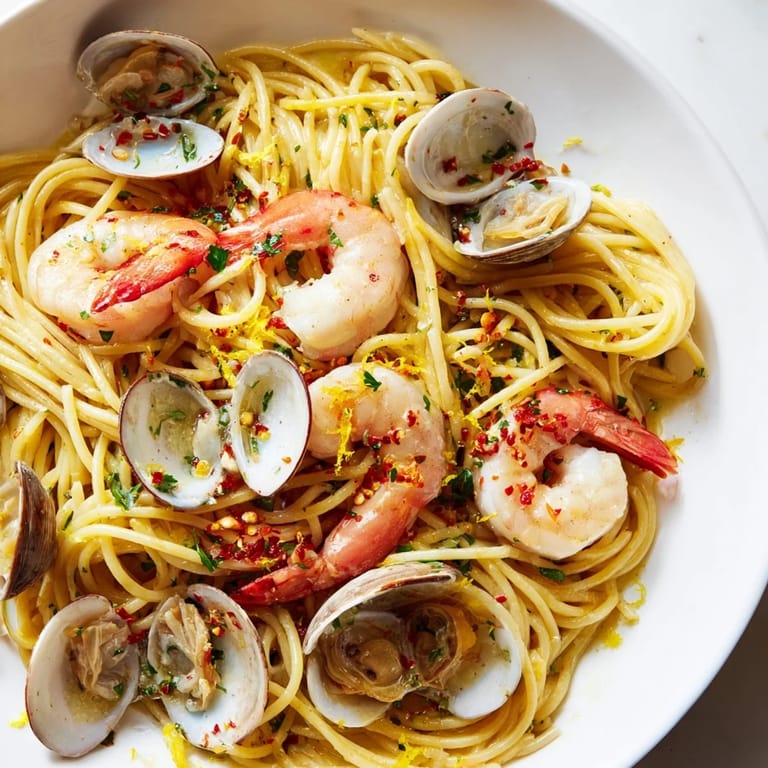
The first time a guest told me this tasted like a restaurant, I felt genuinely proud in a way that doesn't happen with complicated recipes. It wasn't about technique or fancy equipment; it was about respecting each ingredient enough to not overthink it. That's when cooking stopped being a chore and started being a way to say "I'm glad you're here."
Why This Dish Works
Aglio e olio is a structure, not a rigid formula. The garlic oil becomes your base, the seafood adds its natural briny liquid, and the pasta water emulsifies everything into something greater than its parts. It's the cooking equivalent of trusting your instincts; the more you make it, the less you need to check the recipe.
The Seafood Question
Shrimp and clams are traditional, but mussels work beautifully if that's what you find, and I've added squid for variety when I'm feeling adventurous. The key is using seafood that's impeccably fresh and cooking it just long enough so it stays tender. Overcooked shrimp becomes rubbery, and clams transform from tender to impossible in seconds, so timing is everything.
Timing and Flexibility
The beauty of this dish is how adaptable it is to the moment. On nights when I have extra garlic cloves, I add them. When my lemon is particularly fragrant, I use more zest. When someone has a gluten sensitivity, swap in gluten-free pasta without changing anything else. The core logic remains unshaken.
- This pasta is best served immediately, while everything is still hot and the pasta hasn't started absorbing all the liquid.
- Pair it with a crisp Italian white wine like Pinot Grigio or Vermentino.
- Leftovers can be reheated gently in a skillet with a splash of water, though it's honestly best the first time around.
 Pin It
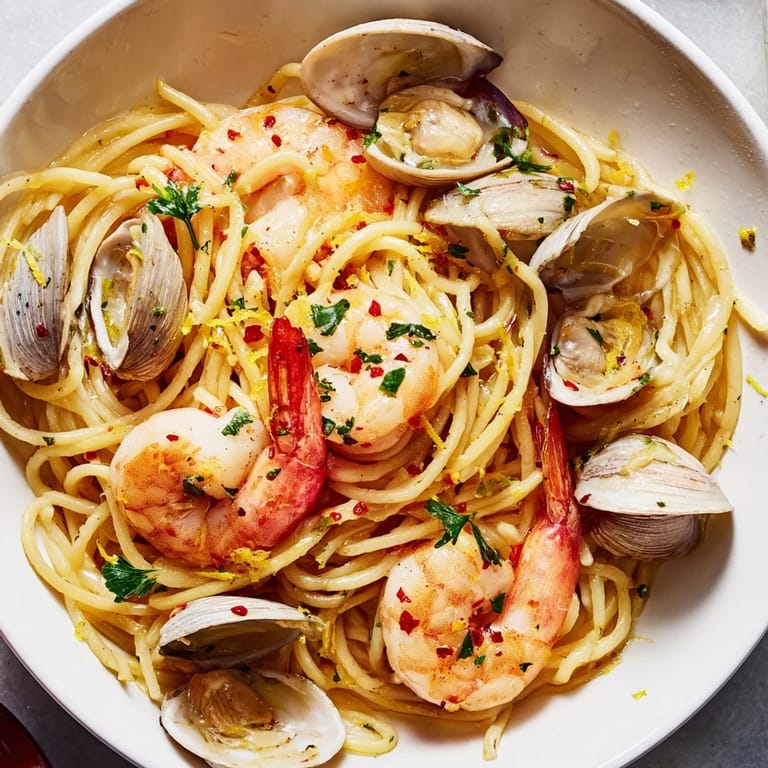
 This recipe is a reminder that some of the best meals come from knowing when to stop fussing. Let the seafood sing, let the garlic glow gold, and let simplicity be enough.
Recipe Questions & Answers
- → How do I prevent garlic from burning?
Cook garlic over medium heat and remove from heat as soon as it turns golden and fragrant to avoid bitterness.
- → Can I substitute the clams with other seafood?
Yes, mussels or calamari can be used instead for a delightful variation.
- → What pasta type works best for this dish?
Spaghetti is traditional, but any long, thin pasta can complement the flavors well.
- → How does adding pasta water affect the sauce?
The reserved pasta water helps bind the sauce and pasta, creating a silky texture.
- → What wine pairs well with this seafood pasta?
A crisp Italian white wine like Pinot Grigio enhances the dish’s fresh and zesty flavors.