 Pin It
 There's something almost magical about the moment when a pot of vegetables transforms into something glossy and rich. I discovered this sauce entirely by accident one Wednesday evening when I had a refrigerator full of vegetables that were about to turn soft, and absolutely nothing else to make for dinner. The immersion blender changed everything—suddenly those humble carrots, peppers, and zucchini became a silky base that tasted like I'd been simmering tomatoes all afternoon. My daughter took one bite and asked if I'd added cream, which made me laugh because the entire point was sneaking vegetables past her radar.
I made this sauce for a friend who'd just moved to the neighborhood, and I remember how quickly the kitchen filled with such a warm, inviting smell—onions and garlic softening in olive oil, then tomatoes deepening into something almost caramel-like. When she tasted it over fresh pasta, she closed her eyes like she was tasting something from her childhood, and asked for the recipe right there at the table. That moment reminded me that the best recipes aren't always the complicated ones; sometimes they're just about taking your time and letting simple ingredients speak.
Ingredients
- Carrot: The natural sweetness that balances tomato acidity—buy medium ones that aren't too thick so they soften evenly.
- Zucchini: Adds body and silkiness without changing the flavor, and it practically melts once blended.
- Bell pepper: Red or orange ones are sweeter than green, which is why they're my choice here.
- Onion: The foundation of everything good in this sauce—don't skip the sauté time.
- Garlic: Added after the vegetables soften so it doesn't burn and turn bitter.
- Celery: The secret ingredient that deepens the savory notes without tasting like celery.
- Crushed tomatoes: Two cans give you enough body; fresh tomatoes would require cooking twice as long.
- Tomato paste: Concentrate of flavor that adds richness and helps thicken everything.
- Olive oil: Use something you wouldn't be ashamed to drizzle on bread.
- Oregano and basil: Dried herbs work perfectly here and release their flavor into the heat.
- Salt and pepper: Taste as you go—you might need less if your tomatoes are already salty.
- Sugar: Just a tiny bit to whisper down any harsh acidity from the tomatoes, not to make it sweet.
Tired of Takeout? 🥡
Get 10 meals you can make faster than delivery arrives. Seriously.
One email. No spam. Unsubscribe anytime.
Instructions
- Get your vegetables soft and fragrant:
- Heat olive oil in your largest saucepan and add the onion, carrot, celery, zucchini, and bell pepper. You're looking for that moment when everything starts to soften and the kitchen smells like dinner is happening. After about 8 to 10 minutes, when a fork easily pierces each piece, add your garlic and cook just until you can smell it—this takes about a minute.
- Build the tomato foundation:
- Stir in the tomato paste and let it cook for one minute so it caramelizes slightly against the bottom of the pan. Then add your crushed tomatoes, oregano, basil, salt, pepper, and that optional pinch of sugar if your tomatoes taste a bit sharp.
- Let it simmer and soften:
- Bring everything to a gentle simmer, cover it, and walk away for 20 to 25 minutes. Stir occasionally just to make sure nothing sticks to the bottom, and taste the sauce after about 15 minutes—it should taste increasingly rich and deep. The vegetables should be so tender they practically dissolve when you press them with a spoon.
- Make it smooth and silky:
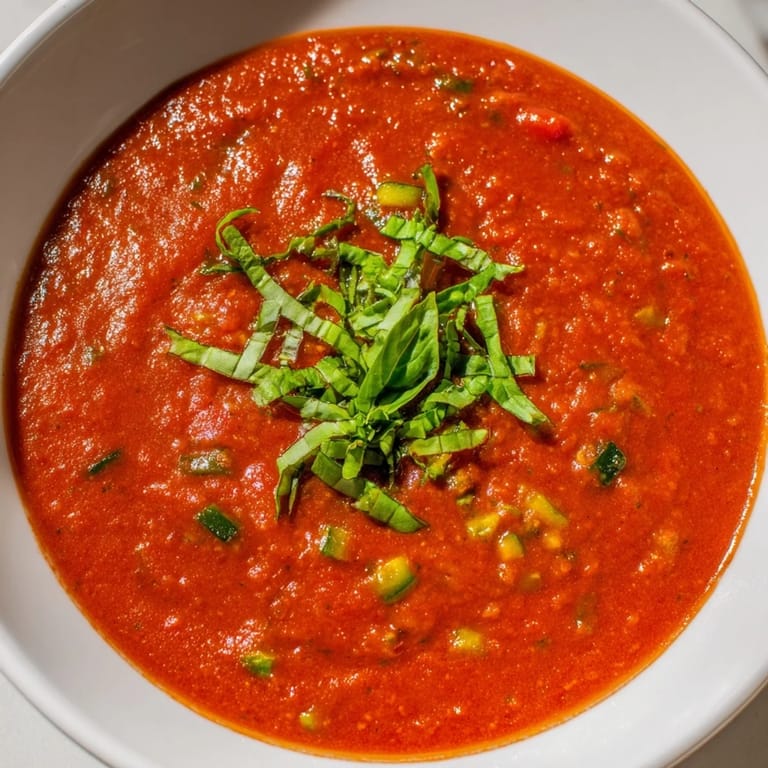
- Remove from heat and use an immersion blender to purée everything until there are no visible vegetable pieces and the sauce flows like silk. If you don't have an immersion blender, carefully transfer batches to a regular blender—just don't fill it more than halfway or hot sauce will explode everywhere, which I know from personal experience. Return it to low heat and let it simmer uncovered for another 5 to 10 minutes while you adjust the seasoning one more time.
- Finish and serve:
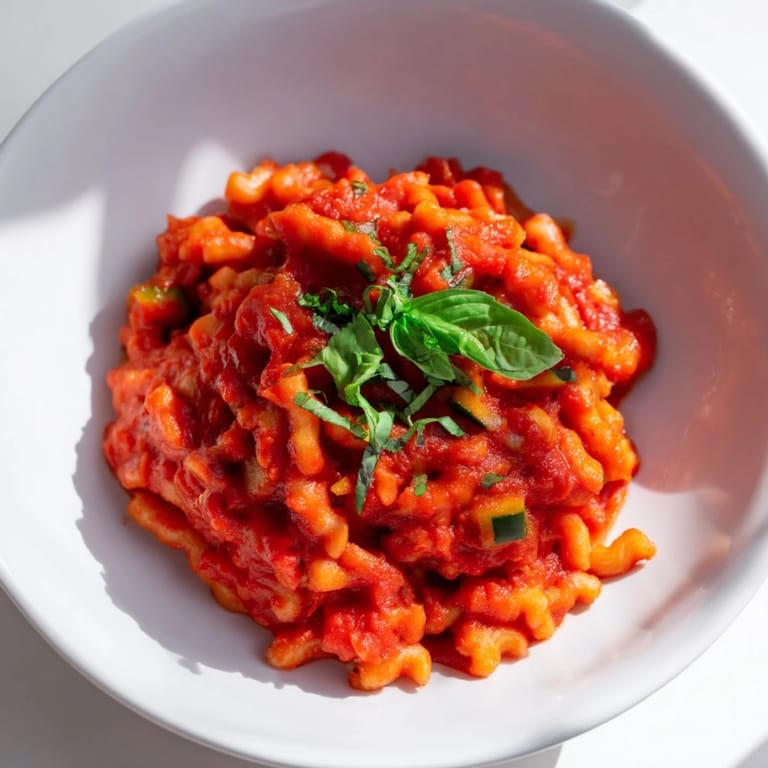
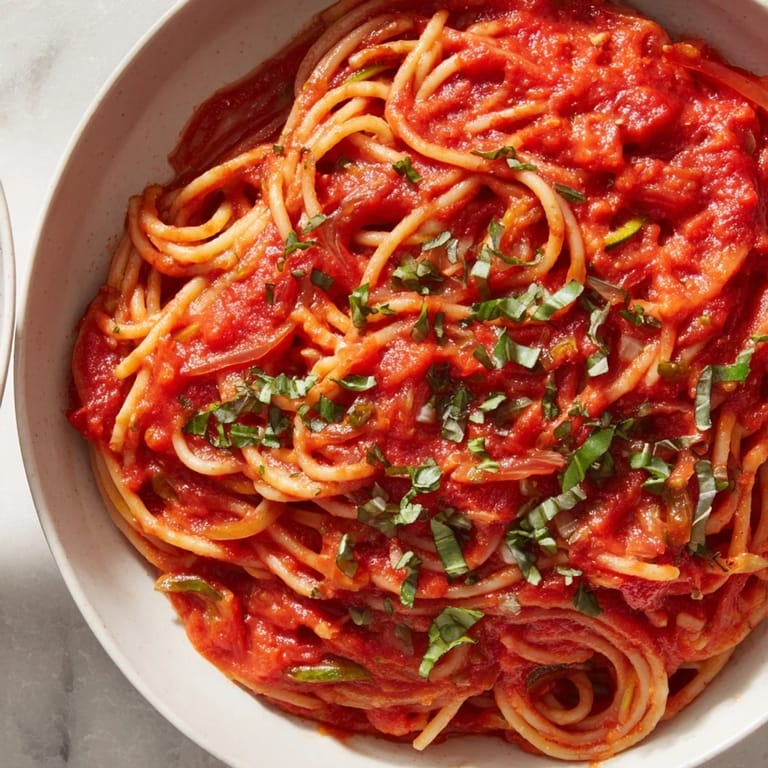
- Pour it over hot pasta and finish with a small handful of fresh basil if you have it. The warmth of the pasta will release the basil's aroma.
 Pin It
What stuck with me most was watching my usually vegetable-resistant nephew ask for seconds, and then thirds. He didn't know he was eating an entire carrot and half a zucchini in each bite, and honestly, that felt like the ultimate kitchen victory. Food doesn't need to announce itself to be nourishing.
Making It Your Own
Once you understand how this sauce works, you can start playing with it. I've added a small handful of fresh spinach in the last five minutes of cooking and nobody could taste it, only the sauce became a touch richer. A colleague swears by stirring in cooked white beans after blending, which turns it into something more substantial. The vegetable base is so forgiving that you can use whatever needs eating—mushrooms, eggplant, even broccoli stems all work beautifully.
Storage and Make-Ahead Magic
This is one of those sauces that actually improves after a day in the refrigerator, as the flavors continue to meld and deepen. I always make a double batch and freeze half in portions, which means on nights when I'm tired or running late, there's already a restaurant-quality sauce waiting in my freezer. It keeps frozen for up to three months without losing any character.
Perfect Pairings and Last Thoughts
Fresh egg pasta feels luxurious with this sauce, but it's equally delicious over whole-wheat pasta if you're looking for more fiber, or even spooned onto roasted vegetables. The sauce is naturally vegan and gluten-free as written, which makes it a safe choice when you're cooking for a mixed group.
- A grating of good Parmesan on top feels optional but transformative.
- Pair with a light white wine if you're cooking for an evening that feels special.
- Leftover sauce becomes pizza topping, soup base, or even a dip for crusty bread.
 Pin It
 This sauce taught me that the best cooking doesn't come from complicated recipes or fancy ingredients—it comes from respecting what you have and taking the time to let it become something beautiful. Make it tonight.
Recipe Questions & Answers
- → What vegetables are included in this sauce?
It features carrot, zucchini, bell pepper, onion, garlic, and celery, all cooked until tender and blended into the sauce.
- → How is the sauce thickened and smoothed?
The cooked vegetables and tomato base are puréed using an immersion or countertop blender to achieve a smooth consistency.
- → Can I add spice to the sauce?
Yes, a pinch of red pepper flakes can be added for a gentle heat without overpowering the flavors.
- → How long does it take to prepare and cook?
Preparation takes about 15 minutes with an additional 35 minutes of simmering for tender vegetables and melded flavors.
- → Is this sauce suitable for special diets?
Yes, it's naturally vegetarian, vegan, and free of nuts, providing an allergen-friendly option.
- → Can this sauce be stored or frozen?
It freezes well for up to three months, allowing easy meal prep and storage.