 Pin It
 The first time I wrapped beef in pastry, my hands were shaking. Not from nerves about the cooking, but because my sister had just announced her engagement, and somehow I'd volunteered to make Beef Wellington for the celebration dinner without thinking it through. Watching that golden pastry emerge from the oven, crackling and perfect, felt like I'd pulled off something impossible. Now whenever I make it, that rush comes back—that strange mix of doubt and determination that makes the whole thing taste better.
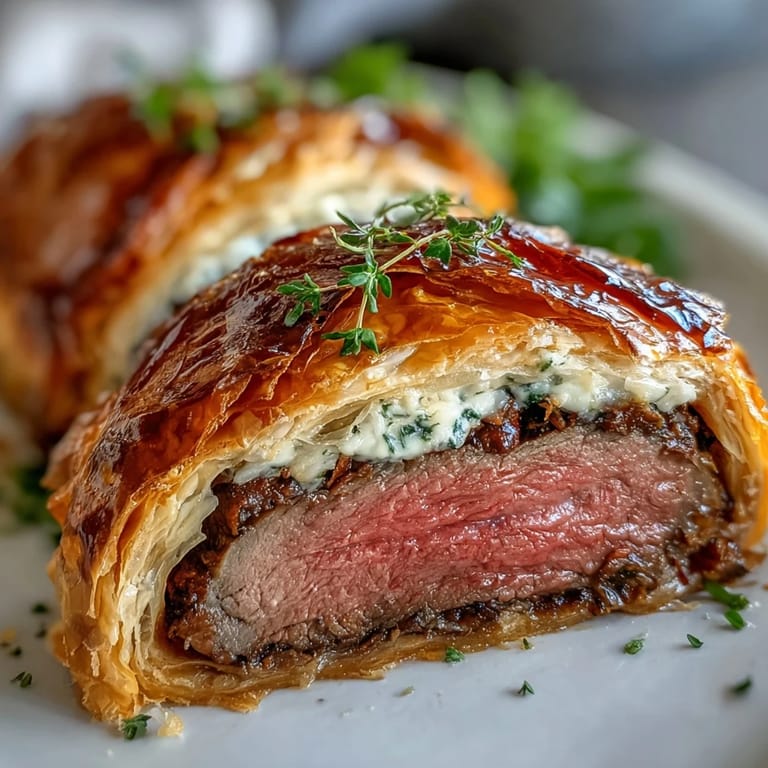
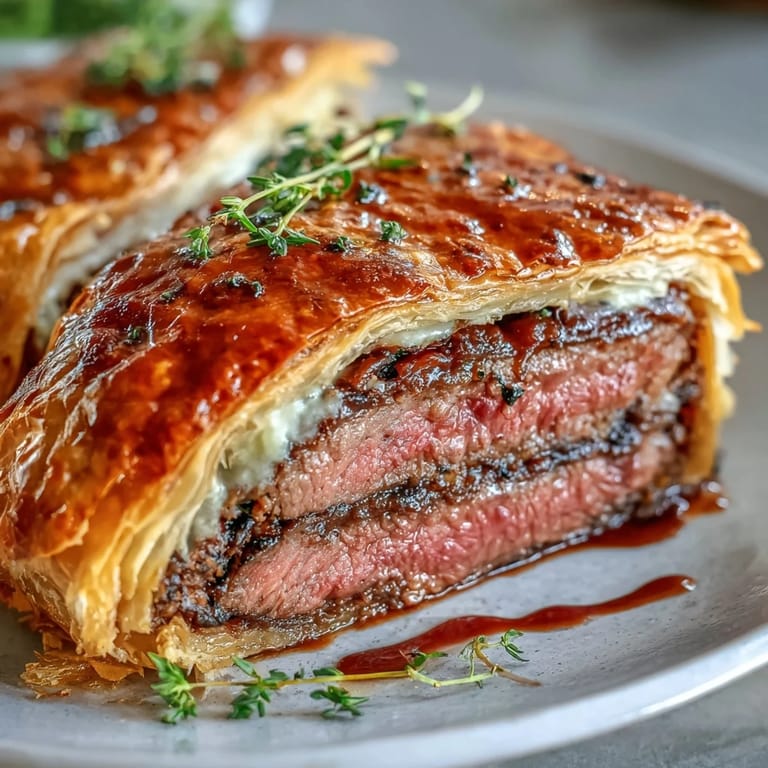
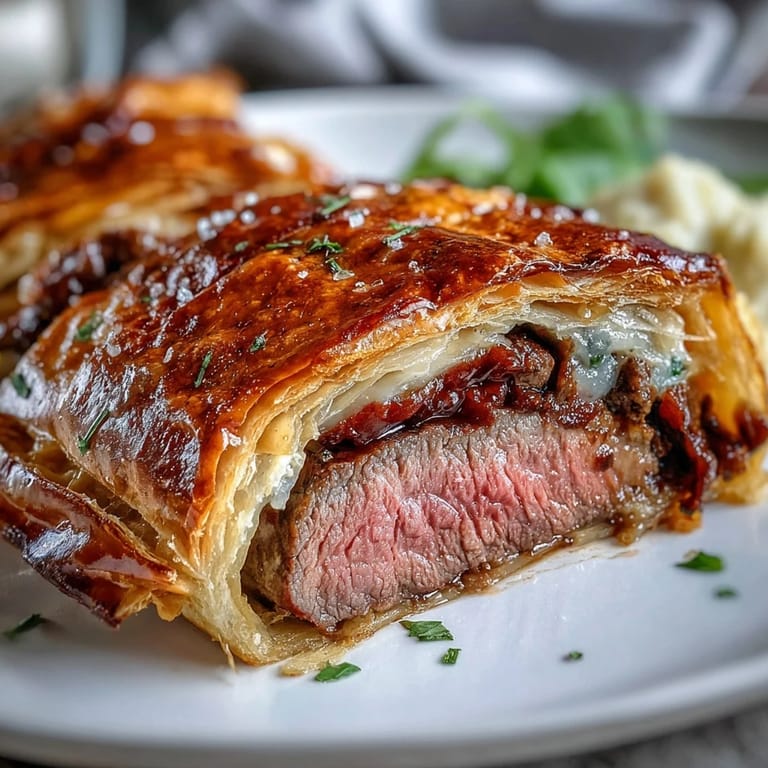
I made this for a dinner party where someone mentioned they'd never had anything homemade that felt restaurant-quality, and I watched their face when they cut into it. That moment when the knife hits the pastry crust and you see all those layers—beef, duxelles, prosciutto—it never gets old. It's one of those dishes that tastes the way confidence feels.
Ingredients
- Beef tenderloin (2 lb / 900 g), trimmed: This is the foundation, and using tenderloin matters because it's naturally tender and cooks evenly; don't skip the trimming step or you'll have uneven thickness.
- Salt and freshly ground black pepper: Season generously at the start; this is your only chance to season the beef itself before it gets wrapped.
- Vegetable oil (2 tbsp): A high-heat oil is essential for searing without burning; I use grapeseed or avocado oil for better results.
- Cremini or button mushrooms (1 lb / 450 g), finely chopped: The finer you chop these, the better the duxelles clings to the beef; a food processor saves time and effort here.
- Shallots (2) and garlic (2 cloves), minced: These aromatics dissolve into the mushroom mixture and add depth without texture.
- Unsalted butter (2 tbsp): Butter brings richness to the duxelles and helps the moisture cook off faster.
- Fresh thyme leaves (2 tbsp), chopped: Fresh thyme is worth seeking out; dried thyme tastes harsh against the delicate beef and mushrooms.
- Prosciutto (10 slices): This creates a moisture barrier and adds a silky richness; it also helps hold everything together during rolling.
- Dijon mustard (2 tbsp): A thin layer adds a subtle tang that cuts through the richness; don't overdo it or it becomes the only flavor you taste.
- Puff pastry (1 sheet, about 14 oz / 400 g): Thaw it slowly in the fridge the night before for the best texture; warm puff pastry tears and cracks.
- Egg (1 large), beaten: This egg wash is what gives the pastry that deep golden shine and ensures even browning.
- Flour, for dusting: This prevents sticking but use it sparingly; too much flour on the pastry seals it and prevents browning.
Tired of Takeout? 🥡
Get 10 meals you can make faster than delivery arrives. Seriously.
One email. No spam. Unsubscribe anytime.
Instructions
- Sear your beef properly:
- Heat your skillet until it's screaming hot, then sear the beef on all sides for about two minutes each until you get a deep brown crust. This sealing keeps the juices inside and builds flavor; don't move it around or you'll break the crust. Let it cool completely before wrapping, or the heat will cook the prosciutto unevenly.
- Make the duxelles:
- This mushroom paste is where the magic lives—cook it slowly over medium heat, stirring often, until every bit of moisture has evaporated and it looks almost like a paste. This takes patience, usually about ten minutes, but rushing it means a watery, bland layer that slides off during cooking.
- Layer like you mean it:
- On plastic wrap, arrange your prosciutto slices so they overlap just slightly and form a rectangle; you want them tight enough to hold the mushroom mixture but loose enough to roll smoothly around the beef.
- Wrap and chill:
- Spread the duxelles evenly over prosciutto, place the beef on top, then use the plastic wrap to roll everything into a tight log by lifting the wrap and rolling it over itself. This technique is easier than it sounds, and the plastic keeps everything clean; chill for twenty minutes so everything sets.
- Encase in pastry:
- Roll out your thawed puff pastry, place the unwrapped beef in the center, then fold the pastry over and seal the edges with a touch of water. The seam should be on the bottom when you place it on the baking sheet.
- Egg wash and chill again:
- Brush the whole thing with beaten egg and give it a final chill while your oven preheats; this helps the pastry puff evenly and brown beautifully.
- Bake to temperature:
- Bake at 425°F (220°C) for forty to forty-five minutes until the pastry is golden and your thermometer reads one hundred twenty degrees for rare beef. The temperature matters more than the time; the pastry can brown while the beef rests safely inside.
- Rest before slicing:
- Let it rest for ten to fifteen minutes after coming out of the oven; this allows the juices to redistribute and keeps every slice tender and moist instead of weeping onto the plate.
 Pin It
I learned the hard way that this dish transforms an ordinary evening into something memorable. A friend who usually orders takeout sat down, took one bite, and suddenly she was asking for the recipe—not to make it herself, but because she wanted to understand how something this elegant could come from a home kitchen. That's when I realized it's not just about the flavors.
The Prosciutto Layer Matters More Than You Think
The prosciutto isn't just there for flavor; it acts as a moisture barrier between the mushrooms and the beef, which keeps the beef from turning gray and prevents sogginess from developing. I once skipped it thinking the duxelles alone would be enough, and the beef came out pale and slightly steamed instead of beautifully seared. The saltiness of the prosciutto also seasoned the entire package without me having to add more salt to the duxelles, which would have made it too intense.
Temperature Control Is Everything
This dish lives in the space between underdone and overdone, and an instant-read thermometer is the only tool that removes the guesswork. I've seen people leave it in too long because they're worried about the pastry, and then the beef becomes tough and the whole thing feels like a waste of good ingredients. The pastry will finish cooking while the beef rests, so pull it out at one hundred twenty degrees for rare or one hundred thirty for medium-rare, and trust that rest period.
Serving and Timing Secrets
You can prep everything up to the point of wrapping in pastry several hours ahead, which means the actual baking time is your only real constraint. This makes it perfect for entertaining because you're not stressed in the kitchen while your guests are waiting. Some nights I make a simple red wine reduction to serve alongside, and other nights I let the beef speak for itself with just a light pan jus.
- A sharp knife dipped in hot water gives you clean slices through the pastry without cracking it.
- Slice thick enough to show off all the layers, but thin enough that the pastry stays attached.
- If you're serving it, plate it immediately so the pastry stays crispy and doesn't steam from the warm beef.
 Pin It
 This dish has a way of making people feel celebrated, and honestly, that's what cooking is really about. Whether it's for an anniversary, a promotion, or just because you want Tuesday to feel special, Beef Wellington delivers.
Recipe Questions & Answers
- → What temperature should the beef reach for medium-rare?
For medium-rare, aim for an internal temperature of 130°F (54°C) when checked with an instant-read thermometer. The beef will continue cooking slightly as it rests.
- → Can I prepare Beef Wellington ahead of time?
Yes, you can assemble it completely up to 24 hours in advance. Wrap tightly in plastic wrap and refrigerate. Brush with egg wash just before baking and add a few extra minutes to cooking time if starting from cold.
- → Why is my puff pastry soggy?
Ensure the mushroom duxelles is cooked until completely dry with no moisture remaining. Also, make sure the seared beef is completely cooled before wrapping to prevent steam from softening the pastry.
- → What can I serve alongside Beef Wellington?
Traditional accompaniments include roasted vegetables, sautéed green beans, creamy mashed potatoes, or glazed carrots. A red wine reduction or rich pan sauce complements the dish beautifully.
- → Can I use a different cut of beef?
Beef tenderloin is ideal for its uniform shape and tenderness, but you can use a well-trimmed beef fillet or center-cut portion. Avoid tougher cuts as the cooking time is relatively short.
- → How do I prevent the pastry from breaking when wrapping?
Roll the puff pastry to an even thickness and ensure it's cold but pliable. If it tears, patch it with scraps and seal with egg wash. Working quickly prevents the pastry from becoming too warm and difficult to handle.