 Pin It
 My neighbor knocked on my door one winter evening with a single celery root in hand, insisting I'd never tasted soup until I'd made this one. Skeptical about a vegetable I'd honestly never cooked with before, I ended up creating something that genuinely surprised me—silky, refined, and tasting nothing like I expected. That night taught me that sometimes the most elegant dishes come from the simplest ingredients and a willingness to try something unfamiliar.
Last spring, I ladled this soup into bowls for a dinner party where I was genuinely nervous—the kind of gathering where you want to impress but don't want anyone to notice you're trying. The moment I saw my guests slow down between spoonfuls, really tasting each one, I knew I'd found something worth making again and again.
Ingredients
- Celery root (about 700 g / 1.5 lb): This is the star, with a delicate celery flavor that becomes almost creamy when blended—peel it generously since the outer skin can be tough.
- Yukon Gold potato: Adds natural creaminess and body without making the soup feel heavy or starchy.
- Leek, white and light green parts only: The real secret to depth here; don't skip it or substitute with onion alone.
- Yellow onion and garlic: Build that base layer of flavor that makes people ask what's in this soup.
- Vegetable broth (4 cups): Use the good stuff if you have it—homemade is wonderful, but a quality store-bought broth absolutely matters.
- Whole milk and heavy cream: Together they create that silky finish; don't be tempted to skip either one.
- Unsalted butter or olive oil (2 tbsp): Butter gives a richer taste, but olive oil works beautifully if that's what you prefer.
- Bay leaf, white pepper, and salt: White pepper is worth seeking out here—it adds a clean bite without specks.
Tired of Takeout? 🥡
Get 10 meals you can make faster than delivery arrives. Seriously.
One email. No spam. Unsubscribe anytime.
Instructions
- Start with the aromatics:
- Melt butter in a large pot over medium heat and add your sliced leeks, chopped onion, and minced garlic. You want to listen for a gentle sizzle and watch for the vegetables to turn translucent and soft—this takes about 5 minutes, and you're not looking for any browning here. Trust the smell to tell you when it's ready.
- Build the base:
- Add your diced celery root and potato to the pot and let them cook for about 3 minutes, just enough for them to start releasing their flavors into the butter. Stir occasionally so nothing sticks to the bottom.
- Simmer into tenderness:
- Pour in your vegetable broth, add the bay leaf, and bring everything to a boil. Once it's bubbling, reduce the heat and cover the pot, letting it simmer gently for about 25 minutes until the celery root and potato are completely tender when you pierce them with a fork. The kitchen will smell incredible at this point.
- Blend it smooth:
- Remove and discard the bay leaf, then use an immersion blender to purée the soup right in the pot until it's completely smooth and velvety. If you don't have an immersion blender, carefully transfer the soup in batches to a regular blender, blend until smooth, and pour it back in. Take your time with this step—the smoother the soup, the more elegant it feels.
- Finish with cream:
- Stir in the milk and heavy cream, then warm the soup gently over low heat without letting it boil—boiling can sometimes cause cream to separate slightly, and we want that silky perfection. Season carefully with salt and white pepper, tasting as you go since broths vary in saltiness.
- Serve and garnish:
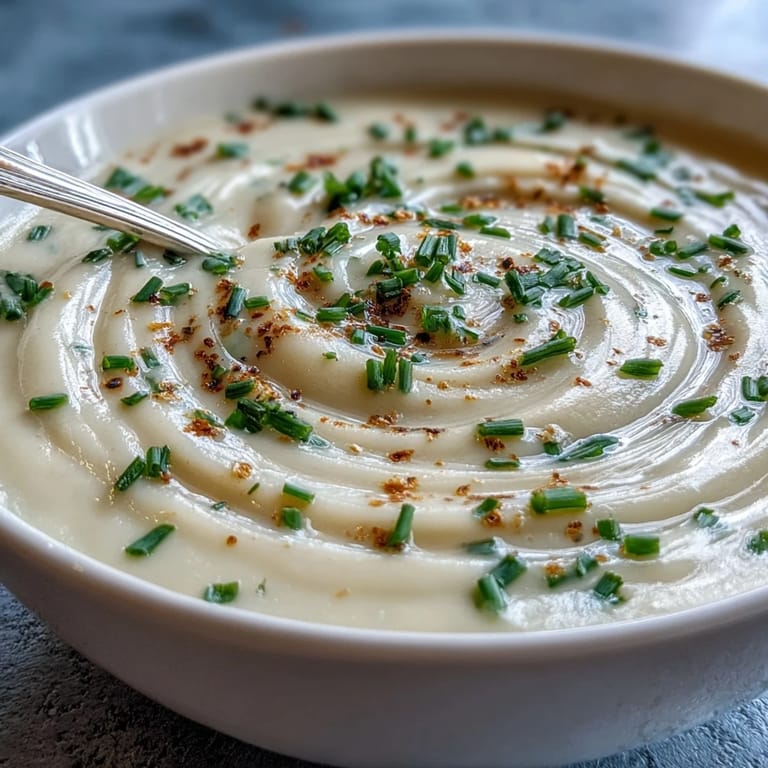
- Ladle into warm bowls and finish with fresh chopped chives or parsley and a small drizzle of cream if you're feeling luxurious.
 Pin It
I made this soup on the morning my mother visited after moving across the country. We sat together in my small kitchen while it simmered, and it became the thing that said welcome back without either of us having to say much.
The Magic of Celery Root
Celery root is one of those vegetables that looks intimidating—knobby, ungainly, requiring serious peeling—but once you cook it, it transforms into something almost sweet and incredibly refined. It's not quite celery, not quite potato; it's its own gentle thing, and when blended into soup, it creates this subtle sophistication that makes people pause mid-spoonful trying to figure out what they're tasting.
Making It Your Own
This soup is a beautiful canvas for small variations without losing its essence. A splash of dry white wine stirred in before the broth adds a subtle brightness, or you can add a pinch of fresh thyme to the simmering liquid for an earthier edge. Some cooks finish with a touch of nutmeg, and honestly, it works, though I prefer keeping this one pure and letting the celery root be the star.
Storage, Serving, and Pairing
This soup actually improves slightly on the second day as flavors meld, and it freezes beautifully for up to three months—just leave out the cream and milk until you reheat, stirring them back in gently. Serve it in proper bowls if you have them; the warmth and presentation matter more than you'd think for something this elegant. It pairs perfectly with crusty bread for dipping and a crisp white wine like Sauvignon Blanc or Chablis that echoes the soup's refined simplicity.
- Make the soup ahead and refrigerate it without the cream; add the cream when you reheat for the freshest taste.
- For a vegan version, use olive oil instead of butter and substitute plant-based milk and cream without changing anything else.
- If your celery root is particularly large or small, adjust your timing slightly—tenderness is what matters, not the clock.
 Pin It
 This bisque has quietly become the soup I make when I want to feel capable in the kitchen and create something that tastes like more effort than it actually required. That's really what it's all about.
Recipe Questions & Answers
- → What does celery root taste like?
Celery root has a mild, earthy flavor with subtle celery notes and a hint of parsley. It's less intense than stalk celery, with a nutty sweetness that shines when cooked and puréed.
- → Can I make this bisque ahead of time?
Absolutely. This bisque actually improves in flavor when made 1-2 days ahead. Store covered in the refrigerator and reheat gently over low heat, adding a splash of liquid if needed.
- → What's the purpose of the potato?
The potato acts as a natural thickener and contributes to the velvety texture. Its neutral flavor allows the celery root to remain the star while providing body and creaminess.
- → Is there a substitute for heavy cream?
Coconut cream creates a lovely dairy-free version with subtle sweetness. For a lighter option, use additional whole milk or purée some cooked white potato into the broth for extra body.
- → Why use white pepper instead of black?
White pepper provides gentle heat without visible specks in the finished bisque. Its flavor is slightly more earthy and less sharp than black pepper, complementing delicate purées beautifully.
- → Can I freeze this bisque?
Yes, freeze for up to 3 months. Leave out the cream when freezing, then stir it in during reheating for the best texture. The potatoes may cause slight graininess after freezing.