 Pin It
 My friend swore by these smash dumplings after a late-night cooking session when everything in her fridge seemed to demand use. She threw together ground pork, ginger, and whatever greens she had on hand, folded them into wrappers with the kind of confidence that comes from desperation, and discovered something magical when that first batch hit hot oil. The sizzle, the steam, the way they transformed into crispy-bottomed treasures—I was hooked before I even tasted one. Now I make them whenever I need something that feels impressive but honestly isn't complicated, and people keep asking for the recipe like it's some guarded secret.
I made these for my coworkers during a potluck last month, and watching someone take that first bite—then immediately reach for another without asking—reminded me why I bother cooking at all. Someone actually said, 'Did you make these?' with that surprised tone that means they assumed they came from a restaurant. That's the feeling right here.
Ingredients
- Ground pork (200 g): Use pork shoulder or ground pork from the butcher counter; it has just enough fat to keep the filling moist and flavorful without being greasy.
- Scallions (2 tbsp, finely chopped): These brighten everything—don't skip them, and keep them separate until you're ready to mix so they don't get watery.
- Fresh ginger (1 tbsp, finely grated): This is your backbone; freshly grated makes an enormous difference, and squeeze it over a bowl first to catch that pungent juice.
- Garlic (1 clove, minced): One clove is just right—more than that and you'll overshadow the other flavors.
- Soy sauce (1 tbsp): This binds everything together and adds saltiness; use low-sodium if you prefer to control the salt yourself.
- Sesame oil (1 tbsp): Drizzle it in at the end; the aroma alone tells you the filling is almost ready.
- Rice vinegar (1 tsp): A tiny bit of acidity brightens the whole thing without making it taste sour.
- Sugar (1/2 tsp): Just a whisper to round out the flavors; your guests won't taste it directly but they'll feel it working.
- Ground white pepper (1/4 tsp): White pepper is milder and less visible than black, but tastes a bit more delicate—perfect for dumplings.
- Napa cabbage (1/2 cup, finely chopped and squeezed dry): Squeeze it hard over the sink after chopping; excess moisture is the enemy of a proper filling.
- Dumpling wrappers (16 round): Gyoza wrappers are the traditional choice, but wonton wrappers work too—buy them fresh from the Asian aisle and keep them under a damp towel while you work.
- Vegetable oil (2 tbsp): Use something neutral like canola or vegetable oil; save the expensive stuff for drizzling.
- Water (1/3 cup for steaming, plus a small bowl for sealing): The water steams the dumplings through while the oil creates that signature crispy bottom.
- Dipping sauce components (soy sauce, rice vinegar, chili oil, sesame seeds): Mix these to taste; you're building a sauce that should taste a bit sharper than the filling to balance the richness.
Tired of Takeout? 🥡
Get 10 meals you can make faster than delivery arrives. Seriously.
One email. No spam. Unsubscribe anytime.
Instructions
- Build Your Filling:
- Combine the ground pork, scallions, ginger, garlic, soy sauce, sesame oil, rice vinegar, sugar, white pepper, and squeezed-dry cabbage in a bowl and mix gently with your hands until everything is distributed evenly—don't overwork it or the dumplings will be dense and tough. The mixture should smell fragrant and slightly glistening from the sesame oil.
- Wrap With Care:
- Place a wrapper on your work surface, add about a tablespoon of filling to the center (too much and they'll burst; too little and they're underwhelming), wet the edge with water using your finger, then fold and pinch to seal. If you want pleats, pinch three or four times along the sealed edge as you press the wrapper closed; if not, just press firmly and move on.
- Heat and Sear:
- Get your large skillet hot over medium-high heat, then add the oil and let it shimmer for about thirty seconds—you'll see it move like glass across the pan. Arrange the dumplings flat side down without touching or overlapping; they should sizzle immediately when they hit the pan.
- The First Sear:
- Let them sit undisturbed for two to three minutes until you see golden brown color creeping around the edges. Resist the urge to move them; the magic is happening down there on that bottom surface.
- Add Steam:
- Carefully pour the water around the dumplings (not directly on top of them), cover the pan immediately with a lid, and reduce the heat to medium. The steam will rise dramatically, which means it's working.
- Steam Until Cooked Through:
- Leave the lid on for five to six minutes; listen for the sizzle to quiet down and watch for the water to mostly evaporate. When you peek under the lid, the dumplings should feel slightly plump and the wrappers should look translucent.
- Final Crisp:
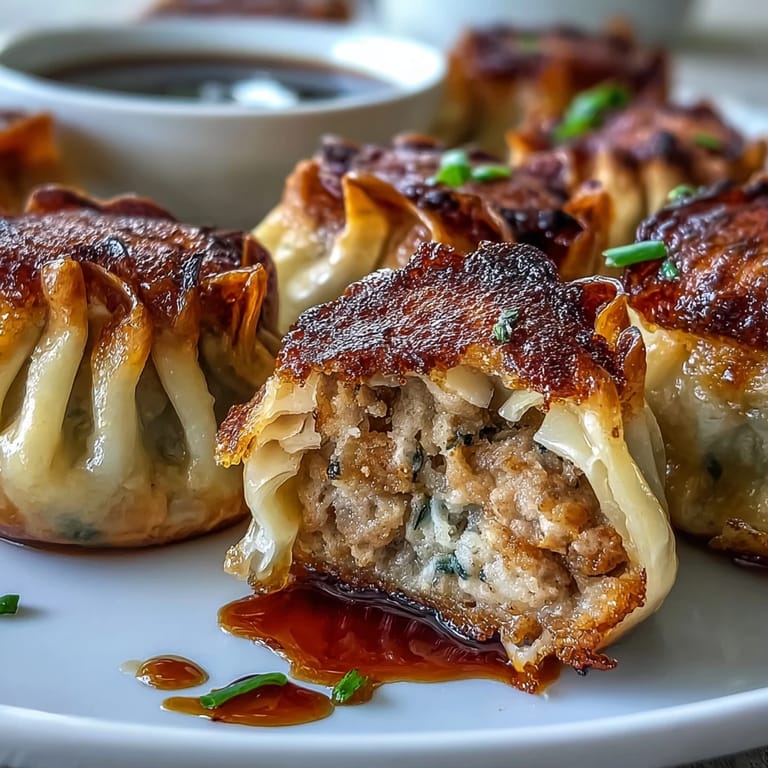
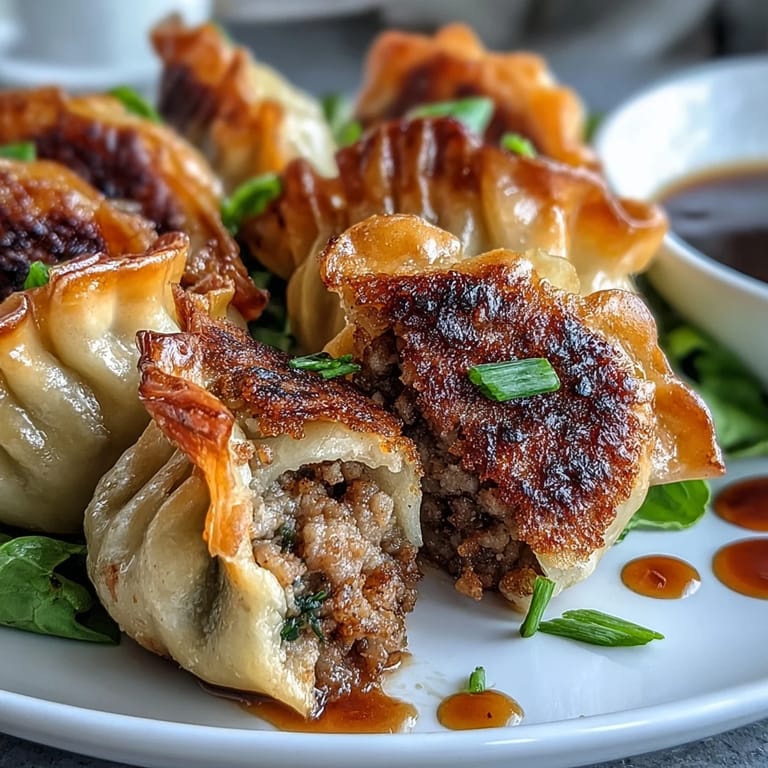
- Remove the lid and let any remaining water evaporate completely, then gently press each dumpling with the flat of your spatula to smash it slightly and increase contact with the hot pan. Cook for another minute or two until you hear a fresh round of sizzling and can smell that toasted, nutty bottom.
- Mix Your Dipping Sauce:
- Combine the soy sauce, rice vinegar, and optional chili oil and sesame seeds in a small bowl—taste it and adjust the vinegar or chili oil to your preference.
- Serve Immediately:
- Transfer the dumplings to a plate while they're still hot and crispy, and serve with the sauce for dipping.
 Pin It
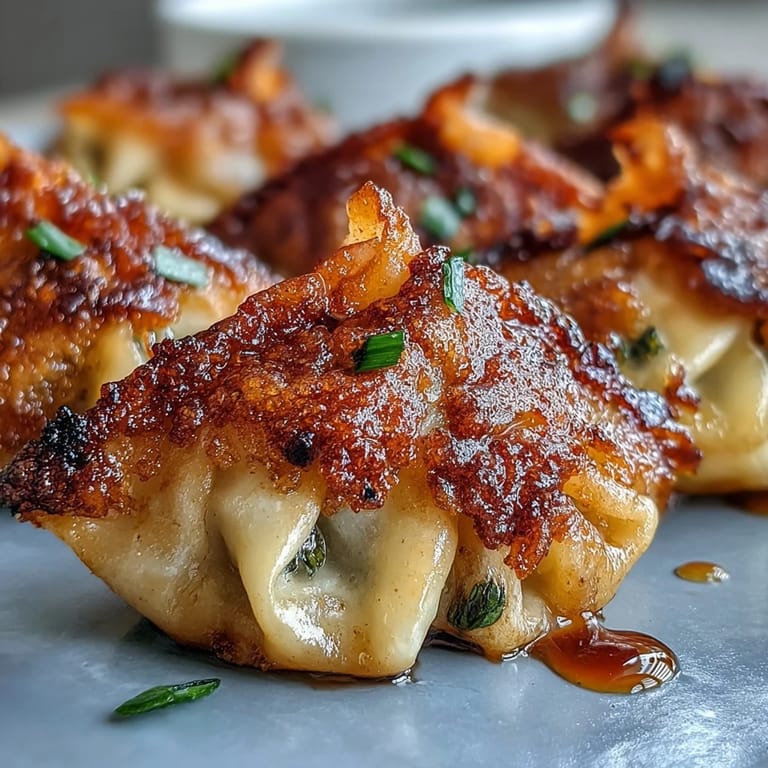
There's a moment when you pull the lid off and the steam clears just enough to see those golden, slightly smashed dumplings glistening under the kitchen light that reminds you why cooking for other people matters. It's not just food; it's a small, intentional gift that took maybe thirty minutes of your time.
Making Them Ahead (And Actually Using That Knowledge)
You can assemble these dumplings up to eight hours before cooking them, as long as you place them on a parchment-lined tray in the freezer for at least thirty minutes first, then transfer them to a ziplock bag. When you're ready to cook, don't thaw them—they'll go straight from freezer to hot pan, though you might need to add an extra minute or two to the steaming time. I've done this for dinner parties when I wanted to seem less frazzled than I actually was, and it genuinely works.
If Your Wrappers Start Drying Out
Keep them covered with a barely damp kitchen towel while you work, and keep a small bowl of water nearby for wet fingers—this prevents the wrapper edges from drying out and cracking when you try to seal them. If you're folding them slowly or you notice the wrappers getting papery, run your fingers under water and re-dampen the towel. It seems like a small thing, but it's the difference between a sealed dumpling and one that opens during cooking.
Beyond the Basic Recipe
Once you nail the basic version, you can play around with the filling in ways that still feel respectful to the original: add finely chopped mushrooms for earthiness, swap the pork for ground chicken or turkey, or go vegetarian with a mix of finely diced mushrooms, cabbage, and tofu. The technique stays the same; only the filling changes. Some people like to add a tablespoon of cornstarch to the filling to help it stay juicy, and honestly, it does make a difference.
- A pinch of five-spice powder adds intrigue without making the filling taste exotic or unfamiliar.
- If you can't find fresh dumpling wrappers, frozen ones thaw quickly at room temperature and work just as well.
- Store leftover dumplings in an airtight container in the fridge for up to three days and reheat them in a dry skillet over medium heat until the bottom crisps up again.
 Pin It
 These dumplings are the kind of thing that disappear fast and leave people asking you to make them again, which is really the whole point. Get comfortable folding them, nail the sear-steam-crisp technique, and you'll have something in your cooking arsenal that feels like a bigger accomplishment than it actually is.
Recipe Questions & Answers
- → What makes smash dumplings different from regular dumplings?
Smash dumplings are pressed with a spatula after steaming to create extra-crispy, flattened bottoms with more surface contact for maximum crunch, while keeping the filling juicy.
- → Can I use store-bought dumpling wrappers?
Yes, round gyoza or wonton wrappers work perfectly. Look for them in the refrigerated section of Asian grocery stores or well-stocked supermarkets.
- → How do I prevent the dumplings from sticking to the pan?
Use a nonstick skillet and ensure it's properly heated with enough oil before adding the dumplings. Avoid moving them until the bottoms are golden and naturally release.
- → Can I make these dumplings ahead of time?
Yes, assemble the dumplings and freeze them on a baking sheet. Once frozen, transfer to a bag. Cook directly from frozen, adding 2-3 extra minutes to the steaming time.
- → What vegetarian substitutions can I use?
Replace ground pork with crumbled firm tofu, finely chopped mushrooms, or plant-based mince. Add extra vegetables like carrots or water chestnuts for texture.
- → Why do I need to squeeze the cabbage dry?
Excess moisture from cabbage can make the filling watery and prevent proper sealing. Squeezing removes water, keeping the filling cohesive and flavorful.