 Pin It
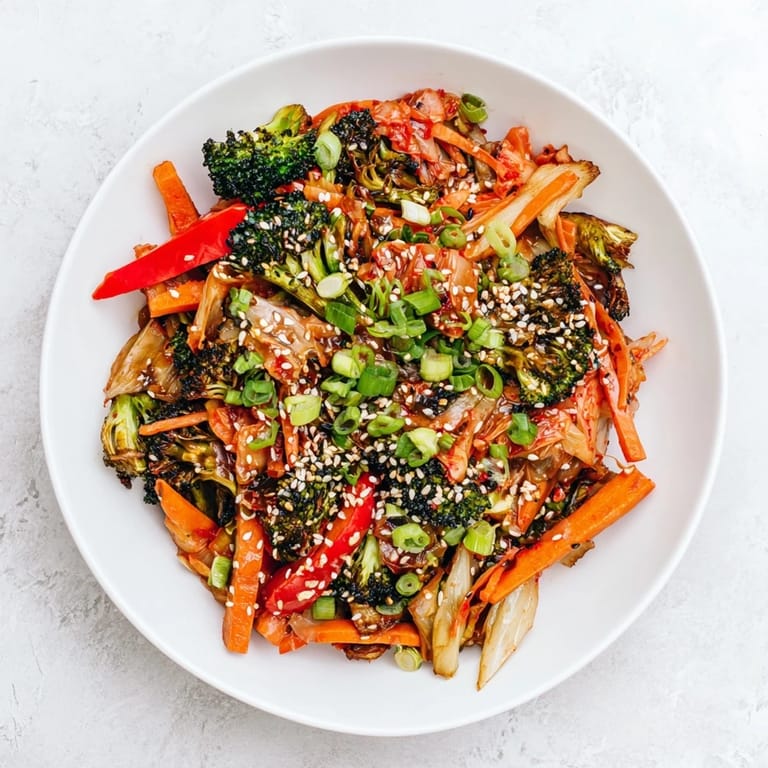
 Last February, when my radiator hissed more than it heated, I craved something that felt like sunshine in a bowl. This stir-fry became my go-to, mixing winter's sturdy vegetables with kimchi's bright tang. One bite brought that perfect balance of cozy warmth and zippy freshness I needed on gray days.
My neighbor Sarah dropped by during a snowstorm and I threw this together using whatever lingered in my crisper drawer. She went back for seconds, then thirds, and now texts me every time she makes it herself. The kimchi works magic, making simple vegetables taste like something from a restaurant.
Ingredients
- 1 small head broccoli: Cut into bite-sized florets, they hold up beautifully during high-heat cooking
- 2 medium carrots: Slice on the bias for more surface area and faster cooking
- 1 small parsnip: Adds subtle sweetness that balances kimchi's tang
- 1 small sweet potato: Thin matchsticks cook quickly and bring natural sweetness
- 1 cup shredded green cabbage: Provides crunch and soaks up the savory sauce
- 1 red bell pepper: Sliced thin for color and fresh sweetness
- 1 tablespoon fresh ginger: Grated fresh brings warmth that dried ginger cannot match
- 2 cloves garlic: Minced finely for even distribution
- 2 tablespoons toasted sesame oil: The foundation of flavor, worth every penny for quality
- 2 tablespoons soy sauce or tamari: Use tamari if avoiding gluten
- 1 tablespoon rice vinegar: Cuts through richness and brightens everything
- 1 teaspoon maple syrup or honey: Just enough to balance acidity
- 1 cup kimchi: Chopped, aged kimchi gives deeper flavor than fresh
- 2 green onions: Sliced for a fresh finish
- 1 tablespoon toasted sesame seeds: Sprinkle on top for nutty crunch
Tired of Takeout? 🥡
Get 10 meals you can make faster than delivery arrives. Seriously.
One email. No spam. Unsubscribe anytime.
Instructions
- Prep your vegetables:
- Cut everything before you heat the pan, stir-fries move fast and waiting means burned aromatics
- Heat your wok:
- Warm sesame oil over medium-high heat until it shimmers, you want it hot but not smoking
- Sauté aromatics:
- Add ginger and garlic, stirring constantly for 30 seconds until fragrant, do not let them brown
- Cook hard vegetables:
- Toss in carrots, parsnip, sweet potato, and broccoli, stir-fry 4 to 5 minutes until they begin softening
- Add soft vegetables:
- Throw in cabbage and bell pepper, cook another 3 to 4 minutes until everything is crisp-tender
- Make the sauce:
- Whisk together soy sauce, rice vinegar, and maple syrup in a small bowl until combined
- Add sauce:
- Pour over vegetables and toss everything thoroughly to coat each piece evenly
- Finish with kimchi:
- Remove from heat first, then fold in chopped kimchi gently to preserve its beneficial bacteria
- Garnish and serve:
- Top with green onions and sesame seeds while still steaming hot
 Pin It
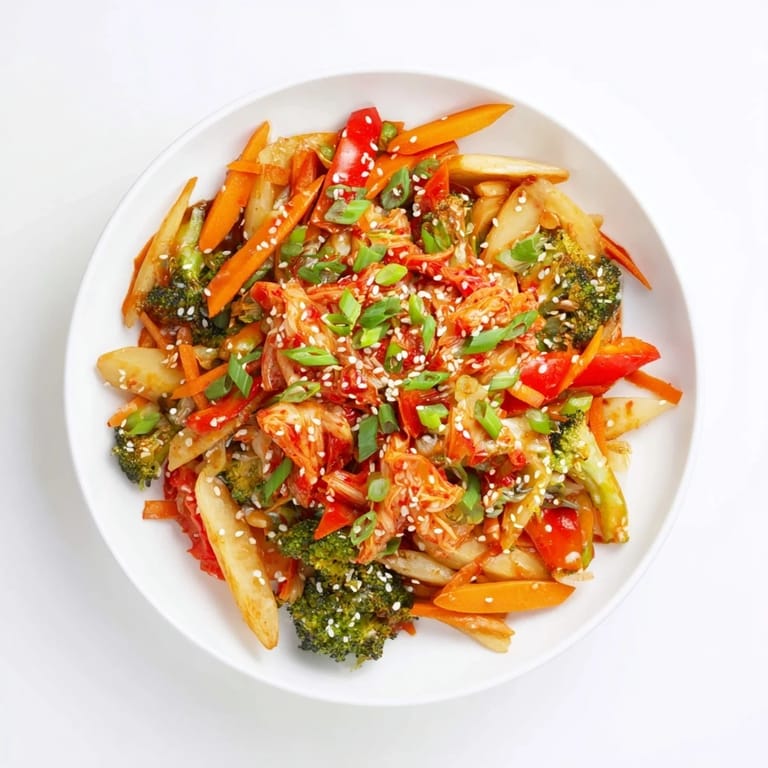
This recipe saved me during that week everything seemed to go wrong. Standing over the steaming wok, smelling ginger hit hot oil, then that first taste, somehow everything felt manageable again.
Making It Your Own
Swap in whatever winter vegetables you have on hand. Turnip, rutabaga, or kale work beautifully here. The framework stays the same, the ingredients can shift with your crisper drawer.
Serving Suggestions
Steamed rice turns this into a complete meal, but soba noodles or quinoa work just as well. The grains soak up that savory sauce and make the dish stretch further.
Storage Tips
Leftovers keep well for three days in the refrigerator, though the vegetables soften slightly. Reheat gently over medium heat, adding fresh kimchi at the end to restore brightness.
- Fresh kimchi at the table perks up leftovers
- A splash of rice vinegar wakes up flavors after refrigeration
- Avoid microwaving if possible, the wok gives better texture
 Pin It
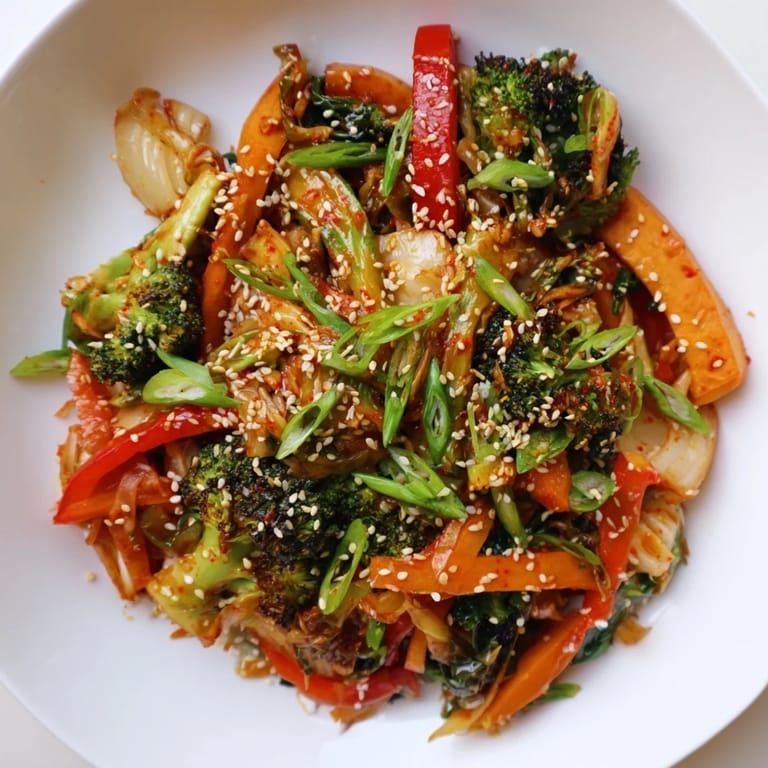
 Hope this brings warmth to your kitchen like it did to mine. Every bowl tells a story of winter transformed.
Recipe Questions & Answers
- → What vegetables work best in this stir-fry?
Broccoli florets, carrots, parsnips, sweet potato, and cabbage provide hearty texture. Feel free to substitute turnips, rutabaga, or kale based on what's available.
- → Why add kimchi at the end?
Adding kimchi after removing the pan from heat preserves the beneficial probiotics and live cultures that can be destroyed by high heat cooking.
- → Can I make this gluten-free?
Simply use tamari instead of soy sauce, and verify your kimchi is gluten-free as some varieties contain wheat-based ingredients.
- → What should I serve with this?
Steamed rice, quinoa, or soba noodles make excellent bases to transform this into a more substantial meal.
- → How spicy is this dish?
The spice level depends on your kimchi. Start with 1 cup and adjust to taste—mild kimchi yields gentle heat while aged varieties bring more intensity.