 Pin It
 There's something about a pot of lentil stew bubbling quietly on the stove that feels like the kitchen itself is taking care of you. I discovered this recipe on a gray Tuesday afternoon when I needed something filling but didn't have much in the pantry except dried lentils, a few root vegetables, and hope. What emerged was unexpectedly comforting—the kind of dish that tastes better the next day and somehow knows exactly what you need.
I made this for my neighbor who had just moved in, unsure if a pot of stew was too forward a gesture. She texted me three days later asking for the recipe, and I realized then that food like this—humble, nourishing, made without pretense—is how people actually connect. Now whenever she makes it, she tells me she adds extra garlic because of something I mentioned once in passing.
Ingredients
- Brown or green lentils (1 ½ cups, rinsed): These hold their shape beautifully as they cook, unlike red lentils which fall apart into mushiness. I learned to rinse them thoroughly under cold water, watching for any hidden stones that occasionally sneak through.
- Vegetable broth (4 cups): This is where the soul of the stew lives, so use something you'd actually drink rather than the saltiest option on the shelf.
- Olive oil (2 tablespoons): Just enough to coat the pot and help the vegetables release their sweetness without making the stew greasy.
- Onion, carrot, celery (1 large, 2 medium, 2 stalks): The aromatic trio that forms the foundation—when these three hit the hot oil, your kitchen smells like someone who knows what they're doing.
- Red bell pepper (1): Adds brightness and a slight sweetness that balances the earthiness of the lentils.
- Garlic (3 cloves, minced): The moment it hits the pan is non-negotiable; don't walk away or it'll burn and taste bitter.
- Potato (1 medium, cubed): Creates a subtle creaminess and adds substance to every spoonful.
- Diced tomatoes (1 can with juice): The acidity brightens everything, cutting through the richness and keeping the stew from feeling heavy.
- Spinach or kale (2 cups, chopped): Added at the very end, it wilts into the hot stew and you feel virtuous about the greens you're eating.
- Ground cumin, smoked paprika, dried thyme (1 teaspoon, 1 teaspoon, ½ teaspoon): These three spices work together like they planned it, creating warmth without any single flavor dominating.
- Bay leaf (1): Removes easily and adds a whisper of something indefinable that makes people ask what's in it.
- Salt and black pepper: Added at the end when you can taste what you're actually seasoning.
Tired of Takeout? 🥡
Get 10 meals you can make faster than delivery arrives. Seriously.
One email. No spam. Unsubscribe anytime.
Instructions
- Build your flavor base:
- Heat the olive oil in a large pot over medium heat until it's shimmering but not smoking. Add your diced onion, carrot, celery, and red pepper, stirring occasionally as they soften into a fragrant mess of color—this takes about 5 to 7 minutes and is the moment when you know the stew is going to be good.
- Wake up the garlic:
- Stir in your minced garlic and cook for just one minute, staying in the kitchen so you catch it before it browns. That sharp, raw garlic transforms into something sweet and mellow almost instantly.
- Combine everything:
- Add your cubed potato, rinsed lentils, canned tomatoes with their juice, all your spices, the bay leaf, and the vegetable broth. Stir everything together so nothing sticks to the bottom, then take a moment to appreciate how full your pot is.
- Let time do the work:
- Bring the whole thing to a boil, then lower the heat, cover it, and let it simmer gently for 30 to 35 minutes. Stir occasionally and resist the urge to add more liquid—the stew knows what it's doing, and patience is the secret ingredient no one talks about.
- Add the greens and finish:
- Fish out the bay leaf, then stir in your spinach or kale and let it cook down for 2 to 3 minutes until it's soft and dark. Taste it now, then season with salt and pepper until it tastes like the best version of itself.
 Pin It
This stew taught me something unexpected about cooking for others: sometimes the most generous thing you can do is make something simple and true rather than complicated and impressive. A friend once told me that eating this made her feel like she was taking care of herself, and I think that's the highest compliment a stew can receive.
Why This Stew Gets Better With Time
Lentil stew is one of those rare dishes that tastes noticeably better on day two or three, once all the flavors have had time to get acquainted and the spices have settled into the broth. I've learned to make a double batch specifically so I can eat it once fresh and then enjoy the improved version later in the week, which feels like a gift I'm giving my future self.
Variations That Actually Work
The beauty of this stew is that it responds well to what you have on hand or what you're craving that day. Swap regular potato for sweet potato if you want something slightly sweeter, add a splash of balsamic vinegar if you want deeper notes, or throw in diced zucchini or mushrooms for extra substance. I've made it at least a dozen different ways and it's never disappointed, which is rare enough in cooking that it bears mentioning.
Serving Suggestions and Final Thoughts
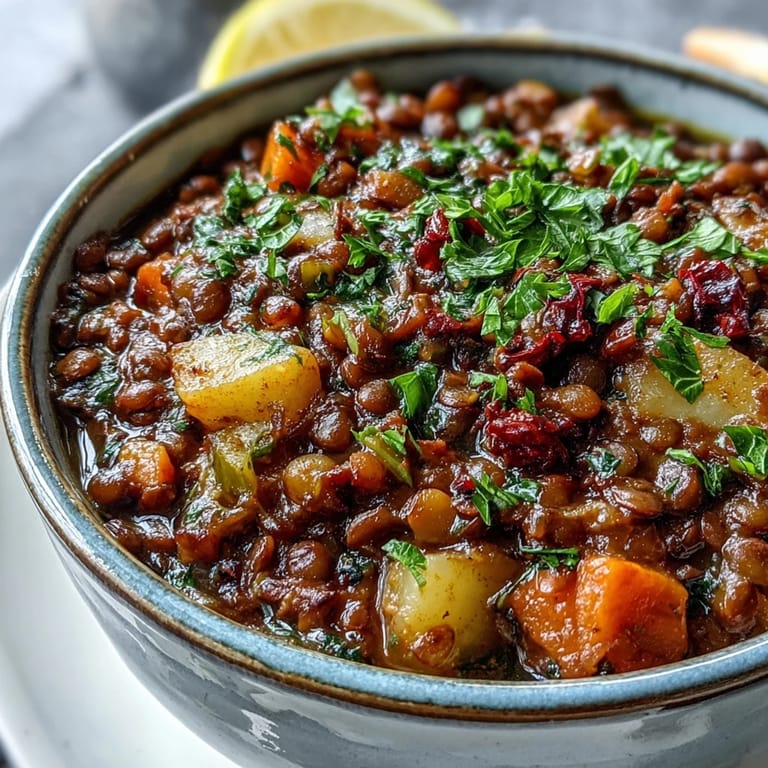
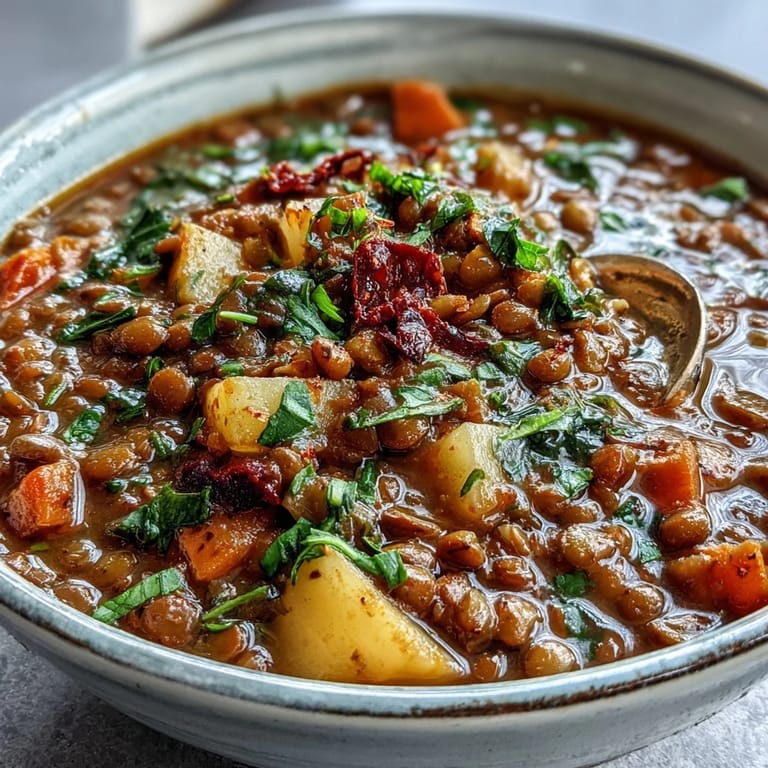
Serve this in a wide bowl with a wedge of crusty bread for soaking up every bit of broth, or with a squeeze of fresh lemon to brighten the earthiness. It's the kind of food that works for a casual weeknight dinner, a meal to bring someone who needs feeding, or even a gentle dinner party if you're in the mood for something honest rather than showy.
- A crusty bread or grilled cheese on the side makes it feel more like dinner than lunch.
- Fresh parsley scattered on top adds color and a hint of freshness that balances the warmth of the spices.
- Make extra because this stew has a way of disappearing faster than you'd expect.
 Pin It
 This stew has become my kitchen meditation, the thing I make when I want to feel grounded and present. There's something deeply satisfying about transforming simple ingredients into something that nourishes both body and spirit.
Recipe Questions & Answers
- → How long does this lentil stew keep in the refrigerator?
This lentil stew stores beautifully in the refrigerator for 4-5 days when kept in an airtight container. The flavors actually deepen and improve after a day or two, making it excellent for meal prep.
- → Can I use canned lentils instead of dried?
While you can substitute canned lentils, the cooking time and liquid amounts will need adjustment. Dried lentils provide better texture and absorb the spiced broth more effectively. If using canned, add them during the last 10 minutes and reduce broth by half.
- → What type of lentils work best?
Brown or green lentils hold their shape beautifully during simmering while becoming tender. Red lentils tend to break down completely, creating a thicker consistency more like dal. For the ideal stew texture, stick with brown or green varieties.
- → Can I freeze this stew?
Yes, this freezes exceptionally well for up to 3 months. Cool completely before transferring to freezer-safe containers, leaving some room for expansion. Thaw overnight in the refrigerator before reheating gently on the stove.
- → What can I serve with this stew?
Crusty bread makes an excellent accompaniment for soaking up the flavorful broth. For a complete meal, serve alongside a simple green salad with vinaigrette. A dollop of Greek yogurt or vegan sour cream adds creamy contrast if desired.
- → How can I add more protein?
While lentils already provide substantial protein, you can stir in white beans or chickpeas during the last 15 minutes. Adding a cup of quinoa to simmer creates even more protein and helps thicken the consistency naturally.