 Pin It
 I discovered hojicha brookies by accident on a rainy afternoon, when I was trying to use up a tin of roasted tea powder that had been sitting in my pantry. Instead of steeping it in hot water like usual, I wondered what would happen if I baked with it. The result was so unexpectedly magnificent—fudgy brownie depths meeting crispy cookie texture, all wrapped in this toasty, almost caramel-like warmth—that I've made them constantly ever since. It's become one of those recipes I reach for when I want to impress someone without making a fuss about it.
My neighbor once asked me to bring something to a book club gathering, and I brought a batch of these still-warm from the oven. Three people went back for seconds, and one asked for the recipe three times before I finally texted it to her. That's when I knew these weren't just good—they were the kind of dessert that makes people stop mid-conversation and focus entirely on what they're eating.
Ingredients
- Unsalted butter: Use good quality here since it's the foundation of both layers; cold butter for cookies, melted for the brownie creates two completely different textures.
- Bittersweet chocolate, chopped: Don't use chocolate chips for the brownie base—they won't melt as smoothly, and you want that silky texture.
- Granulated and light brown sugars: The combination gives you both structure and moisture; brown sugar especially keeps the brownie layer tender.
- Eggs and egg yolk: Room temperature eggs mix in more smoothly, so pull them out thirty minutes ahead if you remember.
- Hojicha powder: This is the star ingredient, bringing that roasted, slightly sweet tea flavor that makes people ask what you did differently.
- All-purpose flour: Sift it with the hojicha and salt to avoid lumps and ensure even flavor distribution throughout.
- Baking soda: Essential for the cookie layer only; it helps with lift and that slightly crispy exterior.
- Chocolate chips: Fold these in gently at the very end so they stay whole and create those little pockets of chocolate throughout.
Tired of Takeout? 🥡
Get 10 meals you can make faster than delivery arrives. Seriously.
One email. No spam. Unsubscribe anytime.
Instructions
- Preheat and prepare your pan:
- Set your oven to 175°C (350°F) and line an 8x8-inch pan with parchment paper, leaving enough overhang on two sides so you can lift the whole thing out later. This saves you from struggling with a spatula and potentially ruining the layers.
- Melt the chocolate and butter:
- Use a double boiler—a heatproof bowl sitting over simmering water—and stir constantly until the mixture is completely smooth and glossy. Don't let it get too hot or the chocolate will seize up and become grainy.
- Build the brownie batter:
- Whisk the cooled chocolate mixture with both sugars until it looks rich and thick, then add eggs and vanilla one at a time. The mixture should be glossy and almost shiny when you're done; this is what gives you that fudgy texture later.
- Fold in the dry ingredients:
- Sift your flour, hojicha powder, and salt together, then fold into the wet mixture using a spatula with gentle, intentional strokes. Stop as soon as you don't see streaks of flour—overmixing makes dense, tough brownies.
- Spread the brownie base:
- Pour the batter into your prepared pan and use a spatula to spread it in an even layer, smoothing the top gently. This becomes your foundation, so make it as level as you can.
- Cream the cookie dough:
- Beat softened butter with both sugars until the mixture is pale and fluffy, about two to three minutes if you're using a hand mixer. This aerates the dough and is what gives the cookie layer its crispy, tender texture.
- Mix the cookie dough:
- Add the egg yolk and vanilla, then sift in your flour, hojicha powder, baking soda, and salt. Stir just until combined—overworking makes tough cookies—then fold in the chocolate chips at the very end.
- Layer the cookie dough:
- Drop spoonfuls of cookie dough across the brownie base and gently press and spread them out, leaving small gaps if you need to. Those little gaps actually look charming and let heat circulate perfectly.
- Bake until golden:
- Bake for 23 to 27 minutes, watching until the cookie top turns light golden brown and a toothpick inserted in the center comes out with just a few moist crumbs clinging to it. That's the sweet spot—not fully set, but not raw either.
- Cool completely:
- Leave the pan on the counter until it's completely cooled, then use those parchment overhangs to lift the whole thing out. Cut into twelve squares with a sharp knife, wiping the blade between cuts so the edges stay clean.
 Pin It
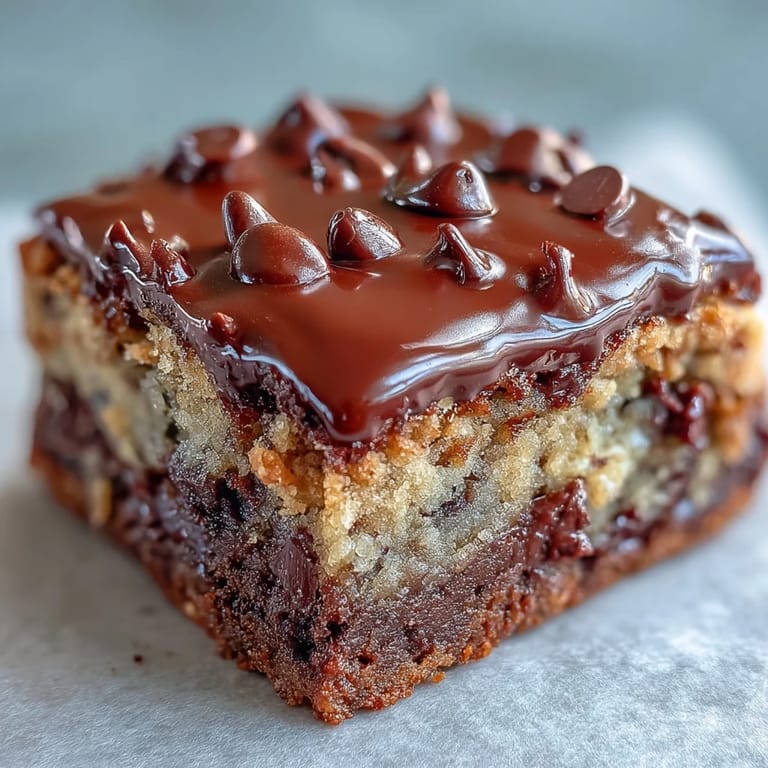
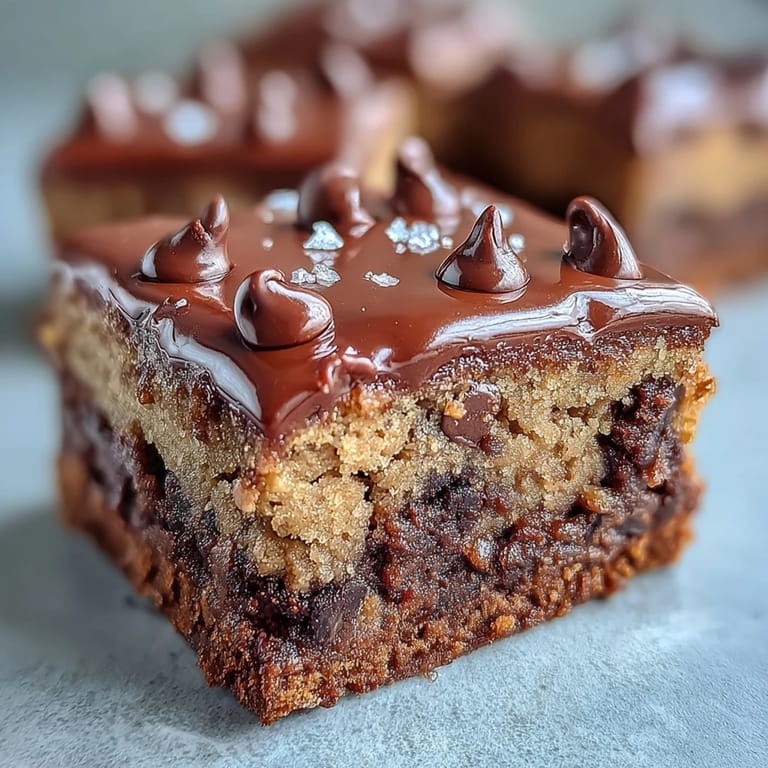
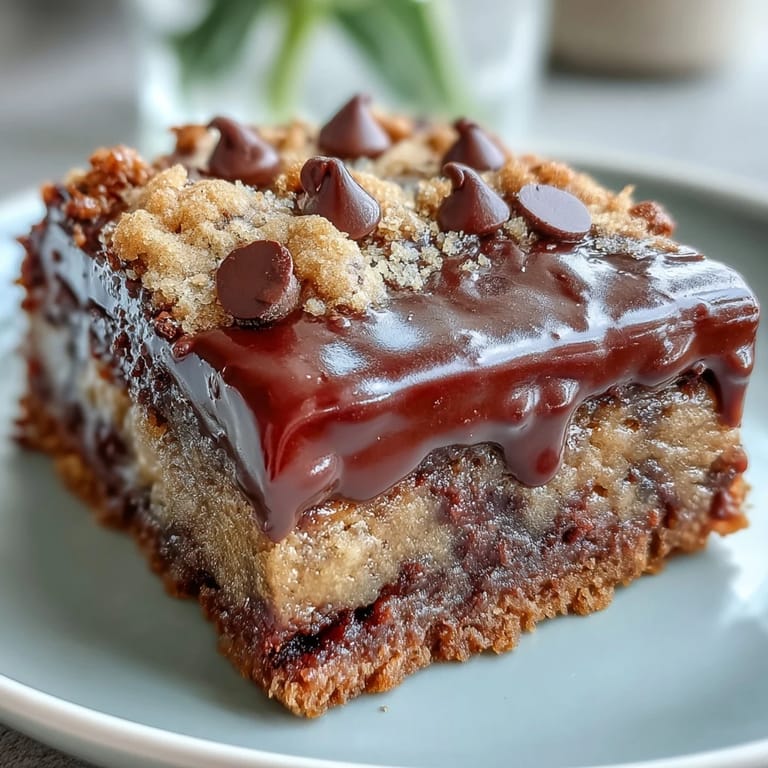
There's something quietly wonderful about pulling these from the pan and seeing how the two layers have fused into something completely new. They're not quite brookies anymore in the traditional sense—they're their own thing, and that's exactly the point.
Why Hojicha Transforms Everything
Hojicha is different from other tea powders because it's been roasted at high temperature, which removes bitterness and brings out these deep, almost caramel-like notes. When you bake with it, those flavors don't fade—they intensify and create this umami-rich backdrop that makes the chocolate taste more like chocolate somehow. It's subtle enough that people won't immediately identify it as tea, but distinctive enough that they'll keep coming back for another piece trying to figure out what makes it special.
The Two-Layer Secret
The genius of this recipe is how the two layers stay distinct even though they bake together. The brownie base stays fudgy because it's denser and retains moisture, while the cookie top gets crispy edges and a slightly chewy center. They create two completely different textural experiences in a single bite, which is why people find them so satisfying.
Customization and Storage
These keep beautifully for three days in an airtight container at room temperature, though they rarely last that long once people discover them in the kitchen. If you want a stronger hojicha flavor, add an extra half tablespoon of powder to each layer—just remember that hojicha can turn bitter if you go too far. Serve them slightly warm if you can, ideally with vanilla ice cream melting on top, because that contrast of temperatures makes everything taste better somehow.
- Matcha powder swaps in beautifully if you want something more earthy and vibrant instead of that toasty warmth.
- Store covered in a cool, dry spot, and they'll stay soft and fresh for days longer than you'd expect.
- If you're sensitive to caffeine, remember that hojicha contains tea, so these aren't an evening dessert for everyone.
 Pin It
 These brookies are the kind of recipe that feels like you're sharing a small discovery with someone, a moment where familiar flavors suddenly feel new. Once you make them, you'll understand why hojicha belongs in your baking rotation.
Recipe Questions & Answers
- → What does hojicha taste like?
Hojicha is a roasted Japanese green tea with a toasty, nutty flavor profile featuring caramel-like sweetness and low astringency. It lacks the grassy notes of matcha, instead offering warm, earthy undertones that pair beautifully with chocolate.
- → Can I substitute hojicha powder?
Matcha powder provides a vibrant green color and grassy notes, while cocoa powder yields a rich chocolate version. Both work well in this layered dessert, though the flavor profile will shift from the signature roasted hojicha taste.
- → How do I know when they're done baking?
The cookie top should appear golden brown, and a toothpick inserted into the center should emerge with a few moist crumbs. Avoid overbaking, as the brownie layer needs to remain fudgy and dense for the perfect texture contrast.
- → Can I make these ahead of time?
These bars actually improve after a day, allowing flavors to meld. Store in an airtight container at room temperature for up to three days. For longer storage, wrap individually and freeze for up to two months, thawing at room temperature before serving.
- → Why cream butter differently for each layer?
The brownie layer requires melted butter for that dense, fudgy texture, while the cookie layer needs creamed softened butter to create a crisp, chewy topping. This technique ensures you get distinct layers rather than a uniform texture throughout.
- → What's the best way to cut clean squares?
Allow the bars to cool completely in the pan before removing. For cleanest cuts, refrigerate for 30 minutes, then use a sharp knife warmed under hot water and wiped dry between each slice. The parchment overhang makes lifting the entire block out effortless.