 Pin It
 The smell of cabbage hitting hot fat takes me back to a tiny apartment in Osaka where I first watched a grandmother make these pancakes with such practiced ease. She told me okonomiyaki means whatever you like, and Ive been testing that theory ever since. My kitchen still smells like dashi and caramelized cabbage whenever I make them, which feels like coming home.
I once made these for a group of skeptical friends who couldnt understand how cabbage pancakes could possibly be dinner. Their silence after that first crispy bite said everything. Now they request them every time it rains.
Ingredients
- All-purpose flour: Creates the lightest foundation, though Ive accidentally used bread flour when desperate and it still worked
- Dashi stock: This Japanese seaweed and bonito broth is what transforms flour into something deeply savory
- Eggs: Room temperature eggs incorporate better into the batter for that signature fluffy texture
- Salt: Just enough to wake up all the vegetables
- Baking powder: The secret lift that keeps these from being dense or heavy
- Green cabbage: Finely shredded by hand creates the best texture, though food processors work when youre rushed
- Green onions: Their mild sharpness cuts through the richness
- Carrot: Julienned thin adds sweetness and color without announcing itself
- Bean sprouts: Optional but I love their crunch and how they mimic street food versions
- Bacon: The fat renders down into the pancake as it cooks, creating layers of flavor
- Okonomiyaki sauce: Store bought is fine but homemade changed my life
- Japanese mayonnaise: Creamier and tangier than American mayo, worth the hunt
- Bonito flakes: They dance and curl from the heat, making these feel alive on the plate
- Aonori: Dried seaweed flakes add ocean depth without being overpowering
- Pickled ginger: Bright red and sharply sweet, it cuts through every rich bite
Tired of Takeout? 🥡
Get 10 meals you can make faster than delivery arrives. Seriously.
One email. No spam. Unsubscribe anytime.
Instructions
- Whisk the foundation:
- Combine flour, dashi, eggs, salt, and baking powder until completely smooth, with no lumps hiding in the corners
- Bring in the vegetables:
- Fold in cabbage, green onions, carrot, and bean sprouts until every piece is lightly coated in batter
- Heat your stage:
- Warm a large nonstick skillet over medium heat and add just enough oil to film the surface
- Form the first pancake:
- Pour one quarter of the batter onto the skillet and shape it into a round about half an inch thick
- Add the bacon:
- Lay two bacon halves across the top, letting them drape over the edges slightly
- Wait for the flip:
- Cook for four to five minutes until the bottom is golden and the edges are set
- Cook through:
- Flip carefully and cook another four to five minutes until everything is hot and the bacon is crispy
- Repeat and plate:
- Cook the remaining pancakes and transfer them to plates while theyre still hot
- Finish with flourish:
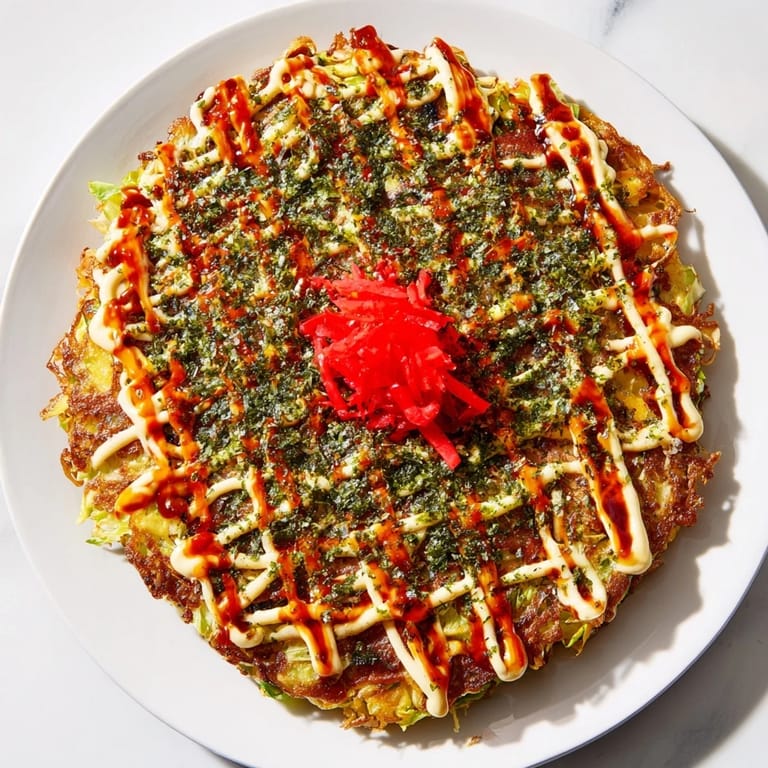
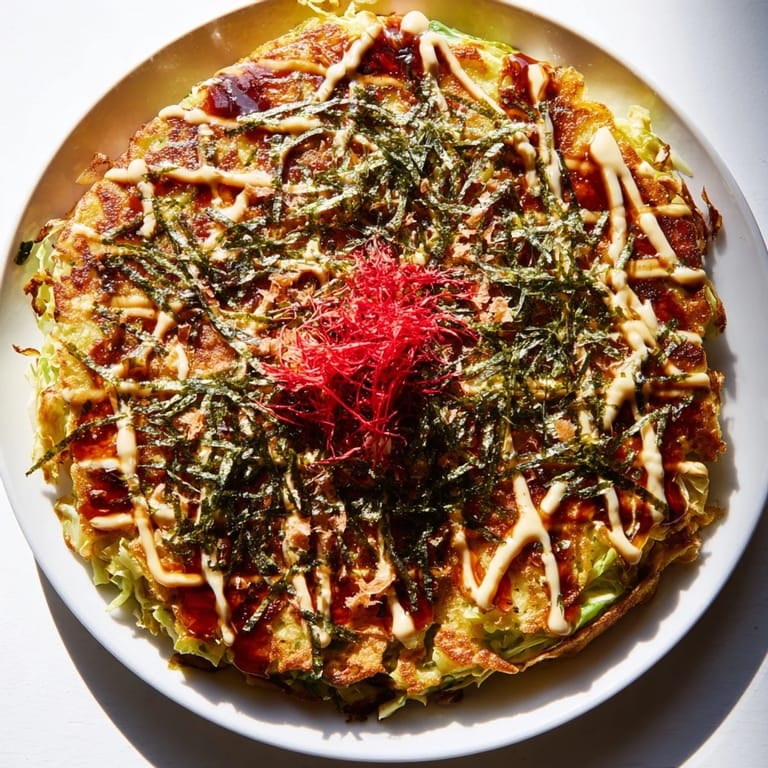
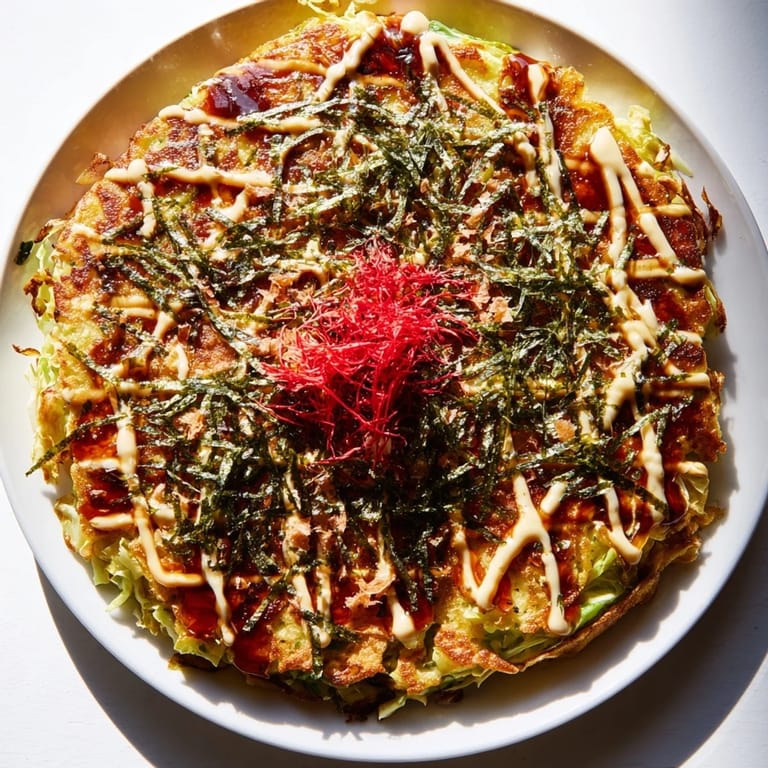
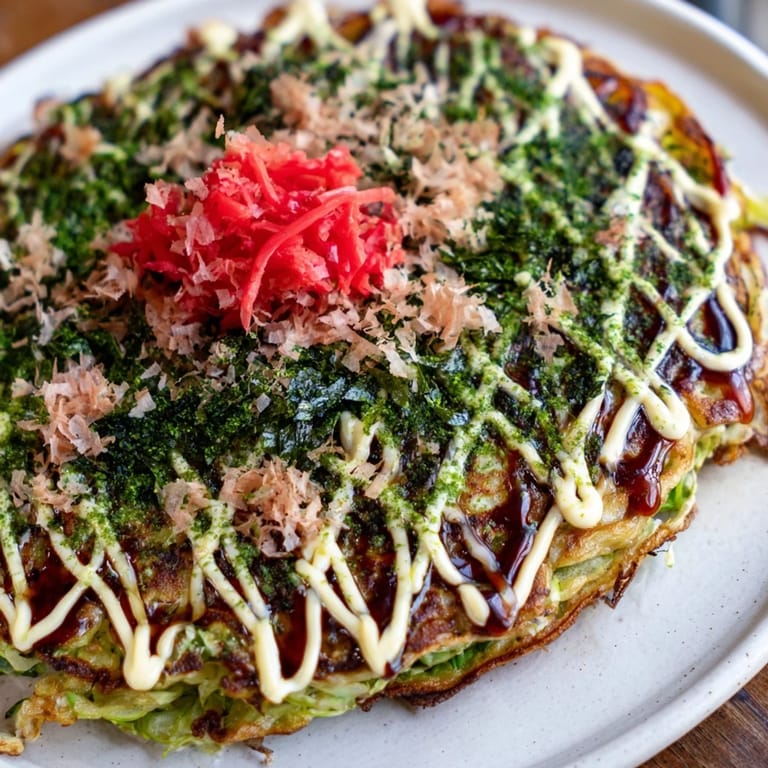
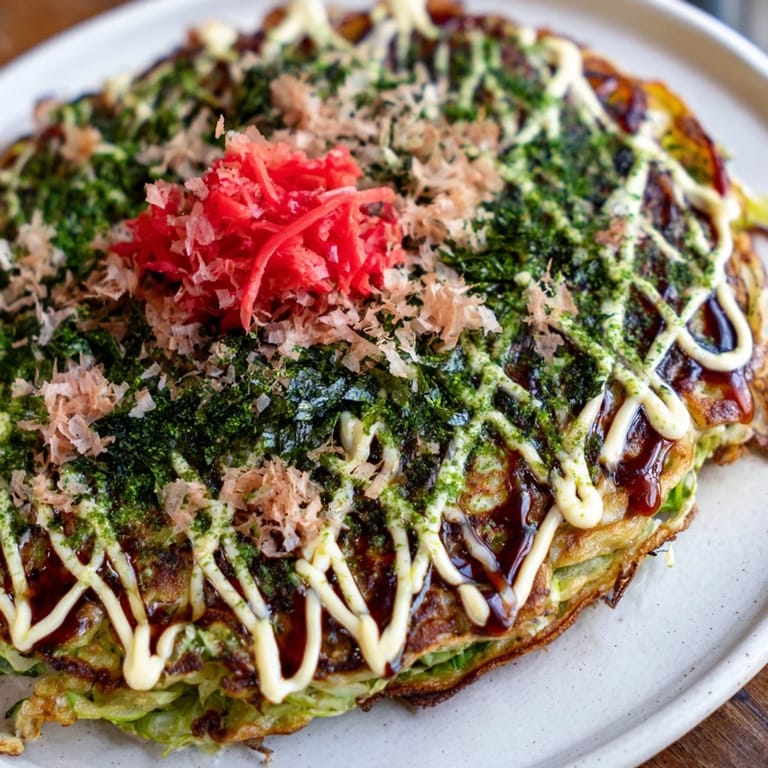
- Drizzle sauce and mayonnaise in a crisscross pattern, then add bonito, aonori, and ginger
 Pin It
  Pin It
Something magical happens when you watch people assemble their own toppings at the table. The conversation always turns to what they would add next time, which is exactly the spirit of this dish.
Making It Your Own
The beauty of okonomiyaki is that it adapts to whatever is in your refrigerator. I once made a version with corn and cheese that my family still talks about, and another with leftover roasted sweet potato that felt like a revelation.
Sauce Secrets
Homemade sauce is just Worcestershire, ketchup, soy sauce, and a touch of sugar or oyster sauce simmered together until thick. It keeps in the refrigerator for weeks and makes everything taste better.
Timing And Temperature
Medium heat is your friend here, too hot and the outside burns before the inside cooks through. I keep a small bowl of water nearby to cool the pan if things are moving too fast.
- Make extra sauce because you will want it on everything
- Leftovers reheat surprisingly well in a toaster oven
- Cold pancake wedges make an odd but satisfying breakfast
 Pin It
  Pin It
 These pancakes have turned countless ordinary Tuesdays into something that felt like a celebration. Sometimes the simplest food is the most unforgettable.
Recipe Questions & Answers
- → What makes okonomiyaki different from regular pancakes?
Okonomiyaki is a savory Japanese pancake made primarily with shredded cabbage rather than flour-based batter. The cabbage creates a fluffy, tender texture while the minimal flour just binds ingredients together. Unlike sweet breakfast pancakes, okonomiyaki features umami-rich dashi stock and is topped with savory sauces, mayonnaise, and bonito flakes.
- → Can I make okonomiyaki vegetarian?
Absolutely! Simply omit the bacon or pork belly and shrimp from the batter. The pancake remains delicious with just vegetables. For the toppings, skip bonito flakes (which are fish-based) or substitute with nori strips. The okonomiyaki sauce and mayonnaise are typically vegetarian-friendly, though always check labels to confirm.
- → What can I substitute for okonomiyaki sauce?
Homemade okonomiyaki sauce is easy to make by mixing Worcestershire sauce, ketchup, soy sauce, and a touch of sugar or oyster sauce. A typical ratio is 2 tablespoons Worcestershire, 1 tablespoon ketchup, and 1 teaspoon soy sauce. This combination mimics the sweet, tangy, and savory profile perfectly.
- → Why do bonito flakes dance on top?
Bonito flakes (katsuobushi) are thin shavings of dried, fermented skipjack tuna. When placed on hot okonomiyaki, the heat causes the flakes to curl and wave, creating a mesmerizing dancing effect. This movement comes from the flakes' thin, delicate structure reacting to rising steam. It's not just visual—the flakes add intense smoky, savory umami flavor.
- → How do I prevent okonomiyaki from falling apart?
The key is not overmixing the batter and ensuring the cabbage is evenly coated but still retains texture. Let the mixture rest for 5-10 minutes before cooking to help ingredients settle. When flipping, use a large spatula and work confidently. Don't make pancakes too large—6-inch diameter is ideal. The natural starch from cabbage and flour will bind everything as it cooks.
- → Can I prepare okonomiyaki ahead of time?
You can mix the batter and vegetables up to 2 hours before cooking, but store it covered in the refrigerator. Let it come to room temperature before cooking for even results. Cooked okonomiyaki is best enjoyed immediately while crispy, though leftovers can be reheated in a skillet over medium heat. Add fresh toppings after reheating for the best experience.