 Pin It
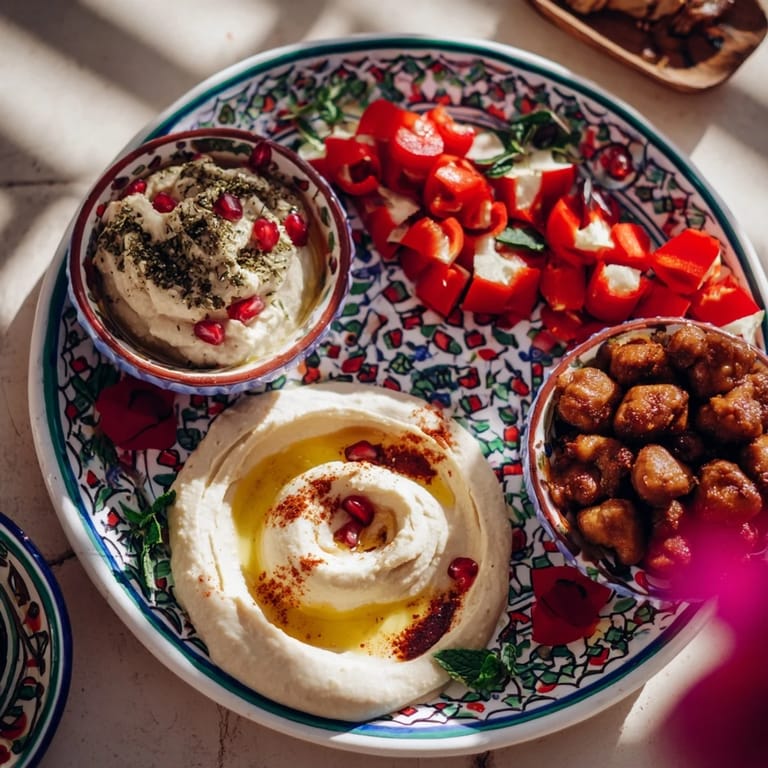
 I still remember the afternoon I stumbled into a small Moroccan riad in Marrakech, where an elderly woman was arranging the most breathtaking spread of colorful bowls filled with dips, pickles, and herbs across a low wooden table. The way each element caught the light reminded me of the intricate zellige tilework adorning the courtyard walls. That moment taught me that the most stunning dishes aren't always about complexity—they're about creating a feast for the eyes as much as the palate. This Moroccan Tile Mosaic platter captures that same magic, transforming humble ingredients into an edible work of art that brings people together.
I made this platter for my sister's engagement party, and I watched it become the centerpiece of the entire evening. People didn't just eat from it—they lingered around it, mixing flavors, discovering new combinations, sharing tastes with strangers who became friends. That's when I realized this wasn't just appetizers; it was an invitation to slow down and connect.
Ingredients
- Classic hummus (1 cup): The creamy foundation that everyone gravitates toward first. Buy a good quality version or make your own—the difference in taste is worth it.
- Baba ganoush (1 cup): Silky and mysterious, this roasted eggplant dip adds depth and sophistication. It's the quiet showstopper people ask about.
- Muhammara (1 cup): Sweet, nutty, and slightly spiced, this red pepper and walnut dip brings warmth and color that makes the platter glow.
- Labneh or Greek yogurt (1 cup): When drizzled with olive oil and za'atar, it becomes tangy and herbaceous—a lighter option that balances the richer dips.
- Roasted red peppers (1 cup): These add natural sweetness and silky texture. Use jarred ones to save time without sacrificing flavor.
- Marinated artichoke hearts (1 cup): Tender and briny, these remind people that vegetables can be exciting and indulgent.
- Moroccan carrot salad (1 cup): Shredded carrots with lemon, cumin, and parsley create brightness and crunch. This is what transforms the platter from nice to memorable.
- Preserved lemons (1 cup): Salty, floral, and utterly addictive, these are the secret that makes people taste Moroccan sunlight in every bite.
- Mixed Moroccan olives (1 cup): Choose a variety—some briny, some buttery—so people can explore. They're the salty anchor of the whole spread.
- Quick-pickled red onions (1/2 cup): Sharp and crunchy, these cut through rich flavors and add visual drama. Make them fresh the day before.
- Cornichons or baby gherkins (1/2 cup): Tiny, crisp, and fun to eat, these add texture and a palate-cleansing bite.
- Roasted almonds (1/2 cup): Unsalted lets the toasty flavor shine and prevents the platter from becoming too salty overall.
- Pistachios (1/2 cup): Their vibrant green color is essential to the mosaic effect, and their delicate flavor adds sophistication.
- Toasted sesame seeds (1/4 cup): Nutty and fragrant, these add crunch and finish dips with professional polish.
- Baguette, sliced and toasted: Toast it fresh just before serving so it's still warm and crispy. This is what people actually eat everything with.
- Mini pita breads, quartered: These are softer and more forgiving than crackers, perfect for scooping creamy dips.
- Pomegranate seeds (1/4 cup): Jewel-like and tart, these add pops of color and flavor that feel celebratory.
- Fresh mint and cilantro (1/4 cup each): These herbs are your final brushstroke. Use them generously to fill gaps and add freshness.
- Sumac (1 tsp): Tangy and lemony, a light dusting over the platter adds both flavor and that final artistic touch.
- Extra virgin olive oil: For drizzling—use your best bottle here. It's the finishing element that ties everything together.
Tired of Takeout? 🥡
Get 10 meals you can make faster than delivery arrives. Seriously.
One email. No spam. Unsubscribe anytime.
Instructions
- Prepare Your Canvas:
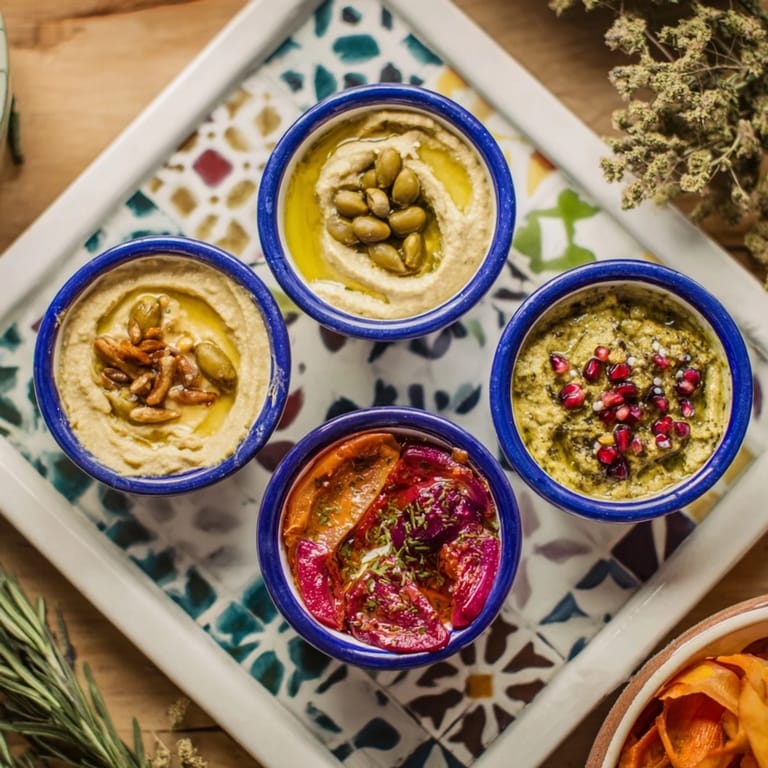
- Gather 8 to 12 small colorful bowls or ramekins—ceramic ones with warm earth tones work beautifully. Spoon each dip into its own bowl: hummus in one, baba ganoush in another, muhammara in a third. This isn't just practical; it's the beginning of your mosaic. Think of these bowls as the primary colors you'll build everything around.
- Arrange the Vegetables and Pickles:
- In separate small bowls, arrange the roasted red peppers, marinated artichoke hearts, Moroccan carrot salad, and preserved lemon slices. Place the quick-pickled red onions and cornichons in their own bowls too. As you're doing this, you'll start to see the color palette forming—reds, golds, greens, and yellows beginning to sing together.
- Gather the Supporting Players:
- In three more bowls, distribute the mixed olives, roasted almonds, and pistachios. Keep the toasted sesame seeds separate—you'll use these as a final garnish. Each element deserves its own space so guests can choose exactly what they want.
- Toast Your Breads:
- Slice the baguette on a bias and toast the slices until they're golden and crisp but still have a tender inside. Warm the mini pita breads gently, then quarter them. The warmth makes everything taste fresher and more welcoming.
- Build Your Mosaic:
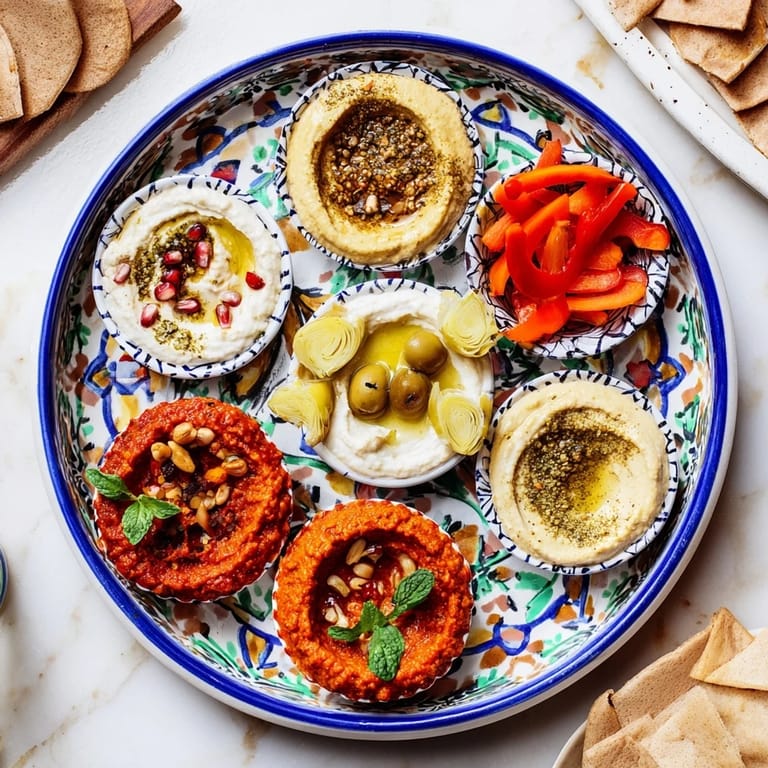
- On a large wooden board or serving tray, begin arranging all the bowls. Tightly pack them together in whatever pattern feels right to you—there's no wrong way to do this. Think of traditional Moroccan zellige tilework: patterns that feel balanced but not rigid. Fill any gaps between bowls with fresh mint leaves, cilantro sprigs, pomegranate seeds, and pine nuts. This is where the platter transforms from nice to stunning.
- The Final Touch:
- Drizzle olive oil generously over the dips and marinated vegetables. Dust the entire platter lightly with sumac. Scatter sesame seeds across the top. Step back and admire what you've created—it should look like edible art.
- Serve with Intention:
- Serve immediately while everything is at its best temperature and freshness. Place small spoons in each dip bowl and encourage guests to mix and match flavors. The beauty of this platter is that there's no wrong way to eat it—it's meant to be explored.
 Pin It
What surprised me most about this platter wasn't just how beautiful it looked, but how it changed the entire energy of the gathering. Instead of people eating standing up and moving on, they stayed, they lingered, they connected. Food became the thing that kept us together for an extra hour, just talking and sharing tastes and stories. That's when I understood why Moroccan hospitality is legendary.
Making This Your Own
The skeleton of this platter is infinitely flexible. In summer, add fresh tomatoes, cucumbers, and a green goddess dip. In winter, include roasted root vegetables and a spiced harissa dip. Have someone who doesn't eat nuts? Leave them out and add roasted chickpeas instead for crunch. This isn't a rigid recipe—it's a template for generosity and creativity. The only rule is that everything should taste vibrant and feel intentional.
Pairing and Serving Suggestions
Serve this platter with Moroccan mint tea for a traditional pairing that feels like an afternoon in a souk, or with a crisp white wine like Sauvignon Blanc that won't compete with all the bold flavors. You can also set it out as a prelude to a larger meal, or make it the star of a casual gathering. The beauty is that it works equally well for an intimate dinner with four friends or a party of twenty.
Storage and Make-Ahead Tips
Most elements of this platter keep beautifully for days in the refrigerator. The dips actually improve as they sit. Make the quick-pickled onions and carrot salad up to three days ahead. Toast bread just before serving so it stays crispy. The only thing that needs last-minute attention is arranging everything and adding the fresh herbs—but that's the fun part, the part where it all comes together.
- Prepare dips and marinated vegetables 24 hours ahead to let flavors deepen
- Toast bread and warm pita just before serving to preserve texture and warmth
- Cover the assembled platter loosely with plastic wrap if sitting for more than 30 minutes
 Pin It
 This platter is my reminder that sometimes the most beautiful moments come not from trying too hard, but from bringing together good ingredients with intention and generosity. Every time I make it, it brings people closer together.
Recipe Questions & Answers
- → What dips are included in the Moroccan mosaic platter?
The platter features classic hummus, baba ganoush, muhammara (red pepper and walnut dip), and labneh drizzled with olive oil and zaatar.
- → Can this platter be made vegan-friendly?
Yes, substitute labneh with plant-based yogurt or omit it entirely to keep the platter vegan.
- → What types of vegetables are marinated for this dish?
Roasted red peppers, marinated artichoke hearts, Moroccan carrot salad with lemon and cumin, and preserved lemon slices are used.
- → Which nuts and seeds are part of the mosaic platter?
Roasted almonds, shelled pistachios, and toasted sesame seeds contribute texture and flavor.
- → How should the platter be arranged for serving?
Arrange colorful bowls with dips, vegetables, olives, and nuts on a large tray mimicking a mosaic pattern, garnished with fresh herbs and pomegranate seeds.
- → Are there any common allergens in this dish?
Yes, it contains nuts like walnuts and almonds, sesame, and dairy, unless substituted. Gluten is present if served with bread.