 Pin It
 There's a particular moment in late July when the farmers market overwhelms you with tomatoes—so many that you can't possibly eat them all fresh. That's when I discovered gazpacho wasn't some fancy restaurant trick, but rather a practical Spanish solution to summer abundance. My neighbor Maria showed me how to blend everything raw one sweltering afternoon, and I've been making it ever since. It's become my go-to when the heat makes cooking feel impossible but eating something nourishing feels essential.
I made this for a friend who'd just moved into a tiny apartment with a broken oven and no AC. She was stressed about feeding herself properly in the heat, so I showed up with a full blender and ingredients. Watching her face when she tasted something so vibrant and refreshing, made completely in her one kitchen tool, felt like a small victory. Now it's her signature move for impressing people at balcony dinners.
Ingredients
- Ripe tomatoes (4 large): Choose ones that smell fragrant at the stem end, since that's your guarantee they'll taste like actual tomato and not like a pale imitation.
- Cucumber (1 large): The cucumber keeps the soup light and adds a crisp quality that cuts through the richness of the olive oil beautifully.
- Red bell pepper (1): Red peppers are sweeter than green ones, which means they balance the tomato's acidity without needing extra sugar.
- Red onion (1 small): Don't skip this or use white onion instead—red onion brings a subtle sweetness that mellows as it sits in the fridge.
- Garlic (1 clove): One clove is enough because the raw garlic will assert itself over the hours of chilling, so restraint here actually matters.
- Extra-virgin olive oil (2 tablespoons): This is where quality genuinely shows, so use something you'd actually want to taste rather than your everyday cooking oil.
- Red wine vinegar (2 tablespoons): The vinegar provides the sharpness that makes gazpacho crave-worthy, so don't dilute it with plain vinegar.
- Sea salt and freshly ground black pepper: Taste as you go, because the flavors will shift and strengthen as everything chills overnight.
- Cold water (1 ½ cups): Use filtered water if possible, since it won't introduce any mineral taste that might compete with the vegetables.
Tired of Takeout? 🥡
Get 10 meals you can make faster than delivery arrives. Seriously.
One email. No spam. Unsubscribe anytime.
Instructions
- Gather and prepare everything:
- Chop your vegetables into rough chunks first—they don't need to be precise since the blender will handle the finesse. Having everything prepped and sitting in your blender bowl takes maybe ten minutes and makes the rest feel effortless.
- Blend the vegetables into velvet:
- Pour your tomatoes, cucumber, bell pepper, onion, and garlic into the blender and blend on high until completely smooth, about 1 to 2 minutes. You'll hear the texture change from chunky to liquid, and that's when you know you're ready to move forward.
- Add your oils and acid:
- Drizzle in the olive oil and red wine vinegar while the blender is running on a lower speed, so they emulsify slightly and integrate smoothly rather than sitting on top. Add the salt, pepper, and cold water last, then blend everything together for another 30 seconds until the color becomes uniform and silky.
- Taste and adjust your balance:
- Pour a small spoonful into a clean glass and actually taste it at room temperature before chilling. This is when you discover if you need more salt, more vinegar, or even a tiny pinch more garlic, so make those changes now.
- Chill it thoroughly:
- Transfer the gazpacho to a bowl or pitcher, cover it, and let it sit in the refrigerator for at least 2 hours—overnight is even better. The flavors will meld and deepen, and the cold will make every sip feel like relief on a hot day.
- Serve with intention:
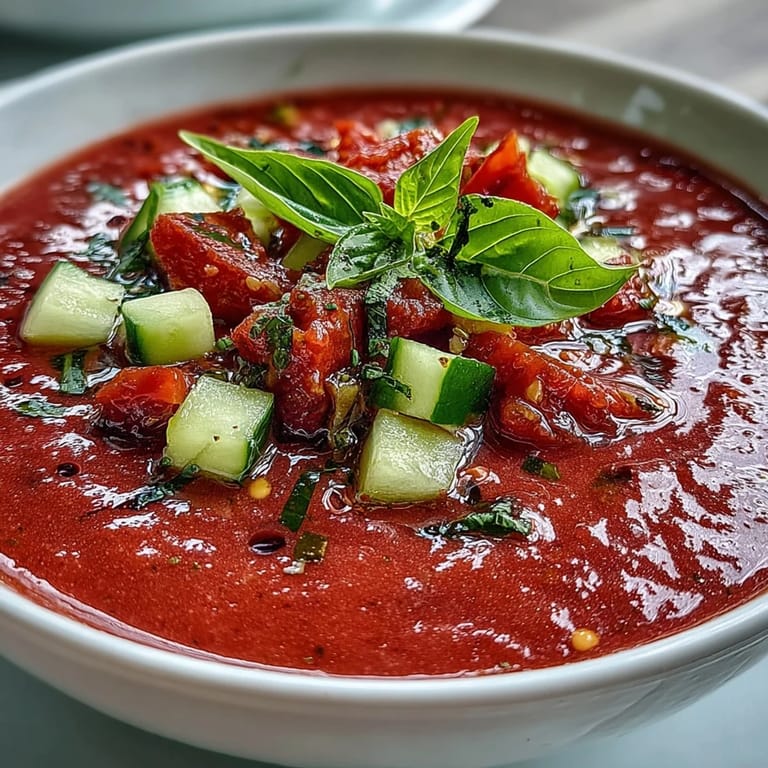
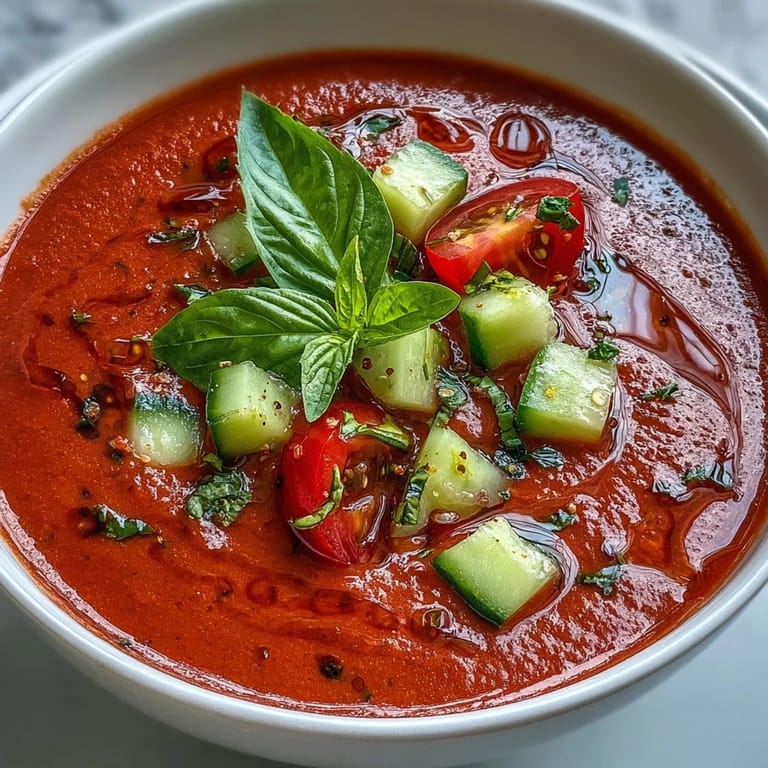
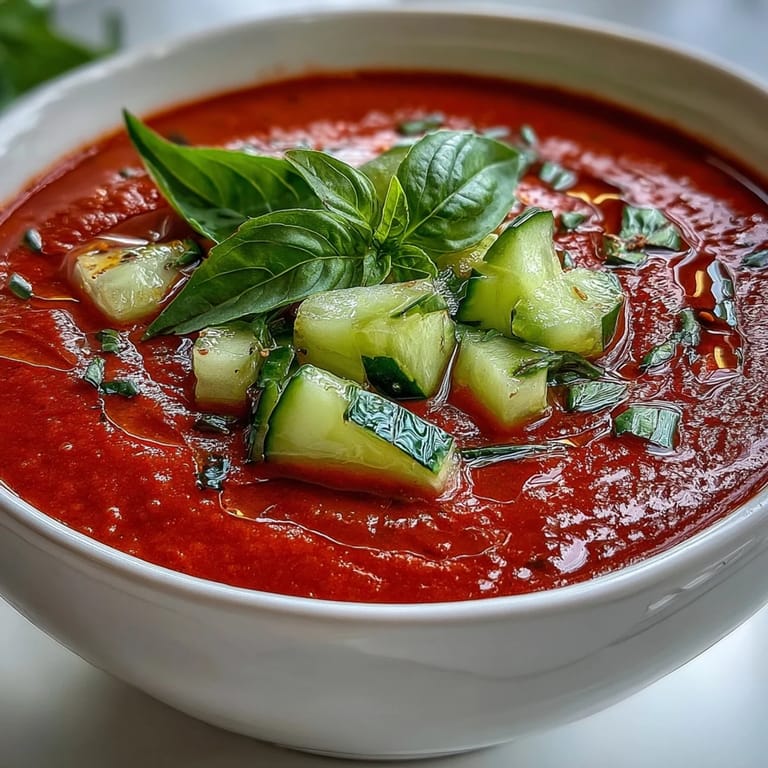
- Give it a good stir before ladling, since the heavier elements settle slightly. Top each bowl with diced cucumber, tomato, a whisper of fresh basil, and a tiny drizzle of really good olive oil if you have it.
 Pin It
My son once asked if gazpacho was just vegetable juice I'd tricked him into thinking was fancy, and I couldn't argue with him. But then he asked for thirds, and somehow that made me understand that the best meals are the ones people don't overthink—they just keep coming back for.
Texture Tips That Change Everything
Some people prefer gazpacho completely silky, while others like it with a bit of texture to remind you there are actual vegetables in the bowl. If you want it smoother than a commercial soup, push it through a fine sieve after blending—it takes five extra minutes and catches all the tiny bits. But honestly, I like leaving some texture in mine, because the little flecks feel more honest somehow.
Variations Worth Trying
Once you understand the basic template, you can swap tomatoes for watermelon, or add a splash of sherry vinegar instead of red wine vinegar for something deeper. A pinch of smoked paprika brings Spanish smokehouse vibes, and a tiny dash of Tabasco or a whisper of jalapeño can turn this into something with actual bite. The beauty of gazpacho is that it's flexible enough to adapt to whatever's in your garden or whatever mood you're in.
Serving Suggestions and Pairing Ideas
Gazpacho becomes a complete light dinner when you pair it with something substantial on the side—grilled fish, a simple chickpea salad, or crusty bread rubbed with garlic and olive oil all work beautifully. I've also served it as a palate cleanser between courses at dinners, and the coolness and brightness make people feel lighter and more awake. It's equally lovely as a solo lunch when you're too hot to think about sitting down with a proper meal, and it keeps in the fridge for three days if you manage not to drink it all in one afternoon.
- Serve it very cold in chilled bowls for maximum impact on a hot day.
- Prepare your garnish vegetables the morning of and keep them in the fridge so they're crisp and cold when you serve.
- A well-made gazpacho should taste refreshing rather than heavy, so resist the urge to add cream or butter.
 Pin It
 This soup represents everything I love about summer cooking: it's simple, generous, and tastes like it took way more effort than it actually did. On the days when the kitchen feels too hot and cooking feels impossible, gazpacho reminds you that some of the best meals don't require fire at all.
Recipe Questions & Answers
- → What vegetables are in this chilled soup?
It features ripe tomatoes, cucumber, red bell pepper, red onion, and garlic, combined for a fresh summer flavor.
- → How is the texture of the mixture achieved?
Blending the ingredients until smooth creates a silky consistency, which can be further refined by straining through a fine sieve.
- → Can the flavors be adjusted before serving?
Yes, seasoning with salt, pepper, and vinegar is added gradually and can be fine-tuned to taste after blending.
- → How long should the mixture chill before serving?
Refrigerate the blend for at least two hours to ensure it is well chilled and flavors meld together.
- → What garnishes enhance this dish?
Diced cucumber, tomato, fresh basil or parsley, and a drizzle of olive oil add fresh texture and aroma to the final serving.
- → Are there options to add more flavor notes?
Adding smoked paprika or a splash of hot sauce like Tabasco can introduce extra depth and subtle heat.