 Pin It
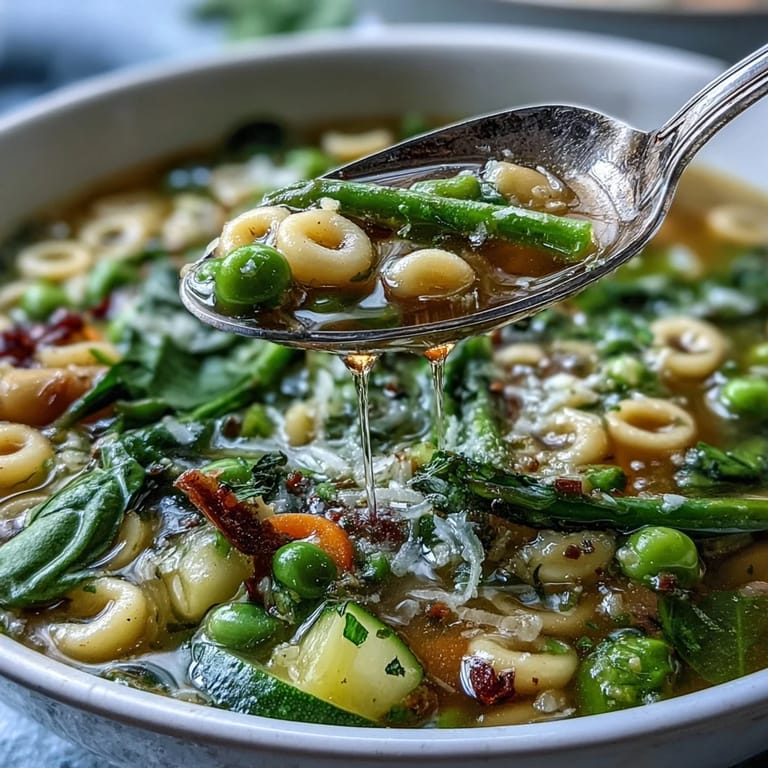
 The first time I made Spring Minestrone, the kitchen windows were open, letting in a drift of warm air and the sharp scent of freshly cut grass. I remember chopping crisp celery and wondering if the green beans would keep their snap. The whole room filled with the mingling aromas of garlic and broth, and even my ever-curious cat paused to sniff the air. Cooking this soup always feels like coaxing out a secret promise from spring itself. Somehow, every batch tastes a little different, yet always bright and inviting.
One rainy evening I threw this minestrone together for some friends who dropped by unexpectedly, and our laughter over steaming bowls drowned out the storm outside. There's something about everyone leaning in for second helpings that makes a simple meal feel like an occasion.
Ingredients
- Olive oil: A good-quality olive oil lays down subtle flavor, so don't hesitate to use your favorite bottle.
- Onion: Finely chopping the onion keeps it meltingly soft and ensures it sweetens the whole pot.
- Garlic: Minced garlic blooms fast in hot oil – inhale deeply once it hits the pan.
- Carrots: Dice them small for easy, even cooking and just the right hint of sweetness.
- Celery: Its earthy crunch rounds out the classic soffritto base.
- Zucchini: Add it after the carrots so the pieces stay tender yet intact.
- Peas: Both fresh and frozen work beautifully; just toss them in near the end for vibrant color.
- Baby spinach: Handfuls of tender leaves wilt almost instantly and boost the soup's green glow.
- Green beans: Cutting them into bite-sized pieces keeps each spoonful harmonious.
- Vegetable broth: Using low-sodium broth gives you better control over the seasoning.
- Bay leaf: A single leaf gently infuses an unmistakeable, comforting depth.
- Small pasta shapes: Choose ditalini, orzo, or tiny shells – their size is perfect for scooping up broth and veggies in one bite.
- Fresh parsley: Chopped at the last minute, it adds bright grassy flavor.
- Salt and black pepper: Season with care and taste as you go—it's the secret to soup that sings.
- Optional: Grated Parmesan cheese, fresh basil, extra olive oil: These garnishes transform every bowl into something truly inviting.
Tired of Takeout? 🥡
Get 10 meals you can make faster than delivery arrives. Seriously.
One email. No spam. Unsubscribe anytime.
Instructions
- Sauté the base:
- Heat the olive oil in a large pot over medium, and listen for a gentle sizzle as the onion goes in. Stir, letting it turn translucent with patience—this is the foundation of all the good flavor you'll build.
- Build the flavor:
- Add garlic, diced carrots, and celery; the fragrance will blossom as you sauté for a few minutes until just tender.
- Add spring veggies:
- Toss in zucchini, green beans, and peas, stirring gently for a minute or two so their colors stay vivid and beautiful.
- Pour in the broth:
- Add the vegetable broth and bay leaf, bringing everything to a lively simmer while the kitchen fills with a savory aroma.
- Simmer and cook the pasta:
- Stir in the pasta and cook until it’s a perfect al dente, keeping the soup at a gentle bubble so nothing sticks or turns mushy.
- Add freshness:
- Scatter in spinach and parsley just before serving, watching the spinach wilt in a flash, and breathe in the sudden hit of green.
- Season and finish:
- Taste, adjust with salt and pepper, and don’t forget to fish out the bay leaf—no one likes an unexpected chew.
- Serve and garnish:
- Ladle into bowls, topping with Parmesan, basil leaves, or a swirl of olive oil to make every bite feel special.
 Pin It
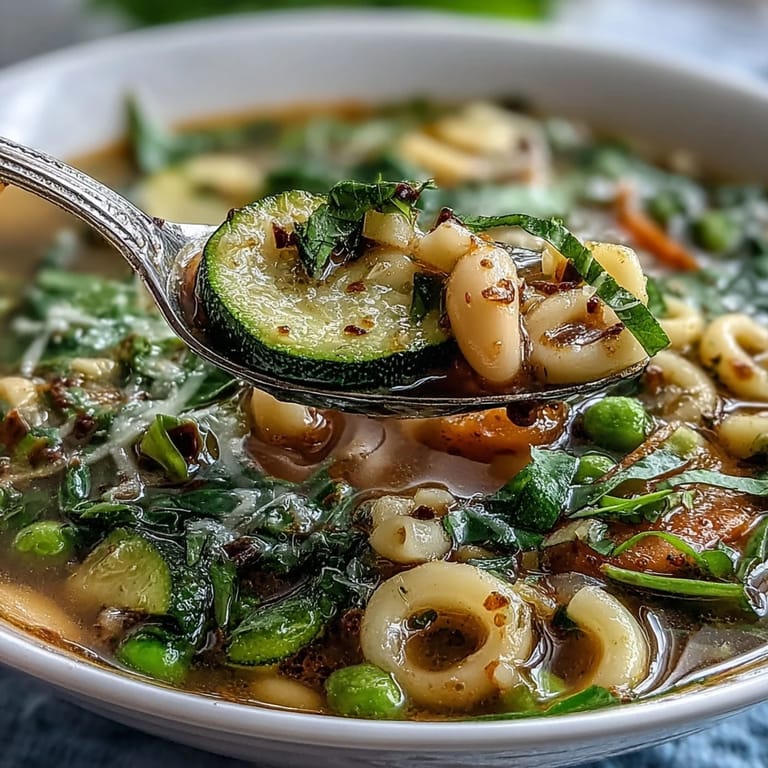
A few weeks ago, someone I love called this their 'bowl of happiness' after a tough day, and I knew this minestrone was now family comfort food. It’s amazing how a soup can sometimes turn a whole day around.
How to Make It Your Own
Don’t hesitate to swap in asparagus, fava beans, or whatever calls out to you at the produce market. Every batch carries the signature of its season and whoever is stirring the pot.
Serving Suggestions That Never Fail
I’ve found a thick slab of toasted sourdough or some crusty bread turns this soup into the most satisfying meal. Sometimes, I’ll rub a little garlic on the bread and drizzle with olive oil before serving for extra comfort.
Troubleshooting and Last Minute Tips
If your broth level drops as the soup sits, splash in a bit more hot stock or even water before reheating—done right, no one can tell. Taste for seasoning a final time before ladling into bowls and let the soup cool ever so slightly so the flavors shine through. Anything leftover is even better the next day.
- Don’t skip the garnish even if it’s just a sprinkle of parsley.
- If you use frozen peas, add them straight from the freezer.
- Pasta keeps soaking up broth, so store it separately for leftovers if you can.
 Pin It
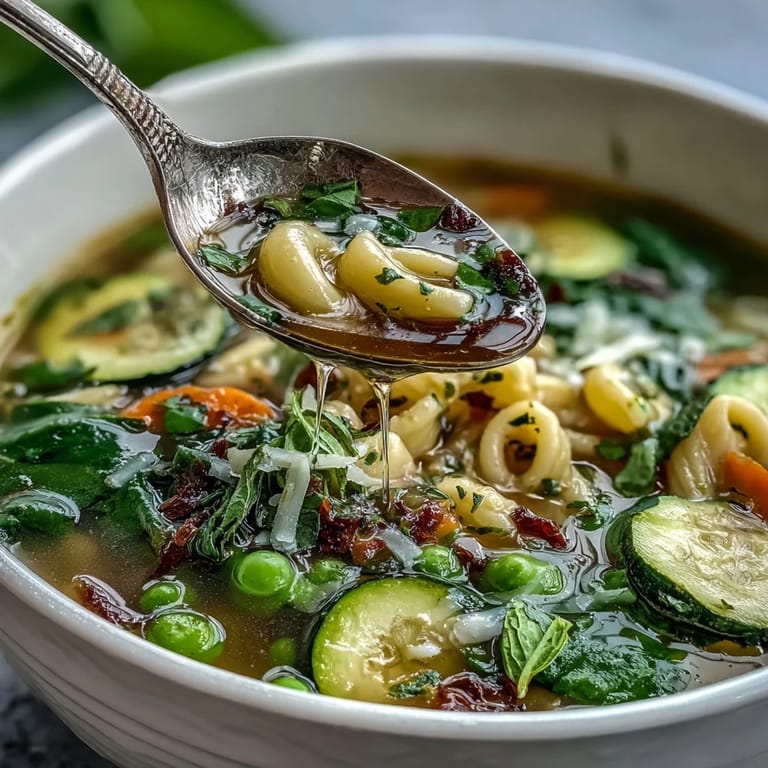
 I hope you enjoy this fresh, lively soup as much as anyone gathered around my table. Here’s to the small joys that simmer up in the simplest pots.
Recipe Questions & Answers
- → How do I prevent the pasta from getting mushy?
Stir the pasta into the simmering broth only when the vegetables are nearly done and follow package timing for al dente. For the best texture, cook pasta separately and add just before serving if you plan leftovers.
- → Can this be made vegan?
Yes. Omit the Parmesan and finish with a drizzle of good olive oil. Use a plant-based grated cheese if you want a similar savory finish and confirm the broth is vegan.
- → What spring vegetables work well as additions?
Asparagus tips, shelled fava beans, baby leeks, or young peas all complement the flavor. Add firmer vegetables earlier and delicate ones like asparagus tips near the end to preserve texture and color.
- → Is it okay to freeze this soup?
You can freeze the soup, but cook the pasta separately and freeze the broth and vegetables alone. Reheat and add freshly cooked pasta to avoid a soggy texture after thawing.
- → How can I deepen the broth flavor?
Sauté the vegetables until slightly caramelized, use a quality vegetable stock, and simmer with a bay leaf. Finish with a splash of lemon juice or a grating of Parmesan to lift the overall flavor.
- → How do I adapt this for gluten-free diets?
Swap the small pasta shapes for certified gluten-free pasta or use grains like rice or quinoa. Always check the labels of the broth and any packaged ingredients for hidden gluten.