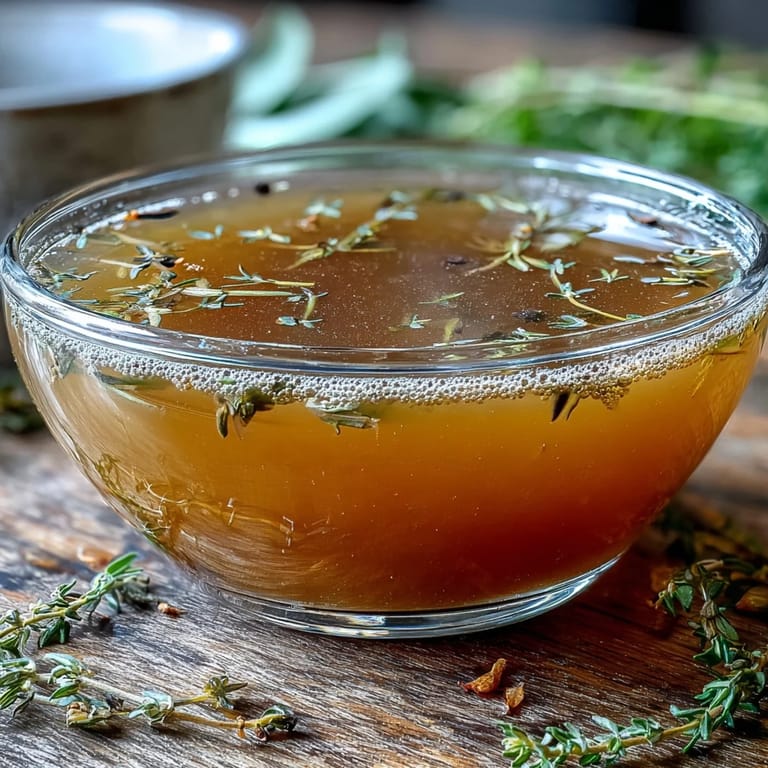
 Pin It
 There's something quietly satisfying about turning vegetable scraps into liquid gold. I started making broth from scraps during a particularly tight week when grocery money was thin, and what began as pure necessity became one of those kitchen habits I can't shake. The first time I sipped a mug of my own vegetable broth on a gray Tuesday morning, something shifted—I realized I'd been throwing away flavor all along, tucked inside carrot peels and celery ends that sat on my cutting board.
My friend Maya watched me strain a batch through cheesecloth one afternoon and asked if I was performing some kind of kitchen ritual. When she tasted it, she immediately started saving her carrot peelings in a jar, and now she texts me photos of her collection like I'm her broth mentor. That's when I understood—this recipe isn't just about making something useful, it's about seeing waste differently, about collaborating with your own kitchen leftovers.
Ingredients
- Vegetable Scraps (4 cups assorted trimmings): Carrot peels, onion skins, celery ends, leek tops, mushroom stems, and parsley stems are your stars here—save these religiously and store them in the freezer if you're not ready to simmer them immediately, since frozen scraps actually break down more easily and release deeper flavor.
- Bay Leaf (1): This single leaf transforms a pot of water into something that smells like actual cooking, grounding the whole experience with a subtle earthiness that deserves respect.
- Black Peppercorns (5–7): Crack them lightly or leave whole—they'll float around and remind you they're there with tiny hits of warmth without overwhelming anything.
- Garlic (2 cloves, crushed): Optional, but I always add it because that papery skin and crushed flesh contribute a quiet depth that rounds out the broth beautifully.
- Salt (1 teaspoon): Go light here since you might use this broth in other recipes, and it's much easier to add salt later than to rescue over-salted stock.
- Fresh Thyme (1 sprig) or Dried (1/2 teaspoon): If you have fresh thyme growing somewhere or hanging in a bundle, use it—the little leaves will perfume the whole pot with something herbal and alive.
- Cold Water (8 cups): Start cold so everything simmers gently and evenly, bringing out flavor without forcing it.
Tired of Takeout? 🥡
Get 10 meals you can make faster than delivery arrives. Seriously.
One email. No spam. Unsubscribe anytime.
Instructions
- Gather your treasure:
- Collect your vegetable scraps in a bowl as you prep throughout the week or day, keeping them clean and fresh. Skip potato peels, broccoli, cauliflower, cabbage, and anything overly starchy or sweet—they'll cloud your broth or add flavors that dominate everything else.
- Build the pot:
- Combine your scraps, bay leaf, peppercorns, garlic, salt, and thyme in a large stockpot, arranging them so they'll move freely as things heat. Pour in your cold water until everything is submerged, giving the aromatics room to dance around.
- Heat gently:
- Bring the pot to a boil over medium-high heat—you'll hear it before you see it—then immediately turn the heat down to a gentle simmer where just a few lazy bubbles break the surface. This is the difference between broth and cloudy accident.
- Skim and simmer:
- Let it bubble quietly for 45 to 60 minutes, occasionally skimming off any foam that rises to the top with a spoon or small ladle—this keeps your broth clear and elegant. The longer you simmer, the deeper the flavor, but you don't need hours like you do with bones.
- Taste and adjust:
- After 45 minutes, steal a small spoonful and taste it. If it feels thin, give it another 15 minutes; if it's already tasting rich and savory, you're done.
- Strain with care:
- Pour the whole pot through a fine-mesh sieve or cheesecloth into a clean container, letting gravity do the work and catching the clear liquid while the scraps settle at the bottom. Don't force it—patience rewards you with clarity.
- Cool and store:
- Let your broth cool to room temperature, then pour it into airtight containers and refrigerate for up to five days or freeze for up to three months, and you'll have this magic on hand whenever you need it.
 Pin It
One morning I made a simple risotto using nothing but my frozen broth and some leftover rice, and my partner asked what restaurant I'd ordered from because it tasted too good to be real. That's when I realized this broth had become the quiet foundation of better meals, the kind of thing you don't notice until you don't have it anymore.
When to Roast Your Scraps
If you have a little extra time and want to push the flavor envelope, roasting changes everything. Spread your scraps on a baking sheet, drizzle lightly with oil if you have it, and roast at 200°C for about 20 minutes until they smell toasty and the edges caramelize slightly—then proceed as normal. This step adds a complexity that makes the broth taste like it's been simmering all day when it hasn't, and it's the secret move that's caught everyone off guard who's tasted my broth after that.
Umami Upgrades
Once you've mastered the basic broth, you can start experimenting with tiny additions that deepen it almost mysteriously. A small piece of kombu (dried seaweed) or a handful of dried mushrooms—shiitake, porcini, whatever you have—adds umami that makes the broth taste savory and satisfying in ways that surprise you, like you've stumbled onto a secret restaurants guard closely.
Beyond Broth
This broth is humble enough to be a quiet supporting player or bold enough to be the star of the show. Use it as the foundation for soups and stews, cook your grains in it instead of water, make risotto sing with it, or simply pour it warm into a mug on a cold morning and sip it like a ritual. It's also forgiving enough that you can experiment with it without fear—it handles additions and adjustments gracefully.
- Simmer it with a handful of noodles and greens for a nourishing bowl that feels fancy but takes minutes.
- Freeze it in ice cube trays so you always have broth ready to toss into a sauté pan or soup without thawing whole containers.
- Share it with friends or family who cook—homemade broth is a gift that says you care enough to turn scraps into something precious.
 Pin It
 Making vegetable broth from scraps is one of those quiet kitchen habits that costs almost nothing but teaches you something each time—that waste is often just resources in the wrong place. Once you start, you'll never look at vegetable trimmings the same way again.
Recipe Questions & Answers
- → What vegetables should I avoid putting in broth?
Skip potato peels, brassicas (broccoli, cauliflower, cabbage), and overly starchy or sweet vegetables. These can make your broth bitter or cloudy, and potatoes may add an unpleasant texture.
- → How long does homemade vegetable broth last?
Store your broth in airtight containers in the refrigerator for up to 5 days, or freeze it for up to 3 months. Consider freezing in ice cube trays for easy portioning.
- → Can I add salt to the broth?
Salt is optional since you'll likely season the final dish. If adding, use about 1 teaspoon and taste before adjusting. Keep it light if using the broth as a base for other dishes.
- → How can I make the broth more flavorful?
Roast vegetable scraps at 200°C (400°F) for 20 minutes before simmering. You can also add kombu seaweed or dried mushrooms for extra umami depth.
- → What's the best way to strain the broth?
Use a fine-mesh sieve or cheesecloth to remove all solids. For an extra clear broth, line your sieve with cheesecloth and let it drain naturally without pressing.
- → Can I use frozen vegetable scraps?
Absolutely! Collect scraps in a freezer bag until you have enough. Frozen scraps work just as well as fresh, making it easy to accumulate trimmings over time.