 Pin It
 I first encountered the magic of a yin and yang board at a gallery opening in the city, where a clever caterer had arranged one as the centerpiece of the reception. I was immediately struck by how the circular balance of dark and light ingredients seemed to mirror the art on the walls—it was thoughtful, intentional, and somehow made reaching for a dark chocolate square or a handful of cashews feel like a moment of culinary meditation. That evening, I decided I had to recreate this experience in my own kitchen, and now it's become my favorite way to welcome guests.
I'll never forget watching my sister's eyes light up when she first saw this board at my dinner party last spring. She walked around it slowly, taking in the arrangement like it was a piece of art, before finally saying, "This is too beautiful to eat." Of course, she ate three pieces anyway, and by the end of the evening, everyone was gravitating toward their preferred side—some of us team dark chocolate, others devoted to the creamy cheese.
Ingredients
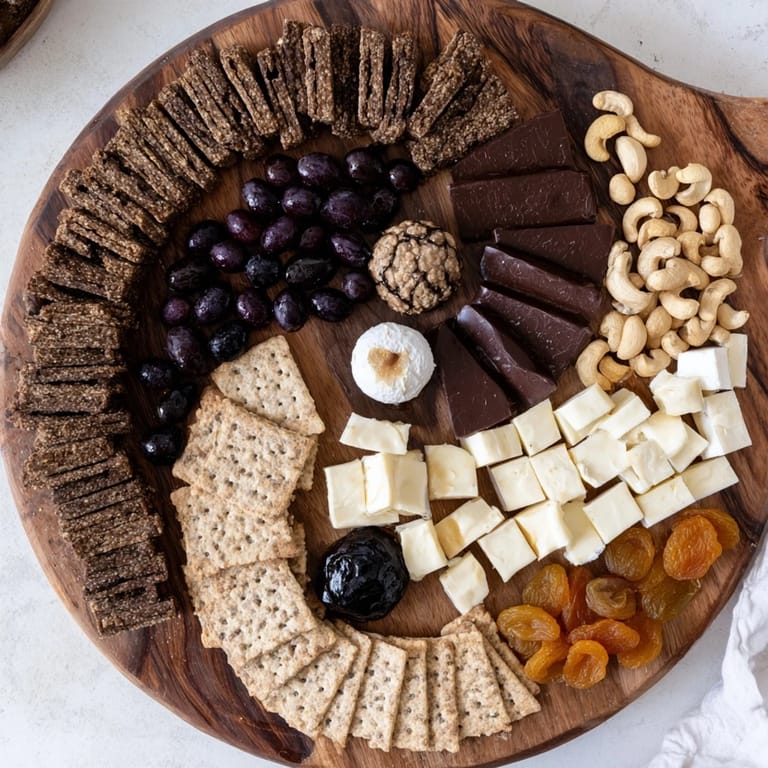
- Black olives, pitted: These are the anchor of your dark side—choose the ones you actually enjoy eating, whether that's Kalamata or oil-cured varieties, because they're the ones guests will notice
- Dark rye crackers: They add an earthy depth and hold their own against bold flavors, plus they look striking against the lighter components
- Aged balsamic-glazed mushrooms: If you can find them prepared, they're worth it; if not, quickly sauté fresh mushrooms with a touch of balsamic and let them cool—this is where you earn the compliment about depth of flavor
- Black grapes or blackberries: These bring a natural sweetness that bridges the gap between savory and indulgent on the dark side
- Dark chocolate squares: Go for 70% cacao or higher; anything less feels like you're not taking the balance seriously
- White cheese: Goat cheese, brie, or fresh mozzarella all work beautifully—choose based on what texture appeals to you, and remember that softer cheeses make for easier eating on a standing board
- Rice crackers or water crackers: These stay crisp longer than most crackers, which matters when your board is sitting out being admired
- Raw cashews or blanched almonds: Raw nuts taste fresher and keep that light, delicate feeling on your pale side
- Dried apricots or white grapes: The sweetness here should feel natural, not overwhelming—these are the bridge between cheese and the honey drizzle
- Honey: A light drizzle transforms the whole experience, especially when it pools slightly on the cheese
Tired of Takeout? 🥡
Get 10 meals you can make faster than delivery arrives. Seriously.
One email. No spam. Unsubscribe anytime.
Instructions
- Gather your board and find your center:
- Take your largest round serving board—it needs to be substantial enough that you can really play with the composition. Set it on a clean, flat surface where you have room to move around it. This is your canvas, and the next step is all about creating that visual intention.
- Mark your yin and yang divide:
- Use a small bowl or circular cutter as your guide, and lightly trace an S-shaped curve down the center of the board. Don't worry about it being perfect—the organic quality is part of the charm. This isn't about precision; it's about creating a visual suggestion that divides dark from light.
- Fill the dark side with intention:
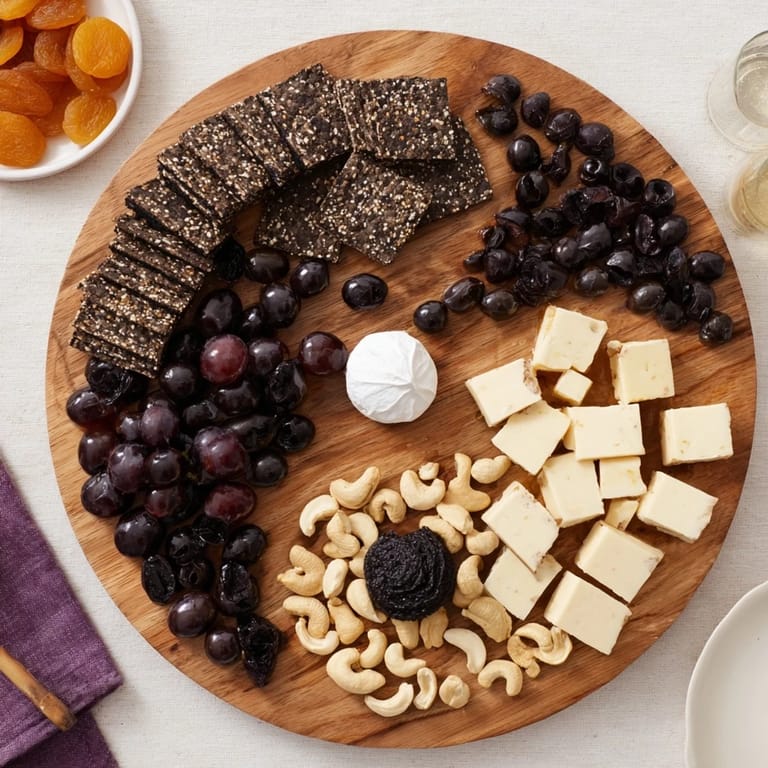
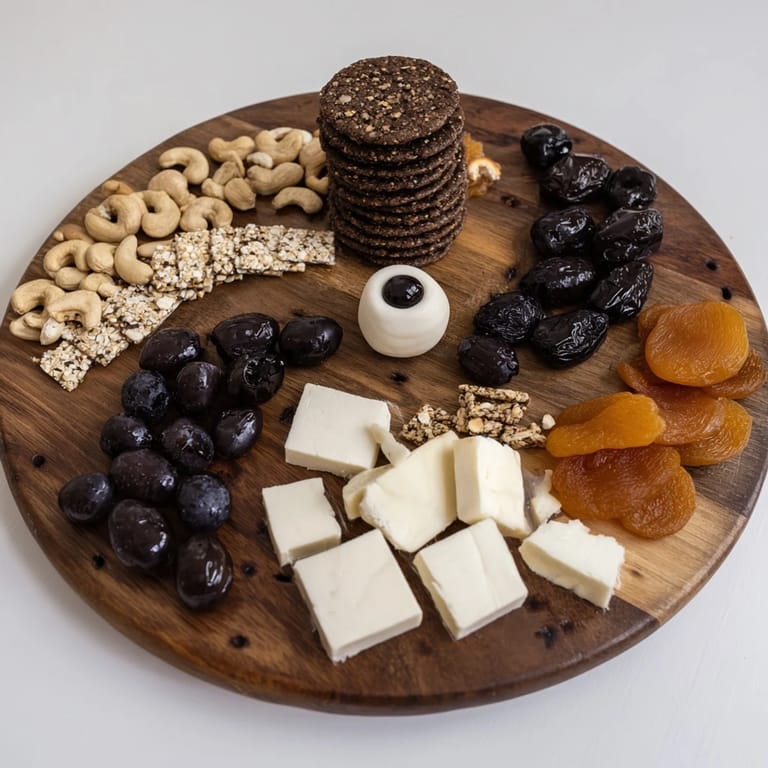
- Start with the black olives, scattered in clusters so they catch the light. Lay down a few dark rye crackers, leaving small gaps so the board shows through. Arrange your balsamic mushrooms so they glisten slightly. Add the grapes or blackberries in little groups—they look like dark jewels. Finally, place your dark chocolate squares in spots where they'll be visually balanced and easy to grab. Step back and look at it. If one area feels heavy, adjust.
- Balance with the light side:
- Now mirror that energy on the light side. Slice or cube your cheese into inviting pieces and distribute them across the space. Lay crackers down with intention, creating small clearings that show the board. Add your nuts in small piles—they're delicate, so let them breathe. Scatter the dried apricots or white grapes for color contrast and sweetness. If you're using honey, drizzle it lightly over the cheese area so it catches light and glistens.
- Add the yin-yang dots:
- Take a small round cheese ball or a single olive and place it in the center of each swirl where a traditional yin-yang symbol would have its dots. This tiny detail transforms the whole board from beautiful to unmistakably intentional.
- Step back and admire, then serve:
- Give yourself a moment to really look at what you've created. The board should feel balanced, with each side distinct but equal in visual weight. Serve it immediately while everything is fresh, and invite your guests to experience both sides—to taste the contrast and discover their own balance between light and dark.
 Pin It
The real magic happened when my young niece studied the board for a full minute before asking if she could take a photo. She said the balance made her feel calm, and she loved that she could choose based on her mood—dark chocolate when she wanted to feel bold, or cheese and apricots when she wanted something gentle. That's when I realized this board isn't just about food; it's about giving people permission to honor what they need in that moment.
The Philosophy of Pairing
Building a yin and yang board taught me something about balance in cooking that extends beyond just this recipe. The dark side represents richness, intensity, and earthiness—think of it as the umami, the deep notes, the flavors that linger. The light side is delicate, bright, and clean—it's the part that refreshes and balances. When you understand this, you start to see how every board, every meal, every plate benefits from having both. It's not about one being better than the other; it's about how they complete each other. Serve this board alongside a crisp sparkling white wine or a light Pinot Noir, and watch how the wine finds its place in the conversation too.
Customizing Your Balance
One of the joys of this board is that it's endlessly adaptable. Vegetarian diets feel naturally honored here, but if your guests eat differently, you can easily add cured meats to the dark side or seafood options to the light side. The structure remains beautiful; only the contents change. I've made versions for dietary restrictions by swapping out the brie for dairy-free alternatives, or the nuts for seeds. The key is remembering that each ingredient should earn its place by either tasting wonderful or looking beautiful—ideally both. Over time, you'll discover your own favorite combinations, the cheese you can't live without on this board, the nuts that feel essential.
Creating Moments, Not Just Meals
What I've learned from making this board multiple times is that presentation genuinely changes how people eat and experience food. When something is arranged with care, when there's visual intention behind it, people slow down. They take time. They taste more deliberately. This board became my favorite way to gather people not because the ingredients are rare or expensive, but because it invites a different kind of attention and presence.
- Make this board about an hour before guests arrive, then cover it loosely with plastic wrap and refrigerate if you're concerned about anything wilting or sweating—unwrap it just before serving
- If you have edible flowers, scatter them lightly for extra color and sophistication, treating them like you would the other delicate elements
- Keep a small cheese knife nearby, and consider adding a small spreader for the honey, so guests feel empowered to serve themselves thoughtfully
 Pin It
 Serve this board when you want to create a moment of beauty and intention in your kitchen. It's proof that hospitality doesn't require complicated cooking—just thoughtfulness and a willingness to play with balance.
Recipe Questions & Answers
- → What is the best way to arrange the ingredients?
Arrange the ingredients in a circular pattern divided by an S-shaped curve to mimic the yin and yang symbol, placing dark items on one side and light items on the other.
- → Can I substitute any ingredients?
Yes, feel free to swap cheeses, crackers, or nuts based on dietary needs or flavor preferences to maintain balance and variety.
- → How should this board be served?
Serve immediately on a large round board to showcase the visual contrast and encourage tasting of the opposing flavor profiles.
- → Are there suggested pairings?
Pairs excellently with sparkling white wine or a light red to complement the variety of flavors and textures.
- → What tools are needed to prepare the board?
A large round serving board and a small bowl or circular cutter to mark the division are helpful, along with a cheese knife for slicing.